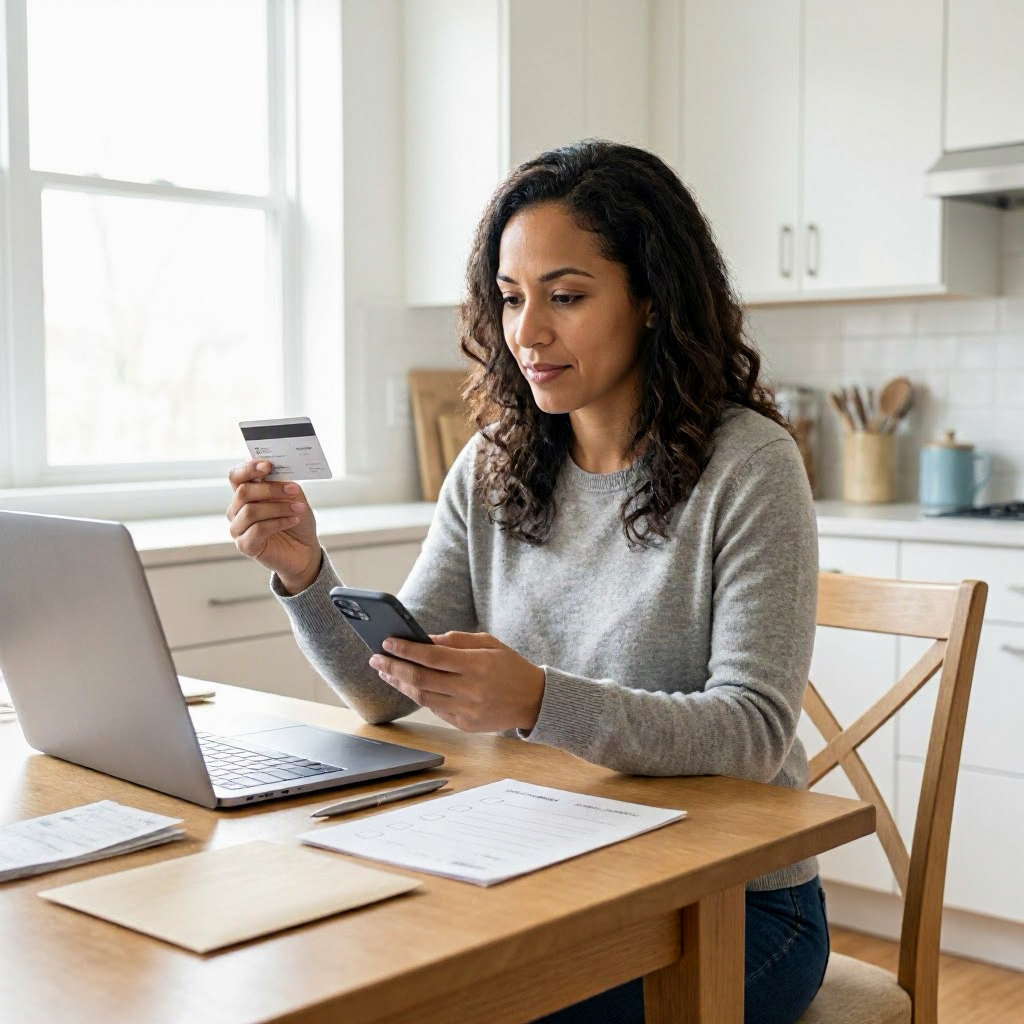
Consumer rights checklist when a gift card balance disappears
---
Why Gift Card Balances Disappear and What Your Consumer Rights Cover
Gift cards offer convenience for online shopping and gifting, but discovering a zero balance can be frustrating, especially if you expected funds to remain. In the United States, federal laws like the CARD Act and FTC guidelines provide some protections for gift cards, but coverage varies by type: closed-loop cards (specific to one retailer like Amazon or Target) versus open-loop prepaid cards (Visa, Mastercard, or American Express branded). Policies differ by issuer, retailer, and state, so always check official terms.
This checklist focuses on practical steps for U.S. consumers when a gift card balance vanishes unexpectedly. Start with verification before contacting anyone. Keep all records, as they strengthen your case. This is general information, not legal or financial advice, and outcomes depend on your specific situation and proof.
Common scenarios include unauthorized use, expiration (though federal law bans expiration on most cards bought after 2010), inactivity fees (limited by law), technical glitches, or scams. For example, a family buying a $100 Visa gift card online might log in later to find $50 deducted without explanation.
Initial Checklist: What to Check First
Before assuming theft or error, rule out simple explanations. Use this quick checklist to assess your situation.
| Issue | What to Check | Action if Confirmed |
|---|---|---|
| Incorrect card number or PIN | Official balance checker on issuer's site or app (e.g., vanillagift.com for Vanilla Visa) | Retry with exact details from receipt |
| Recent use by you or recipient | Transaction history via official portal | Note dates, amounts, merchants |
| Expiration or dormancy fee | Card terms (back of card or purchase email) | Federal law limits fees; contact issuer if improper |
| Partial redemption | Order confirmations from purchases | Compare total spent vs. loaded amount |
| Scam site used for check | Did you use a link from email/text? | Switch to official site only |
Screenshot everything during checks. For instance, if your Target gift card shows $0 on their app, capture the screen with date and time visible.
Step-by-Step Guide to Recover a Missing Gift Card Balance
Follow these numbered steps in order. Document each one with notes, including dates, representative names, and reference numbers.
Step 1: Locate and Review Purchase Proof
Dig out your original purchase records immediately. Without them, recovery is harder.
- Physical or digital receipt: Note purchase date, amount loaded, retailer (e.g., bought at Walmart), card serial number (hide last 4 digits for safety), and activation confirmation.
- Email confirmations: Search your inbox for "gift card" from the seller or issuer. For online buys via Amazon or eBay, check order history.
- Account statements: If bought with a credit/debit card or PayPal, review the transaction for merchant name and amount.
- Photos of the card: Front and back, including any PIN sticker (redact PIN after noting it).
Example: A student buying a $50 Starbucks e-gift card via their app should screenshot the email receipt showing "Balance: $50" sent at purchase.
If no proof exists (e.g., received as a gift), proceed but note the limitation—issuers prioritize verified owners.
Step 2: Check Balance Officially and Securely
Avoid third-party sites or apps promising "balance recovery"—they're often scams.
- Log into the official issuer website or app. Examples:
- Retail-specific: Target.com/giftcards, Starbucks.com/giftcard.
- Prepaid networks: VisaGiftCard.com, GiftCards.com (check back of card for exact URL).
- Enter card number and PIN exactly. Note the balance shown and any transaction log.
- If digital card, check email delivery confirmation and redemption history.
- Watch for "fraud hold" messages, common if unusual activity is detected.
Take screenshots of the balance page, transaction list (even if empty), and any error messages. For a $200 Home Depot card used for online tools, print the history showing deductions.
If the site flags suspicious activity, do not retry multiple times—call support instead.
Step 3: Review Card Terms for Hidden Rules
U.S. law under the 2009 CARD Act prohibits expiration on gift cards sold for $25+ after August 2010 and limits inactivity fees to once per year after 12 months dormancy, with disclosure required.
- Read terms on the card back, receipt, or issuer site.
- Check for "use it or lose it" policies on promotional cards.
- State laws add protections; e.g., California bans all dormancy fees.
Screenshot terms. If fees seem improper (e.g., charged within 12 months), flag for your complaint.
Step 4: Contact the Gift Card Issuer Promptly
Use official channels only—no phone numbers from Google ads or unsolicited texts.
- Find contact info: Official website "help" or "contact us" section, or back of physical card. For e-gift cards, use the delivery email's support link.
- What to say: "My [retailer/Visa] gift card # [last 4 digits] loaded with $X on [date] now shows $0 balance. Attached: receipt, screenshots. Please investigate transactions."
- Provide: Purchase proof, card details (not full number via email), your contact info.
- Request: Full transaction history, refund to original payment method or new card, fraud investigation if unauthorized.
Expect chat, email, or phone. Save chat transcripts, email chains, call logs (date, time, rep name, reference #). For a vanished $75 Macy's card balance, a senior shopper might email support with receipt scan, getting a response in 24-48 hours.
Follow up in 3-5 business days if no reply. Policies vary; some issuers replace within 7-10 days with proof.
Handling Specific Gift Card Types
Closed-Loop Retailer Gift Cards (e.g., Amazon, Walmart, Apple)
These tie to one store. Balance issues often stem from account glitches or unlinked redemptions.
- Link card to your retail account if not done.
- Check order history for partial uses.
- Contact via retailer's app/site support. Example: Amazon orders > "Your Orders" > gift card issues.
- If bought third-party (e.g., eBay seller), dispute via marketplace first.
A small business owner with a $300 Lowe's card for supplies might find balance dropped due to unapplied purchase—retail support can recredit.
Open-Loop Prepaid Cards (Visa, Mastercard, Amex Gift)
These work anywhere Visa/Mastercard is accepted, including online.
- Use network sites like MyPrepaidCenter.com or specific issuer portals.
- Fraud more common; report as "unauthorized transaction."
- Issuers may issue replacement if fraud proven within timelines (often 60 days).
Example: Family vacation fund on a $500 Mastercard gift card depleted online—network investigates PIN misuse.
Marketplace or Third-Party Bought Gift Cards
If purchased via Amazon, eBay, or Walmart Marketplace:
- Check seller ratings and return policy at buy time (too late now, but note for records).
- Open marketplace dispute: Provide proof balance was full at receipt.
- Avoid off-platform communication.
Escalation Options if Issuer Doesn't Resolve
If initial contact fails after 7-10 days, escalate methodically.
Option 1: Contact the Purchase Retailer or Seller
If bought in-store or online:
- Store-bought: Return to purchase location with receipt for replacement (some policies allow).
- Online: Use retailer's dispute process, especially if credit card used.
Option 2: Payment Provider Dispute (If Applicable)
Gift cards bought with credit/debit offer indirect protection.
- Credit card chargeback: For original purchase (not balance use). Contact issuer (back of card) within 60 days typically. Provide purchase receipt showing full load.
- Debit or PayPal: Similar, but funds harder to recover.
- CFPB oversees disputes; check consumerfinance.gov for guidance.
Phrase: "Merchant sold defective gift card with vanishing balance; proof attached."
Note: Chargebacks for gift card use itself are rare, as it's like cash.
Option 3: Report Fraud or Theft
Suspect unauthorized access?
- Notify issuer immediately for fraud block.
- File FTC identitytheft.gov report if personal info compromised.
- Local police for large amounts (e.g., $1,000+), get report number.
Option 4: State and Federal Consumer Complaints
Last resort after exhausting private options.
| Resource | When to Use | How to File |
|---|---|---|
| State Attorney General | Unresolved retailer/issuer issues | Search "[state] AG consumer complaint" (e.g., Texas AG) |
| FTC | Scams, improper fees | Report.ftc.gov; consumer.ftc.gov/articles/shopping-gift-cards |
| CFPB | Payment disputes | Consumerfinance.gov/complaint (if credit/debit involved) |
Complaints prompt investigations but rarely direct refunds. Example: California shopper files AG complaint after Visa issuer denies $200 claim, prompting review.
Documentation Checklist: Build Your Case File
Strong proof increases success rates. Organize in a folder.
- Purchase receipt/invoice.
- Activation email or confirmation.
- Balance check screenshots (before/after issue).
- Transaction history from official site.
- All support communications (emails, chats, call notes).
- Card photos/terms.
- Bank statements for purchase.
- FTC/police reports if fraud.
Digital tip: Use phone camera for scans, timestamp files.
Scam Warnings: Protect Remaining Funds
Disappearing balances often link to phishing.
- Fake balance check sites steal PINs—always use official URLs.
- Texts/emails with "low balance" links: Ignore, forward to FTC.
- Sellers pushing gift cards for payments: Scam red flag.
- Unsolicited "refund" offers requiring card details: Hang up.
Verify via direct site navigation, not links.
Prevention Tips for Future Gift Cards
- Buy from trusted U.S. retailers/official sites.
- Register cards immediately for fraud protection.
- Use within 12 months to avoid fees.
- Track balances monthly via app.
- Opt for reloadable or linked to account cards.
- For gifting, send digital with PIN in separate message.
Example: A parent loads $100 Target card for back-to-school; apps notify low balances.
Real U.S. Consumer Examples
- Case 1: Texas mom buys $50 Vanilla Visa at CVS. Balance zeros after online grocery use. CVS receipt + network chat recredits $50 in 5 days.
- Case 2: Florida retiree gets $200 Best Buy e-card via email scam site. Issuer denies (no proof); FTC report flags seller.
- Case 3: New York student disputes $75 Sephora card bought on eBay. Marketplace refunds purchase price.
These show proof and persistence pay off, but results vary.
In summary, act fast with official channels and records. Most issues resolve at issuer level. Check retailer policies and state laws for extras. For tailored help, visit official sites or your state consumer office. Safe shopping ahead.
(Word count: 2487) ---

About the TDL Expert Panel
TDL Expert Panel · TheDigitalLife Editorial Team
TDL Expert Panel is the editorial team behind TheDigitalLife. The team researches, reviews, and creates practical guides to help everyday readers make better decisions about home repair costs, refunds, AI tools, digital safety, productivity, and useful online resources. Each guide is written to be clear, useful, and easy to understand.