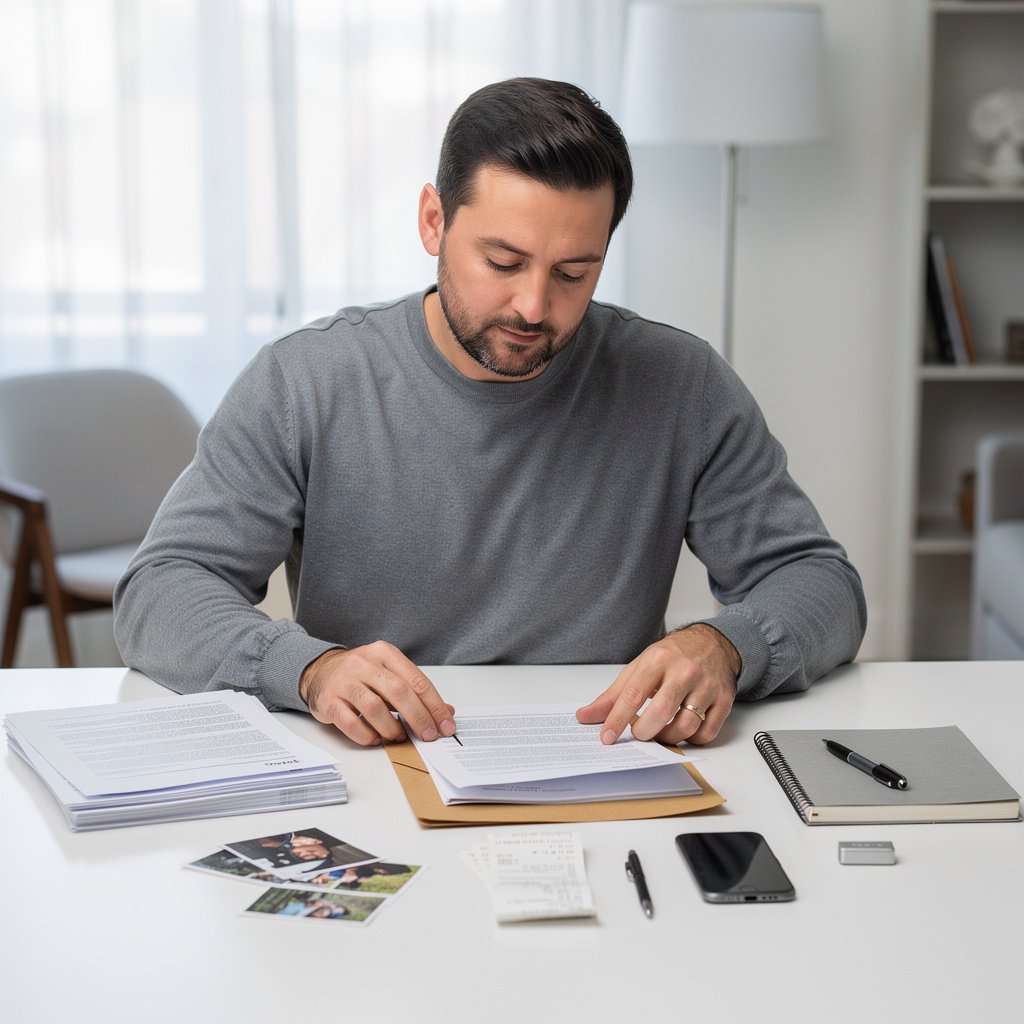
What to bring to small claims court (evidence checklist)
Why Preparation Matters in Small Claims Court
Small claims court handles disputes over small amounts of money or property, typically up to $5,000 to $10,000 depending on your state. These courts offer a simpler process without needing a lawyer in most cases. Rules vary widely by state, county, and even city, so always check your local court's website or clerk's office for specifics.
Going to small claims court unprepared can weaken your position. Judges decide based on the evidence presented, often in a single hearing. Bringing the right documents shows you're organized and helps explain your side clearly. This is general information, not legal advice. Consult your court's self-help center or a qualified attorney for your situation.
Focus on gathering proof that supports your claim or defense. Start early, make multiple copies, and organize everything. Do not ignore your court date, as missing it could mean a default judgment against you.
Steps Before Your Court Date
Before thinking about what to bring, complete these basics. Rules differ by jurisdiction, so verify through official sources.
Filing Your Claim
To start a case as the plaintiff: - Fill out the small claims complaint form (sometimes called a statement of claim). Download it from your county or state court's website. - Pay the filing fee, often $30 to $100, or apply for a fee waiver if eligible. - Include details like the defendant's name, address, amount claimed, and a brief reason.
Keep copies of the filed form, receipt, and any proof of filing.
Sending a Demand Letter
In many states, send a demand letter before filing. This polite written request for payment or action gives the other party a chance to settle. Include: - What happened and why they owe you. - Amount requested. - Deadline to respond (e.g., 30 days). - Your contact info.
Send by certified mail with return receipt. Bring copies to court, as it shows you tried to resolve the issue first.
Serving the Papers
After filing, serve the defendant with the summons and complaint. Methods vary: - Sheriff or constable (common, fee-based). - Certified mail. - Private process server.
Get proof of service, like an affidavit or return of service form. Without it, your hearing may be postponed. Bring this to court.
Track deadlines: response times (often 20-30 days), hearing dates (set after service).
Core Documents Always Bring to Court
Certain papers are essential regardless of your case type. Judges expect them at every hearing.
- Original summons and complaint: Plus copies for the judge and other party.
- Proof of service: Shows the defendant was notified.
- Your ID: Driver's license or state ID.
- Court notices: Any scheduling orders or continuances.
- Case information sheet: Note the case number, court address, judge's name (if assigned), and hearing time.
Make three copies of everything: one for you, one for the judge, one for the other side. Use a binder with tabs labeled by document type.
Your Evidence Checklist by Case Type
Tailor your evidence to your dispute. Below are checklists for common small claims issues. Gather items that prove your story: what happened, when, and why it matters. Photos, emails, and witnesses strengthen cases.
Rules on evidence admissibility vary by state. For example, some courts limit hearsay or require witnesses sworn in. Check your local rules.
Unpaid Debts or Loans (e.g., Borrowed Money, Unpaid Bills)
Debt cases make up many small claims filings. Prove the debt exists and wasn't paid.
| Evidence Type | Why It Matters | How to Get/Prepare |
|---|---|---|
| Signed contract or promissory note | Shows agreement terms, amount, due date | Original + copies; highlight key parts |
| Bank statements or checks | Tracks payments made or owed | Redact unrelated info; circle transactions |
| Emails/texts demanding payment | Proves you asked for repayment | Print with dates, headers; screenshots if digital |
| Demand letter + certified mail receipt | Shows pre-court effort | Include green return card |
| Witness statements | Friend/family who saw the loan | Signed, notarized if possible; they may testify |
Additional items:
- Receipts for any partial payments.
- Ledger of amounts owed vs. paid.
- Credit report excerpts if relevant (but verify with court rules).
Landlord-Tenant Disputes (e.g., Security Deposits, Unpaid Rent)
Tenants or landlords often sue over deposits or damages. Local housing codes apply.
- Lease agreement: Full copy, highlighting relevant clauses.
- Rent receipts and ledger: Proves payments.
- Security deposit itemization: Landlord's list of deductions (if any).
- Photos/videos of property condition: Move-in vs. move-out, timestamped.
- Repair requests: Emails/letters to landlord, responses.
- Inspection reports: From city housing inspector if code violations.
For evictions turned small claims (rare), bring eviction notice copies.
Consumer Disputes (e.g., Bad Products, Services)
Against sellers or repair shops for faulty goods or work.
- Receipt or invoice: Date, amount, description.
- Warranty or guarantee: Written promises.
- Product photos: Defect shown clearly.
- Correspondence: Complaints to seller, their replies.
- Expert opinions: Mechanic quote for car repairs.
- Advertisements: If "as advertised" claim.
Demand letter template outline: 1. Describe purchase and issue. 2. State what you want (refund, repair). 3. Give deadline. 4. Mention small claims if no response.
Property Damage or Personal Property
Car accidents (under limit), broken rentals, neighbor disputes.
- Police report or incident report: If filed.
- Damage photos: Multiple angles, before/after if possible.
- Repair estimates: Two quotes from licensed shops.
- Medical bills/records: If injury involved (but small claims rarely covers big medical).
- Witness contacts: Names, phones; statements.
Auto Repair or Vehicle Issues
Common for shoddy work.
- Repair order/invoice.
- Photos of vehicle before/after.
- Independent mechanic inspection.
- Odometer readings.
- DMV records if title issues.
Employment or Service Disputes (e.g., Unpaid Wages)
If under wage claim limits.
- Pay stubs/time sheets.
- Employment contract.
- Emails about hours/overtime.
- EEOC right-to-sue if discrimination (but check if small claims handles).
Witnesses and Expert Testimony
People who saw events can testify. Bring:
- List of witnesses with contact info.
- Their written statements (signed/dated).
- Subpoena if needed (get from court clerk).
Experts (e.g., appraisers) add credibility but may need pre-approval. Call them ahead.
Organizing Your Evidence for Impact
Judges see many cases; clear presentation helps.
Create a Binder or Folder
- Tab 1: Court Documents (summons, service proof).
- Tab 2: Contracts/Agreements.
- Tab 3: Correspondence (chronological).
- Tab 4: Receipts/Payments.
- Tab 5: Photos/Videos (printed 8x10, labeled).
- Tab 6: Witness Statements.
- Tab 7: Other (estimates, reports).
Number pages. Prepare a one-page summary: Timeline of events, claim amount breakdown, evidence list. Not a speech, just facts.
Digital vs. Paper
Most courts prefer paper, but check for electronic filing/portals. Bring laptop/tablet if allowed for demos (e.g., videos).
Make copies: At least three sets. Staples loose pages; no messy folders.
What to Expect on Hearing Day
Arrive 30-60 minutes early. Dress neatly (business casual). Turn off phones.
Process: 1. Check in with clerk. 2. Wait for your case call. 3. Swear in. 4. Plaintiff presents first: Explain claim, show evidence. 5. Defendant responds. 6. Judge questions, rules (often same day).
Speak clearly, politely. Stick to facts: "On [date], I paid $X, here's the receipt." Practice timing (5-15 minutes per side).
If remote (Zoom in some states post-COVID), test tech, have documents screen-shared ready.
Bring cash/check for fees if ordered to pay something.
Common Mistakes to Avoid
- Forgetting copies: Judge can't read one shared paper.
- Disorganized pile: Loses credibility.
- Emotional arguments: Stick to evidence.
- New evidence: Generally not allowed; disclose pre-hearing if rules require.
- Ignoring counterclaims: Defendant may sue back.
Track everything: Note judge's name, ruling date, next steps.
After the Hearing
Judgment isn't automatic payment. If you win:
- Collect via wage garnishment, bank levy (forms from court).
- Appeal if allowed (short deadline, often 10-30 days).
Keep all papers for records.
When to Get Help
Small claims is DIY-friendly, but complex cases benefit from advice.
- Court self-help centers: Free forms, workshops. Find on county court site.
- Legal aid: For low-income. Use Legal Services Corporation finder: lsc.gov.
- State bar referral: Low-cost consults.
- LawHelp.org: State-specific guides.
Prepare questions: "What evidence works best here?" "Local rules on witnesses?" Do not sign anything without review.
Beware scams: Fake lawyers promising wins, sites charging for free forms. Verify via state bar or court sites.
Final Preparation Checklist
Use this before leaving home:
- [ ] Three copies of all documents.
- [ ] Binder organized with tabs.
- [ ] ID, case info printed large.
- [ ] Witness list/arrival confirmation.
- [ ] Timeline summary sheet.
- [ ] Directions/parking info.
- [ ] Water/snack (waits can be long).
- [ ] Notes on what to say (bullet points).
Double-check your local court's small claims page (e.g., search "[your county] small claims self-help"). Rules change, so confirm.
This guide covers key items, but your case is unique. Read all notices carefully, note deadlines, and seek qualified help if needed. Preparation builds confidence and strengthens your position.

About the TDL Expert Panel
TDL Expert Panel · TheDigitalLife Editorial Team
TDL Expert Panel is the editorial team behind TheDigitalLife. The team researches, reviews, and creates practical guides to help everyday readers make better decisions about home repair costs, refunds, AI tools, digital safety, productivity, and useful online resources. Each guide is written to be clear, useful, and easy to understand.