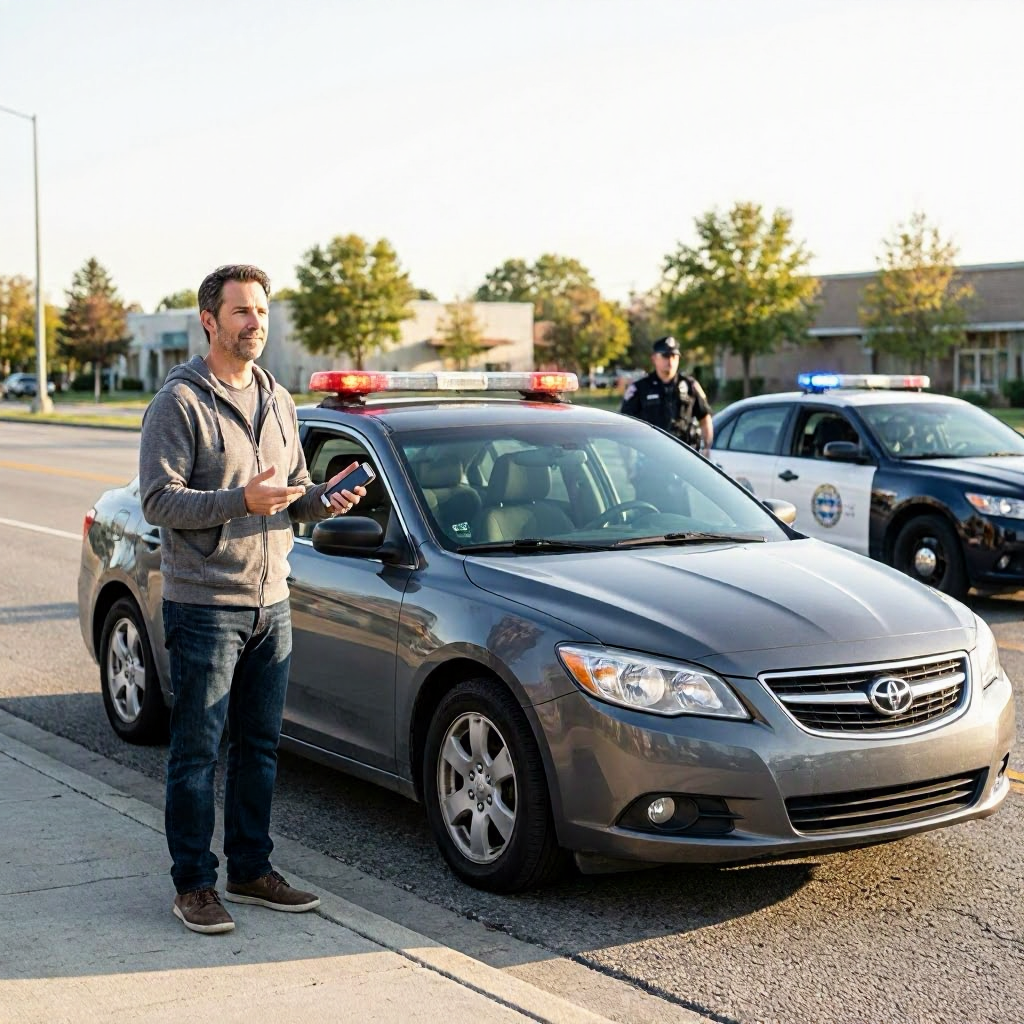
Pulled over by police: your rights step by step
---
Understanding a Traffic Stop
Getting pulled over by police can feel stressful, but knowing general steps and rights can help you stay calm and safe. This guide covers common situations during a traffic stop in the United States. Rules can vary by state, so always check your state's official resources, such as the department of motor vehicles (DMV) website or local court self-help pages, for specifics.
This is general information, not legal advice. Procedures depend on your location, the reason for the stop, and the circumstances. In many situations, officers follow federal constitutional protections like the Fourth Amendment against unreasonable searches and the Fifth Amendment right against self-incrimination. You may want to contact legal aid or a qualified attorney for your specific case.
Preparing Before Any Stop
Even if you drive carefully, stops happen. Keep these basics ready to make interactions smoother:
- Current driver's license, vehicle registration, and proof of insurance in the car, easily accessible without digging.
- Note your state's rules on items like firearms, if applicable, since laws differ.
- If you have a dashcam or phone recorder, consider using it legally after the stop begins, but do not argue or distract.
Pull over as soon as it's safe if you see emergency lights. In many states, using your turn signal and hazard lights signals cooperation.
Step 1: Safely Pull Over
When you notice lights or hear a siren:
- Turn on your interior light if it's dark.
- Slow down gradually and pull to the right shoulder or a safe spot.
- Stop completely, roll down your window, and keep hands visible on the steering wheel.
- Turn off your radio and music.
Do not exit the vehicle unless asked. Officers approach from the passenger side in some cases for safety. Stay in your seat with hands in plain view. This reduces misunderstandings.
Step 2: Initial Contact with the Officer
The officer will likely ask for your license, registration, and insurance. Hand them over calmly. They may explain the reason for the stop, though they are not always required to do so immediately.
- Ask for identification if not shown: Officers should provide their name and badge number.
- Keep responses short: Confirm your name if asked, but limit details.
In many situations, you can say, "Officer, I'm reaching for my documents now." This avoids surprises.
Your Key Rights During the Stop
United States drivers have protections rooted in the Constitution. These apply generally, but state laws and court rulings can add details.
Right to Remain Silent
You have the right to remain silent beyond providing license, registration, and insurance. Politely decline to answer other questions: "I respectfully invoke my right to remain silent."
Do not lie or give false information, as that can lead to charges. Silence protects you from accidental self-incrimination.
No Obligation to Consent to Searches
Officers need probable cause or a warrant for searches. You can refuse consent to vehicle or personal searches: "I do not consent to any searches."
If they search anyway, note details without resisting. Resisting can escalate situations. Courts later review if the search was lawful.
Exceptions exist, like plain view items or during arrests. Check your state's laws via the official DMV or attorney general website.
Step 3: Questions and Exiting the Vehicle
Officers may ask where you're coming from or if you've been drinking. Again, invoke silence after basics.
- If asked to step out, comply calmly. The Supreme Court ruling in Pennsylvania v. Mimms allows this for safety.
- Keep hands visible, avoid sudden moves.
Do not physically resist commands, even if you disagree. Note the time, location, and what happens.
Field Tests, Breathalyzers, and Drugs
For suspected DUI or impairment:
- Field sobriety tests (walk-and-turn, one-leg stand) are voluntary in many states. You can refuse, but refusal may lead to arrest.
- Preliminary breath tests (PBT) are often optional pre-arrest; chemical tests post-arrest have implied consent laws.
Refusal consequences vary by state: license suspension, for example. Read your state's implied consent law on the DMV site.
For drugs, officers look for signs like odor or paraphernalia. Rights against searches still apply.
Step 4: Receiving a Ticket or Citation
If no arrest, you may get a ticket for speeding, equipment issues, or other violations.
- Review it carefully: Note the court date, case number, and fine amount.
- Ask questions politely: "Can you explain the reason for the citation?"
Pay or contest by the deadline listed. Ignoring it can lead to license suspension.
If You're Arrested During the Stop
Arrests happen for DUI, warrants, or serious violations. Officers will:
- Read Miranda rights if questioning.
- Cuff and transport you.
- Inventory belongings.
Ask for a phone call. Do not discuss details without a lawyer. Say, "I want to speak to an attorney."
After the Stop: Immediate Next Steps
Once released or home:
- Write down everything: Time, location, officer's name/badge, witnesses, weather, what was said.
- Take photos of your vehicle if damaged or searched.
- Check for body camera footage requests later.
Keep all documents: Ticket, any receipts, notes.
Requesting the Police Report and Video
Police reports detail the stop. Request it from the department involved.
- Find the form on the agency's website or visit in person.
- Fees may apply, around $10–$25 in many areas, but check locally.
- Bodycam or dashcam footage: Submit a public records request under state laws like FOIA equivalents.
Processing takes days to weeks. Use the report if contesting charges.
| Document or Record | Why It Matters | Where to Get It |
|---|---|---|
| Police Report | Official account of the stop, officer statements, citations | Police department records division; state public records law |
| Ticket/Citation | Court date, violations, fines | Issued at stop; copies from court clerk |
| Bodycam/Dashcam Video | Visual evidence of interaction | Public records request to agency |
| Your Notes/Photos | Personal record to compare with official version | Create immediately after |
Contesting a Ticket in Court
Many tickets go to traffic court. Options vary by state:
- Pay the fine: Admit guilt, points on license.
- Plea bargain: Negotiate reduction.
- Fight it: Request a hearing.
Check the ticket for instructions. Prepare evidence: photos, witnesses, calibration records for radar.
Court self-help centers offer forms and tips. Arrive early, dress respectfully.
License points affect insurance; defensive driving courses mitigate in some states.
If Facing Criminal Charges
Traffic stops can lead to misdemeanor or felony charges like reckless driving or DUI.
- Do not ignore court dates.
- Get a criminal defense attorney via state bar referral or legal aid.
- Bail: Pay or use bondsman; rules differ.
Arraignment sets pleas. Discovery shares evidence.
Documents to Gather and Organize
Strong records protect you:
- License, registration, insurance copies.
- Ticket and any warnings.
- Police report.
- Witness contacts.
- Vehicle maintenance records (e.g., taillights).
- Screenshots of GPS for location proof.
- Medical records if injury involved.
Store digitally and in print. Note names, dates of calls to court or police.
Post-Stop Checklist
- Review Ticket: Note deadlines, court info
- Write Notes: Details within 24 hours
- Request Report: Submit to police within a week
- Photos: Vehicle, scene
- Contacts: Witnesses, officer info
State Variations and Where to Verify
Rights basics are federal, but details differ:
- Implied consent for tests: Penalties vary (e.g., California vs. Texas).
- Open container laws: State-specific.
- Hands-free phone bans: City or state rules.
Verify via:
- Your state's DMV website.
- Local court self-help pages.
- Attorney General consumer protection section.
For example, New York's stop laws differ from Florida's due to local precedents.
When Body Cameras and Dash Cams Help
Many departments use body-worn cameras since 2010s mandates. Request footage promptly.
Your dash cam footage may support your side. Check state wiretap laws on recording police—generally legal if in public.
Common Mistakes to Avoid
- Arguing at the scene: Save for court.
- Consenting to searches unnecessarily.
- Admitting fault casually.
- Speeding away from lights (felony evading).
- Handling items like weapons without notice.
Stay polite; de-escalation aids everyone.
Seeking Legal Help
If charged or confused:
- Court self-help centers: Free forms, advice.
- Legal aid: For low-income via LawHelp.org or lsc.gov.
- State bar referral: Find attorneys, often $30 consult.
- Public defenders for criminal cases if qualifying.
Prepare questions: "What are defenses? What costs? Timeline?"
Avoid scams: No legit lawyer demands upfront gift cards. Verify bar membership on state bar sites.
Preparing for Court or Hearing
Organize a folder:
- Chronological timeline.
- All docs tabbed.
- Witness statements.
- Questions list.
Practice your statement. Arrive 30 minutes early.
Remote hearings? Test tech.
Special Situations: Passengers, Immigrants, Minorities
Passengers have rights too—silence, no searches.
Non-citizens: Stops don't trigger immigration checks without cause, per some policies. Note details for ICE concerns.
Protected classes: Discriminatory stops challengeable via DOJ complaints, but document first.
Long-Term Impacts and Prevention
Tickets raise insurance 20–50% typically. Shop quotes.
Mitigate: Traffic school.
Prevent: Obey limits, maintain vehicle, know local rules.
Traffic Stop Rights Summary
| Situation | Your General Right | Sample Response |
|---|---|---|
| Questioning | Remain silent | "I invoke my right to remain silent." |
| Vehicle Search | Refuse consent | "I do not consent to searches." |
| Exit Vehicle | Comply if ordered | Keep hands visible |
| Sobriety Test | Often voluntary | "I respectfully decline." |
| ID Request | Provide DL/registration/insurance | Hand over calmly |
This table recaps basics—adapt to your state.
Final Practical Tips
Read every document. Note deadlines. Keep records. Verify locally.
If injured or rights violated, consider civil claims, but consult professionals.
Driving safely keeps stops rare. This guide equips you for when they occur.
(Word count: 2487) ---

About the TDL Expert Panel
TDL Expert Panel · TheDigitalLife Editorial Team
TDL Expert Panel is the editorial team behind TheDigitalLife. The team researches, reviews, and creates practical guides to help everyday readers make better decisions about home repair costs, refunds, AI tools, digital safety, productivity, and useful online resources. Each guide is written to be clear, useful, and easy to understand.