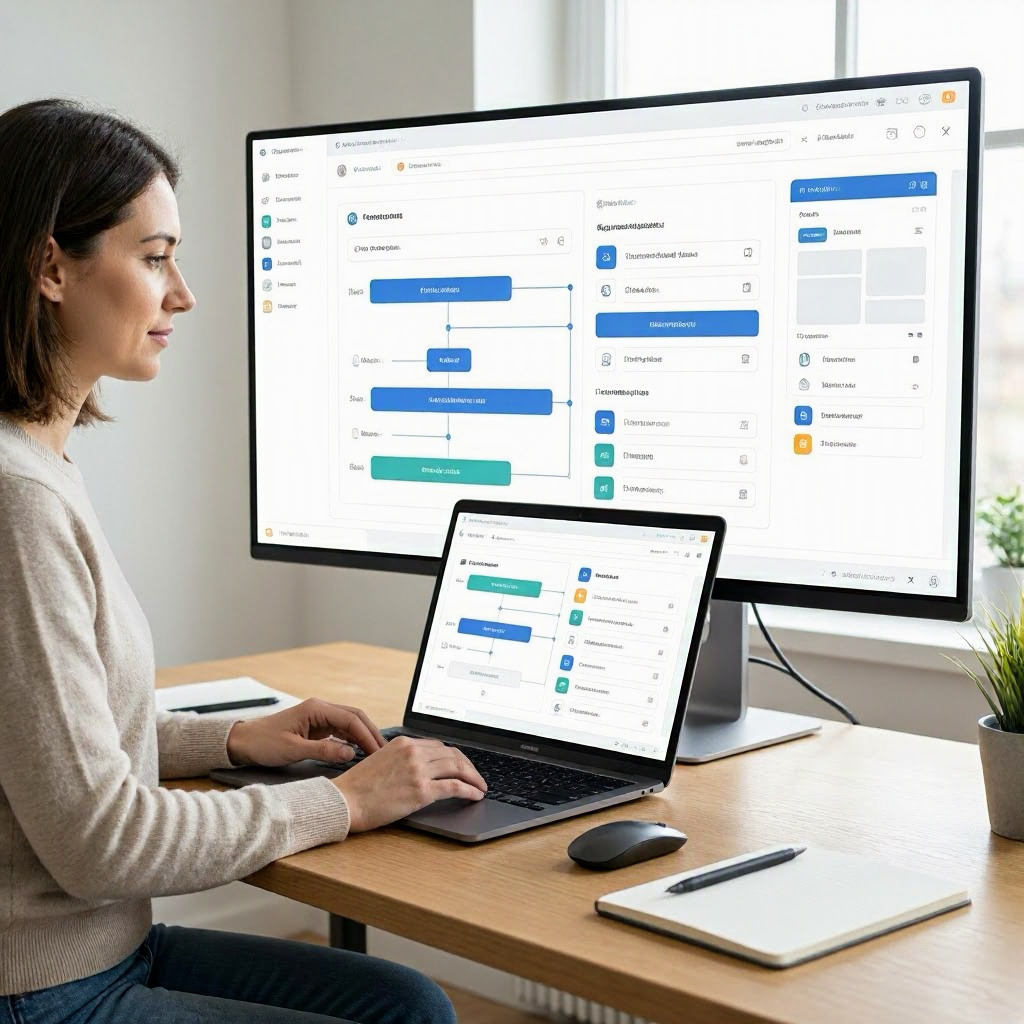
The Rise of No-Code Tools: Build Apps Without Code in 2026
Imagine you have a perfect idea for an app or website. You can picture how it should work, but the thought of learning to code is a massive, intimidating wall. For years, that wall stopped great ideas in their tracks. If you couldn't code, you couldn't build.
But that has changed. In 2026, you don't need to write traditional code to create powerful, functional software. The real skill is no longer about syntax; it's about logical thinking and problem-solving. This is the No-Code Revolution, and it turns anyone from a consumer of technology into a creator.
This guide is for normal homeowners, students, and professionals who want to build solutions, not just use them. It will walk you through what no-code truly is, why it matters for your career, and give you a simple, step-by-step framework to start building your own applications today.
No-code tools let you build websites, mobile apps, and automated software systems using visual, drag-and-drop interfaces instead of writing code. In 2026, this is a powerful way to launch a business idea, automate tasks, or enhance your career skills without needing a computer science degree. The barrier is your logic and planning, not your ability to program.
| Item | Detail |
|---|---|
| Typical Cost | $0 - $0 (using free tiers for projects like a Campus Marketplace) |
| Best First Contact | Official support for the no-code platform you choose (e.g., Webflow, Bubble, Airtable). |
| Main Safety Warning | Avoid "Platform Lock-in"-don't build your entire business on a niche tool that might disappear. Use major platforms or those that let you export your data. |
| Warranty Proof Needed | Data export capabilities and platform terms of service. |
| When to Call a Professional | When your app scales beyond initial growth (e.g., approaching 1 million users) and requires migration to a custom-coded solution. |
Who should I call first
- Who should I call first? Start with the official support documentation and community forums for the no-code tool you are using (e.g., Webflow University, Bubble's forum).
- What will it cost? Many powerful tools have robust free tiers for starting out. Costs increase for more users, advanced features, and premium templates.
- What proof is needed for warranty? Understand the platform's data portability policy. You need to be able to export your application's data and logic if the service changes.
- What are the warning signs? A platform that doesn't allow data export, poor scalability for high user numbers, and building overly complex features too soon.
- When should I avoid DIY? Avoid building mission-critical, large-scale enterprise systems solely on no-code without a plan for professional migration if needed.
| Main Customer Question | Best First Contact | Estimated Cost Range | Labor Charges | Warranty Claim Documents Needed | Safety Warning | Important URLs |
|---|---|---|---|---|---|---|
| How do I start building an app without code? | Platform support (e.g., Webflow, Bubble) | $0 (free tiers) to monthly subscription fees | Your own time; no external labor cost unless you hire a no-code developer. | Access to export your data and project files. | Avoid platform lock-in; stick to established platforms. | Official platform websites and learning hubs. |
The Paradigm Shift: From Syntax to Logic
"No-code" is a bit of a misnomer. The code still exists, but it's hidden behind a visual interface. Think of it like driving a modern automatic car versus a manual car from the 1920s. You don't need to understand the mechanics of the engine to drive; you just steer.
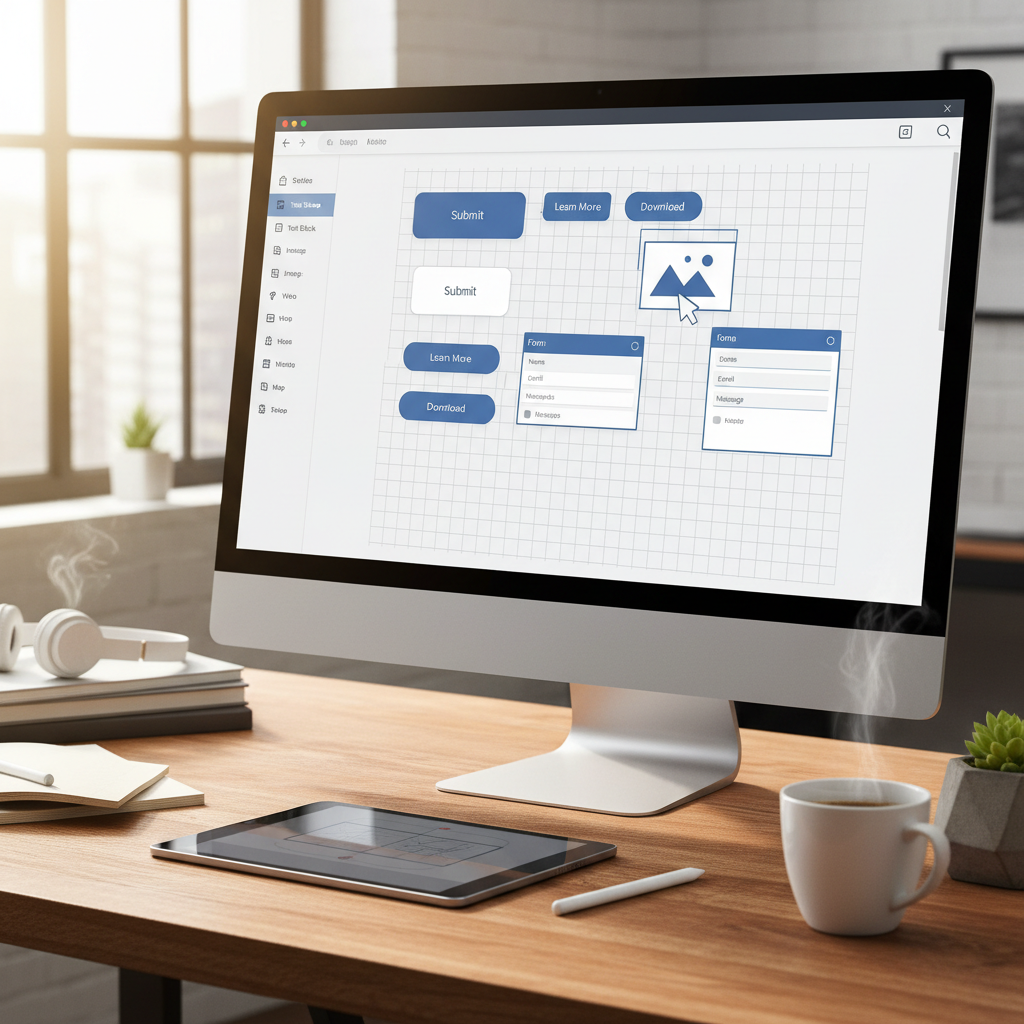
No-code tools work the same way. They replace lines of text with visual blocks that represent logic. You connect these blocks to define what happens-like "when a user submits a form, send an email." You are programming the logic without writing the syntax.
Call a Pro If: Your idea becomes a massive success. No-code is great for starting out, but scaling to millions of users may require hiring developers for a custom solution.
Why This Matters for Your Career
The professional world values results, not how hard you worked. A client or employer cares that a landing page works and looks professional, not whether you hand-coded it for 40 hours or built it in 4 hours with a no-code tool.
Mastering no-code tools makes you a "Full-Stack Operator." You can design the front-end, manage the database, and automate workflows yourself. This makes you incredibly valuable as a one-person product team, whether you're in marketing, operations, or starting your own business.
Your Essential Digital Toolkit: The Core Stack
You don't need to learn every tool. Focus on a reliable "stack" that covers the three layers of any application.
The Interface (Frontend)
This is what users see and interact with. - Websites: Tools like Webflow or Framer let you build professional, responsive websites that look custom-coded. - Mobile Apps: Platforms like FlutterFlow or Glide allow you to build and publish native apps to the Apple App Store and Google Play Store.
The Brain (Backend and Database)
This is where your app's data lives and is managed. - Airtable: Perfect for beginners. It looks like a spreadsheet but acts like a powerful relational database. You can link records and store files. - Xano: For more advanced needs, offering enterprise-level power to handle complex logic and API creation.
The Glue (Automation)
This connects your different apps and services together. - Make (formerly Integromat) or Zapier: These tools automate workflows. For example, "When a form is submitted on my website, add the data to Airtable and send a welcome email."
A Professional Framework: The B.U.I.L.D. Method
Jumping straight into a tool leads to messy results. Follow this structured approach to build like a professional.

B - Blueprint (Paper Prototyping)
Never start on the computer. Sketch every screen of your app on paper first. Draw arrows showing what happens when buttons are clicked. This solves logic problems before you get distracted by design.
U - User Database (Data Architecture)
Decide what data you need to save and how it connects. If building a job board, you need a "Users" table and a "Jobs" table, linked so one recruiter can post many jobs.
I - Interface Design
Now, open your front-end tool (like Glide or Bubble). Build the visual shell by placing buttons and text boxes according to your paper blueprint. Don't connect anything yet.
L - Logic and Wiring
This is where the magic happens. Connect your visual interface to your database. Tell the app: "When the 'Submit' button is clicked, take this text and create a new record in the database."
D - Debug and Deploy
Test everything. Ask a friend to use it without instructions and watch where they get confused. Fix those issues, then hit "Publish."
A Real-World Example: Building a Campus Marketplace
Let's apply the B.U.I.L.D. method to a practical problem: students need a better way to buy and sell textbooks and furniture.
The Solution: A dedicated Campus Marketplace app, built in about 4 hours for $0.
- Blueprint: We sketched three screens: a browse page, a form to post items, and a detail page to contact the seller.
- User Database (in Airtable): We created two tables: "Items" (with name, photo, price) and "Users" (with name, email).
- Interface & Logic (using Softr or Glide): We connected Softr to our Airtable. We dragged a list to show items and a form to post new ones, wiring the form to add rows to the "Items" table.
- Deploy: We published the app, shared the URL, and had a working marketplace.
DIY Is Usually Safe Only If: You are validating an idea or solving a small-scale problem. It's perfect for prototypes and MVPs (Minimum Viable Products).
Thinking in "APIs" for Advanced Features
Once you master the basics, you can connect your app to the wider internet using APIs (Application Programming Interfaces). Most no-code tools allow you to make API calls.
For example, you could build an app that takes a user's text prompt, sends it to an AI image generator like OpenAI's DALL-E via an API, and displays the created image back in your app. This turns a simple app into an intelligent, connected tool.
The Founder's Perspective on No-Code
A common insight from entrepreneurs is that "perfect is the enemy of shipped." Many waste time looking for a technical co-founder when they could start building themselves.
When evaluating talent, a portfolio of apps built with no-code tools like Bubble is often more impressive than a theoretical certificate. It shows grit, understanding of the full product lifecycle, and the ability to actually ship a solution. Don't wait for permission; build it yourself.
Future Career Trends: The Citizen Developer
By 2026, the line between "technical" and "non-technical" roles will blur. We are entering the era of the Citizen Developer.
- Operations Managers as App Builders: They won't just manage spreadsheets; they'll build custom internal tools (like a CRM) in an afternoon to fit exact workflows, commanding a higher salary.
- Rapid Prototyping as a Standard Skill: Marketing teams will build and test their own landing pages without waiting for IT, making "speed to market" a key skill.
- AI-Assisted No-Code: The future is "Text-to-App." You'll describe what you need in plain English, and AI will construct the database and interface. Your role shifts to architect and strategist.
Common Pitfalls to Avoid
No-code is powerful but not magic. Be aware of these common traps.
Trap 1: Platform Lock-in If you build your entire business on a small, niche platform that shuts down, you could lose everything.
- Solution: Stick to major, established players like Webflow, Bubble, or Microsoft Power Apps that allow you to export your data and logic.
Trap 2: Ignoring Scalability No-code is excellent for your first 10,000 users but may struggle at 1 million.
- Solution: Use no-code to validate your idea and get paying customers. Use the revenue to hire developers to migrate to a custom solution if you scale massively.
Trap 3: Over-Complicating the MVP Just because you can add many features doesn't mean you should.
- Solution: Focus on a Minimum Viable Product that solves one core problem exceptionally well.
Do Not Ignore: Scalability limits. Have an exit plan from your no-code platform before you grow too large.
The primary "cost" for no-code development is your time and the subscription fees for the platforms you use.
- Typical Cost Range: Many projects can start for $0 using the free tiers of tools like Airtable, Glide, or Softr. These tiers are often sufficient for prototypes and small-scale apps.
- What Changes the Price: Costs increase as you need more features, higher usage limits (like more database records or app users), premium templates, or custom domains. Subscription fees for professional plans typically range from $20 to $50+ per month per tool.
- Labor Charges: There is no traditional "labor" cost unless you choose to hire a freelance no-code developer to build for you. The primary investment is the time you spend learning and building.
When DIY is Safe and Effective: - You are validating a b
When DIY is Safe and Effective:
- You are validating a business idea or building a prototype.
- You are solving a personal or small community problem (like the campus marketplace).
- You have the time and willingness to learn the visual logic of the tools.
- Your project is within the scale limits of the no-code platform's plans.
Tools/Skills Needed for DIY:
- Logical problem-solving ability.
- Basic comfort with computers and web applications.
- Access to a computer and internet.
- Time to follow tutorials from the platform's learning resources.
When to Call a Licensed Professional (Developer):
- Your no-code app has successfully scaled and is hitting performance limits.
- You need deep, custom functionality that no-code platforms cannot provide.
- Your application handles sensitive financial or medical data requiring specific, audited security.
- You are building a large, mission-critical enterprise system.
Warranty & Safety Risks of DIY:
- The main risk is data loss or platform dependency. If a platform shuts down and you can't export your data, your app is gone.
- Ensure you use platforms that provide data export functionality as a form of "warranty" for your work.
Your first point of contact should always be the official support and learning resources of the no-code platform you are using. Before spending money or time, explore:
- The platform's own documentation and help center.
- Official tutorial sites (like Webflow University).
- The platform's user community forums, where many common questions are already answered.
If you need hands-on help building, you can search for freelance "no-code developers" on marketplaces. For scaling beyond no-code, you would then contact traditional software development agencies or hire in-house developers.
The SOURCE does not provide specific phone numbers, URLs, or direct contact details for the mentioned tools (Webflow, Bubble, Airtable, etc.). You must find these yourself.
Important Verification Step: Always go directly to the official website of the tool you choose. Search for "[Tool Name] official site" to avoid impostor sites. Look for their "Support," "Help Center," or "Contact" pages for legitimate resources.
Key Platforms to Research:
- Webflow
- Bubble
- Airtable
- Xano
- Make (Integromat)
- Zapier
- FlutterFlow
- Glide
- Softr
- Microsoft Power Apps
Since you are building the app yourself on a third-party platform, "warranty" relates to your ability to recover your work and data.
- Document Your Access: Ensure you always have login credentials for your accounts on all no-code platforms and connected services (e.g., Airtable, your domain registrar).
- Regularly Export Your Data: Use the platform's export functions to download backups of your database (e.g., export Airtable bases as CSV files) and any critical project files, if the platform allows it.
- Understand the Terms of Service: Read the platform's terms regarding data ownership, portability, and what happens if they discontinue service.
- For Subscription Refunds: If you need to cancel a paid plan and request a refund, contact the platform's official support through their help desk, providing your account details and invoice/receipt.
State-Specific or Local Checks
The SOURCE does not mention specific state or local agencies related to no-code development. This field is primarily relevant for licensed trades like plumbing or contracting.
However, a general rule applies: if your no-code app evolves into a formal business, you must check with your local city or county clerk's office and your state's business registration office to understand requirements for business licenses, sales tax collection, and any other relevant regulations.
If you decide to hire a freelance no-code developer or an agency, ask these questions:
- Can you show me examples of apps you've built with this specific platform?
- What is your process for ensuring I retain ownership of the data and can access the project?
- Do you build in a way that allows for data export and migration?
- What is the ongoing cost for the platform subscriptions after you hand off the project?
- What is your post-launch support and troubleshooting policy?
A developer or platform that does not allow you to expor
- A developer or platform that does not allow you to export your own data.
- A platform that is very new, has few users, and lacks a clear path for data portability.
- Pressure to build many complex features before proving the core idea works.
- A freelancer who cannot explain the basic logic of how they will structure your app's database.
Practical Step-by-Step Guidance
Before You Start Building: 1. Identify a Small Problem: Choose a simple, clear problem in your daily life or work to solve. 2. Sketch the Solution: Use the B.U.I.L.D. method's Blueprint phase. Draw your app on paper. 3. Pick One Tool: Based on your sketch, choose one front-end tool to start with (e.g., Glide for a simple app, Webflow for a website). 4. Use Free Resources: Go to that tool's official website and complete their beginner tutorial. 5. Build the MVP: Follow the U, I, L, D steps. Build only what's necessary to solve the core problem. 6. Share and Get Feedback: Give your live app to a few friends and ask for honest feedback.
Frequently Asked Questions
Do I own the app I build with a no-code tool? You typically own the data you put into it, but the application itself runs on the platform's infrastructure. Always check the platform's Terms of Service for specifics on ownership and intellectual property.
Can I really publish an app to the Apple App Store with no-code? Yes, tools like FlutterFlow and Glide provide pathways to generate the necessary code packages for submission to the App Store and Google Play Store, handling much of the technical complexity for you.
Is no-code only for simple apps? No. While great for simple apps, modern no-code tools can build complex, database-driven applications like marketplaces, internal business systems, and full SaaS (Software as a Service) products.
What happens if the no-code platform I use shuts down? This is the risk of platform lock-in. If you cannot export your data and logic, you could lose everything. This is why it's critical to use platforms with export features and to take regular backups.
How long does it take to learn no-code? You can build a basic, functional app in a weekend by following a good tutorial. Mastering the tools to build complex applications takes longer, similar to learning any new professional skill.
Will no-code replace developers? No. It empowers more people to build software. Developers will increasingly focus on complex, large-scale systems, AI integration, and migrating successful no-code prototypes to custom-built platforms.
This article is based on a factual source document about no-code development trends and methodologies in 2026. The source discusses tools, frameworks, and career impacts but does not list specific contact numbers or URLs.
Important Verification: The digital tool landscape changes rapidly. Before committing to any platform or spending money:
- Re-check the official websites of tools like Webflow, Bubble, and Airtable for their latest pricing, terms of service, and data portability policies.
- Verify current platform capabilities, as features are updated frequently.
- Consult with a business advisor or legal professional if you are building an app for a formal business to ensure compliance with all regulations.
No-code tools are a powerful way to bring your ideas to life and enhance your career. They democratize creation, allowing logic and vision to be the primary skills. However, always ensure you have a plan for your data and understand the limitations of the platforms you use.
For business-critical applications, consider consulting with a software professional to review your architecture. Start small, validate your idea, and enjoy the journey of building something yourself. Your future as a creator starts with a single sketch and the courage to begin.

About the TDL Expert Panel
TDL Expert Panel · TheDigitalLife Editorial Team
TDL Expert Panel is the editorial team behind TheDigitalLife. The team researches, reviews, and creates practical guides to help everyday readers make better decisions about home repair costs, refunds, AI tools, digital safety, productivity, and useful online resources. Each guide is written to be clear, useful, and easy to understand.