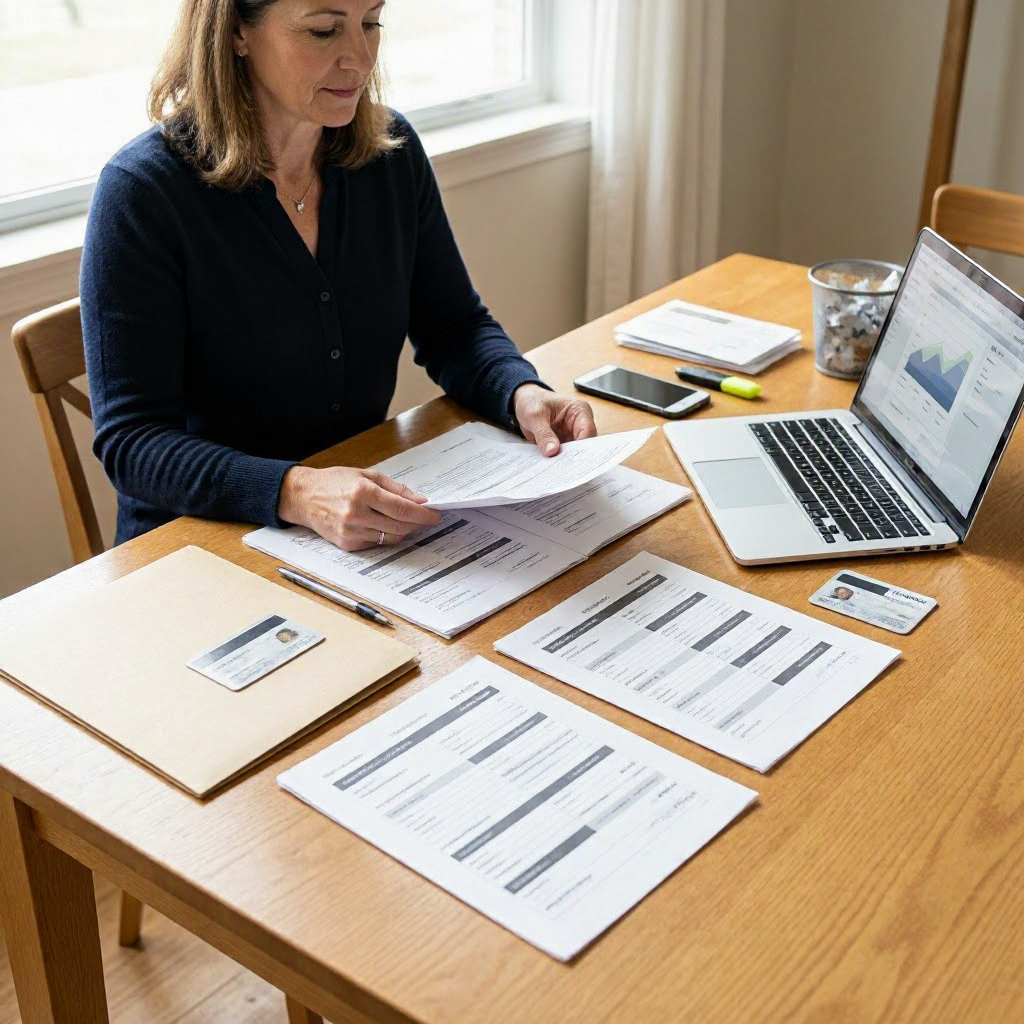
Mixed credit file: what to do when someone else's info is on your report
What Is a Mixed Credit File?
A mixed credit file happens when information that does not belong to you appears on your credit report. This could include someone else's accounts, addresses, inquiries, or personal details mixed in with your own. It differs from simple errors like wrong balances, as entire accounts or profiles from another person show up under your name or Social Security number.
Under the Fair Credit Reporting Act (FCRA), credit bureaus must ensure accurate information. A mixed file can lower your credit scores, lead to denied credit applications, or cause higher interest rates on loans. Rules and policies can vary, so check your credit reports carefully.
This is general information, not personalized financial or legal advice. Credit impact depends on the situation.
Why Mixed Files Happen
Mixed credit files often result from data handling errors at credit bureaus or information furnishers like banks and lenders. Common causes include:
- Similar names or addresses: People with the same or similar names living at the same address at different times can lead to merged files.
- Shared Social Security numbers: Typographical errors when entering Social Security numbers (SSNs) can link accounts incorrectly.
- Family members: Spouses, parents, or children sharing households might have data cross-over, especially if using the same address.
- Identity theft: Fraudsters using your SSN to open accounts, blending their activity into your file.
- Clerical mistakes: Banks or furnishers reporting data with mismatched identifiers, like partial SSNs or birthdates.
Less common triggers include deceased relatives' data merging or errors during credit report merges by bureaus. Regardless of the cause, you have rights to dispute inaccuracies.
How to Check Your Credit Reports for a Mixed File
Start by getting your free credit reports to spot issues. By law, you can access weekly reports from each major bureau via AnnualCreditReport.com. This site is the only federally authorized place for free reports.
Steps to Pull Your Reports
- Visit AnnualCreditReport.com from a secure device.
- Provide your name, address, SSN, and birthdate. No credit card needed.
- Request reports from Equifax, Experian, and TransUnion separately.
- Review online, print, or save PDFs immediately.
Check all three bureaus, as errors may appear on one or more. Credit scores vary by model and bureau, so focus on the report details first.
Key Sections to Review
Scan these areas for unfamiliar information:
| Credit Report Section | What to Look For | Why It Matters |
|---|---|---|
| Personal Information | Names, addresses, phone numbers, SSNs, birthdates | Mismatched details suggest mixing with another person. |
| Accounts/Trades | Account numbers, lenders, balances, payment history | Unknown open or closed accounts could belong to someone else. |
| Inquiries | Hard inquiries from lenders | Recent inquiries you did not authorize. |
| Public Records | Bankruptcies, judgments, liens | Items not yours, like from another state. |
| Collections | Debt collectors, amounts owed | Unrecognized debts listed under your name. |
Print or screenshot each report before disputing. Note dates, page numbers, and exact wording of suspicious items. Keep records of your login confirmation from AnnualCreditReport.com.
First Steps If You Spot Someone Else's Info
Do not panic. Act methodically to protect your credit.
- Verify it's not yours: Cross-check against your records, like bank statements or old leases. Confirm with family if shared addresses are involved.
- Document everything: Save the full credit reports, highlighting errors. Note your score if available and any denied credit letters mentioning the file.
- Check for fraud signs: Look for new accounts, addresses you never used, or inquiries from unfamiliar lenders. If suspicious, place a fraud alert via one bureau (it notifies all three) or consider a credit freeze.
- Avoid new credit applications until resolved, as they could add inquiries.
Contact the bureau online or by mail only through official channels. Use numbers from your credit report or AnnualCreditReport.com, not search results or pop-up ads.
The FCRA Dispute Process Explained
The FCRA requires credit bureaus to investigate disputes within 30 days (45 if you provide more info). They must notify furnishers and correct or delete unverifiable information.
You can dispute online, by phone, or mail. Online is fastest for simple errors, but mail provides a paper trail for mixed files.
Disputing with Credit Bureaus
Each bureau has a dedicated process:
- Equifax: Online at equifax.com/personal/credit-report-services or mail to Equifax Information Services LLC, P.O. Box 740256, Atlanta, GA 30374.
- Experian: Online at experian.com/disputes or mail to Experian, P.O. Box 4500, Allen, TX 75013.
- TransUnion: Online at transunion.com/credit-disputes or mail to TransUnion Consumer Solutions, P.O. Box 2000, Chester, PA 19016.
Prepare your dispute:
- Include your full name, address, SSN, and birthdate.
- List specific errors with report dates/pages.
- Attach copies (not originals) of ID (driver's license), SSN card, utility bills, or account statements proving the info is not yours.
- Request a corrected report and note if it's a mixed file.
Send certified mail with return receipt for proof of delivery. Keep copies of everything.
Sample Credit Report Dispute Letter
Use this as a template, customizing for your details. Send to all affected bureaus.
``` [Your Name] [Your Address] [City, State, ZIP Code] [Date]
[Credit Bureau Name] [Credit Bureau Address]
Re: Dispute of Inaccurate Information on Credit Report Account Number: [Your file number from report] SSN: [Last 4 digits only]
Dear Sir or Madam,
I am writing under the FCRA to dispute inaccurate information on my credit report dated [report date]. The following items do not belong to me:
- [Account name/lender], Account # [number], opened [date] - This is not my account.
- [Address or other detail] - I have never lived at this address.
Enclosed are copies of my driver's license, utility bill, and [other proof] confirming my identity.
Please investigate, delete these items, and send me an updated report. Provide the furnisher's contact info if they verify the data.
Thank you.
Sincerely, [Your Name] [Phone Number] [Email] ```
Track your submission: Note the date sent, certified mail number, and any confirmation emails.
Disputing with the Information Furnisher
Bureaus forward disputes to furnishers (e.g., your bank or lender). If the bureau says the furnisher verified the info, contact the furnisher directly.
- Find their address/phone on your credit report or their website.
- Send a similar dispute letter, including bureau investigation results.
- Ask for written confirmation of deletion.
Furnishers have 30 days to respond. Repeat with each affected furnisher.
Timelines, Results, and Follow-Up
Expect results in 30-45 days. Bureaus must mail:
- Updated reports (free to you and anyone who got your report in the last six months).
- A summary of what happened.
- Furnisher contact if not deleted.
If no response or denial:
- Review results for accuracy.
- Add a 100-word statement of dispute to your file (via bureau).
- File a complaint with the Consumer Financial Protection Bureau (CFPB) at consumerfinance.gov/complaint.
- Consider the FTC at ftc.gov if identity theft.
Re-check reports 30 days after disputes. Scores update gradually as bureaus refresh data.
When a Mixed File Signals Identity Theft
If new accounts or inquiries appear, it may be fraud. Immediate actions:
- Place a fraud alert: Free for one year (extendable); contact one bureau.
- Freeze your credit: Free; prevents new accounts. Lift temporarily for legit applications.
- Report to FTC: Visit IdentityTheft.gov for a recovery plan and police report if needed.
- Notify banks/creditors: Close compromised accounts; open new ones.
- Monitor accounts: Change passwords, enable alerts.
Even non-theft mixes can mimic fraud, so err on caution. Do not share SSN or codes with callers claiming to help.
Preventing Future Mixed Files
Protect your data proactively:
- Regular checks: Pull reports yearly or after big events like moves or new credit.
- Freeze credit: Especially after errors.
- Unique identifiers: Use different emails/phones for financial accounts.
- Shred documents: Destroy statements with SSN.
- Watch for scams: Ignore "credit repair" offers promising instant fixes. Legit repair takes time.
Build credit steadily with on-time payments and low utilization.
Special Situations and Extra Help
Family or Spouse Mix-Ups
Joint accounts are fine, but solo accounts should not mix. Provide proof like marriage certificates or separate leases.
Deceased Relative Data
Bureaus sometimes merge files. Submit death certificates to remove.
Ongoing Issues
If disputes fail repeatedly, consult nonprofit credit counseling via nfcc.org or legal aid. A qualified professional can review complex cases.
State resources: Check your state attorney general for consumer protection.
Documents to Keep for Mixed File Disputes
Strong records speed resolutions:
| Document Type | Examples | Why Keep It |
|---|---|---|
| Credit Reports | Full PDFs from AnnualCreditReport.com | Baseline proof of errors. |
| ID/Proof | Driver's license, utility bills, SSN card copies | Verifies your identity. |
| Correspondence | Dispute letters, certified mail receipts, bureau responses | Timeline of actions. |
| Account Proof | Bank statements, loan docs showing your real accounts | Contrasts wrong info. |
| Denied Credit | Lender letters citing your score/report | Shows harm caused. |
Store digitally and in print. Note rep names, dates, case numbers from calls.
Common Mistakes to Avoid
- Using unofficial sites: Stick to AnnualCreditReport.com and bureau sites.
- Phone-only disputes: Lack paper trail.
- Ignoring furnisher step: Bureaus rely on them.
- Sharing sensitive info: Never with unsolicited callers.
- Expecting instant fixes: Processes take weeks.
Credit repair companies often charge for what you can do free. Verify claims.
Resources for More Support
- AnnualCreditReport.com: Free weekly reports.
- CFPB: consumerfinance.gov/consumer-tools/credit-reports-and-scores – Dispute guidance.
- FTC IdentityTheft.gov: Fraud recovery.
- Bureau sites: equifax.com, experian.com, transunion.com for freezes/alerts.
This is general educational information. Rules vary by situation. Check official sites and consult professionals for your case. Consistent monitoring keeps your credit accurate.

About the TDL Expert Panel
TDL Expert Panel · TheDigitalLife Editorial Team
TDL Expert Panel is the editorial team behind TheDigitalLife. The team researches, reviews, and creates practical guides to help everyday readers make better decisions about home repair costs, refunds, AI tools, digital safety, productivity, and useful online resources. Each guide is written to be clear, useful, and easy to understand.