
Mastering the Future: Why Skill Development is Essential in 2026
The professional world is shifting beneath our feet. If you want to secure your career and thrive in the coming years, you can't rely on what you learned years ago. This article will help you understand the powerful forces making continuous learning essential and provide a clear, practical plan to build the skills that will define success in 2026 and beyond.
You'll learn why the old rules no longer apply, discover the specific skills that offer the highest return on your time, and get actionable steps to weave learning into your busy life. This isn't about going back to school; it's about building a simple, sustainable habit that protects your paycheck and opens new doors.
If you aren't actively building new skills, you are effectively regressing in your career. The shelf life of technical skills is now often less than five years, and in fast-moving fields, it can be as short as 18 months. Your ability to learn quickly-your Learning Quotient-is now more valuable to employers than a high IQ or even past experience. To stay competitive, you must adopt a mindset of "permanent beta," treating every project as a chance to learn.
This article will guide you through: - Why your current skil
This article will guide you through:
- Why your current skills are depreciating
- The two major forces reshaping work
- The four highest-value skill areas to focus on
- How to build a sustainable learning habit
- Key FAQs on navigating career growth
| Item | Detail |
|---|---|
| Best first contact | Your own manager or HR for professional development budget access. |
| Main safety warning | Do not ignore the risk of your skills becoming obsolete. An unskilled workforce is a corporate liability and a personal career risk. |
| When to call a licensed professional | For deep technical skill development, seek out specialized certification courses or mentors in that field. |
Who should I call first
- Who should I call first? Start with your own company's HR department or your direct manager to inquire about available professional development funds.
- What will it cost? Costs vary widely, but many skills can be developed through free resources, company-sponsored courses, or affordable online certifications.
- What proof is needed for warranty? For career advancement, build a "portfolio of learning" that includes a degree, recent certifications, and proof of applying skills to real projects.
- What are the warning signs? You are at risk if you haven't learned a new tool or methodology in the last two years, or if you feel your daily work could be easily automated.
- When should I avoid DIY? When a skill is critical for a promotion or major project, or requires official certification, investing in a structured course or mentor is wise.
| Main customer question | Best first contact | Important URLs/Warning |
|---|---|---|
| How do I start upskilling? | Internal manager or HR for training budgets. | The shelf life of a technical skill is often less than five years. In software or digital fields, it can be 18 to 24 months. |
| What skills should I learn? | Industry forums, professional communities. | Focus on Data Literacy, Emotional Intelligence, Adaptability, and Digital Ethics. |
| How do I stay updated? | Three key industry newsletters or thought leaders. | Without active upskilling, your expertise depreciates while you sleep. |
The ROI of Permanent Beta
Investing in your own skills is the only asset that can't be automated or outsourced. This commitment future-proofs your earning potential. You must move from a "once-and-done" education model to a "permanent beta" state. This means treating every project as a classroom and every challenge as a curriculum update.
Practical Tip: Conduct a personal "Skill Audit" every six months. List the tools and methods you use daily. Research which ones are becoming obsolete and identify one "emerging" skill to replace an "aging" one.
Call a Pro If: A skill is critical for a major career move. Investing in a recognized certification course is often the fastest, most credible path.
The Forces Reshaping the Global Workforce
Two major, permanent changes are making continuous learning mandatory for career survival.
The Maturation of AI and Automation
By 2026, AI handles the first 60% of cognitive work like drafting and basic analysis. The human worker is responsible for the critical final 40%: strategy, ethics, and nuance. If you aren't learning to integrate AI tools, you work at half-speed compared to those who do.
Professionals now need technical literacy to manage AI while focusing on uniquely human skills like empathy and strategic reasoning. Success depends on learning to write complex prompts, vet AI output, and manage automated workflows.
The Hybrid-Global Talent Pool
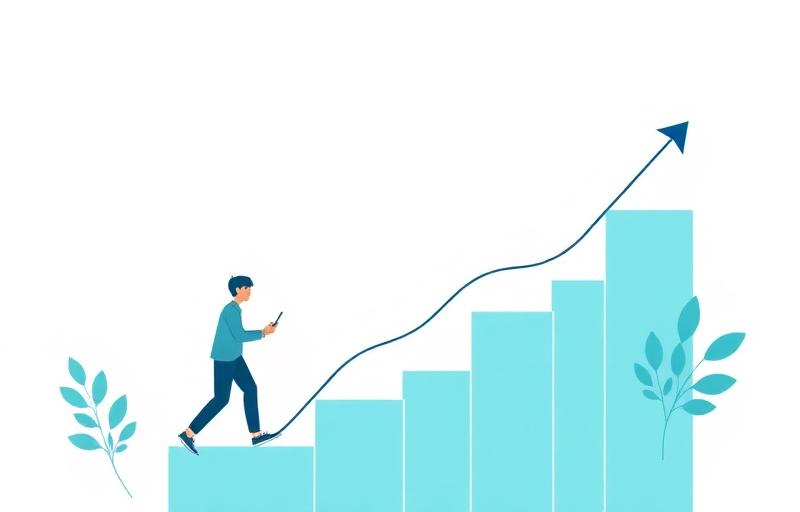
Geography no longer protects your job. Most knowledge-based roles are open to a global talent pool. You are competing with the best minds worldwide, often at different price points. To compete, you need a specialized niche or a rare combination of skills.
Cross-disciplinary expertise is the new standard. Think data science with behavioral psychology, or supply chain management with sustainability ethics. "T-shaped" professionals-deep in one area, fluent in several others-are thriving while generalists are squeezed.
Do Not Ignore: You are competing with professionals globally who may use AI more effectively. Your competition is other augmented humans, not the AI itself.
High-Value Skills for the Current Economy
Focus your energy on these foundational pillars that support any career path.
1. Data Literacy and Algorithmic Thinking
You don't need to be a data scientist. Every department runs on analytics. Understanding how to interpret data, spot biases in algorithms, and make evidence-based decisions is a baseline requirement. - Actionable Step: Learn the basics of SQL or a data visualization tool like Tableau or PowerBI. This lets you speak the language of modern leadership.
2. Emotional Intelligence (EQ) and Collaborative Leadership
As AI handles analysis, "soft" skills become the "hard" skills. Leading diverse teams, resolving conflict, and building trust is more valuable than ever. Humans provide the glue for automated systems and remote teams. Building psychological safety is a skill no algorithm can replicate.
3. Adaptability and Cognitive Flexibility
The ability to switch gears without stress is a massive advantage. It means seeing multiple solutions and being willing to discard old methods. This is the core of the Learning Quotient (LQ).
4. Digital Ethics and Cybersecurity Awareness
With deepfakes and automated scams, every employee is a front-line defender. Understanding AI ethics and data privacy basics is a core competency for anyone handling information, not just the IT department.
How to Build a Sustainable Learning Habit
You don't need to go back to school. Micro-learning is often more effective. Dedicating 30 minutes a day to a new skill adds up to hundreds of hours of progress per year. View learning as a core part of your job, not an extra task.
Use the Rule of Three
- Read: Follow three industry newsletters or thought leaders for trends.
- Practice: Spend 15 minutes daily using a new tool or technique.
- Network: Join one professional community or forum to discuss skills with peers.
Practical Advice: Use a mix of formats. Listen to podcasts during your commute, take a weekend certification course, or volunteer for a cross-functional project at work. Consistency beats intensity. Learning a little daily is better than binging a long course once a year.
Leverage Professional Development Budgets
Many companies have untapped training budgets. In 2026, forward-thinking organizations see an unskilled workforce as a liability. Don't wait for suggestions. Bring your manager a proposal for a certification that solves a current team problem.
Warranty Documents Needed: For career advancement, your "portfolio of learning" should include your degree, recent certifications, and a track record of applying skills to real projects.
When DIY Learning May Be Safe: - Exploring a new field t
When DIY Learning May Be Safe:
- Exploring a new field through free online resources.
- Building basic familiarity with a common tool (e.g., data visualization software).
- Following industry news and trends through curated content.
Tools/Skills Needed for DIY:
- Self-discipline and time management.
- Ability to find and evaluate quality free or low-cost online resources.
- A notebook or digital tool to track progress and insights.
When to Invest in a Pro Service (Structured Course/Mentor):
- The skill is critical for a promotion or key project.
- You need an official, recognized certification for credibility.
- You've hit a plateau with self-study and need expert guidance.
- The topic is complex and requires structured, sequential learning.
Warranty & Safety Risks of DIY Only:
- You may miss key industry-standard practices.
- Your self-taught knowledge may not be recognized by employers.
- You risk spending time on outdated or incorrect information without expert vetting.
Your first contact should almost always be within your own organization. Start with your direct manager or your company's Human Resources department. They can inform you about existing professional development budgets, approved training providers, and skills that are strategically valuable to the company. This internal step is cost-effective and aligns your growth with organizational goals.
For skills your company doesn't support, or for independent career development, your next contacts are professional communities, industry forums, and recognized online learning platforms. These networks provide peer advice and access to quality courses.
What to Ask Before Paying for a Course or Certification
Before you spend any money or significant time, ask these questions:
- Is this certification or skill recognized and valued in my target industry or company?
- What is the total cost, including any exam fees or required materials?
- Who is the instructor or provider, and what is their real-world experience?
- Can I see a detailed syllabus or learning objectives?
- Is there a money-back guarantee or a free trial period?
- What kind of support or community access is included?
- Does this course provide practical, project-based learning or just theory?
Be cautious if you encounter these warning signs: - A course
Be cautious if you encounter these warning signs:
- A course or program guarantees a job or a specific salary increase upon completion.
- The skill being taught has a well-known shelf life of less than two years and the course doesn't teach underlying principles.
- The provider has no verifiable reviews from past students or connections to recognized industry bodies.
- The cost seems extremely high compared to similar, well-rated offerings.
- The program focuses only on theory with no practical application or portfolio-building projects.
- You feel pressure to sign up immediately due to a "limited time" offer.
Practical Step-by-Step Guidance
Follow these steps to start your skill development journey today.
- Conduct a Skill Audit. List the core tools and methodologies you use in your current role. Honestly assess how long you've been using them.
- Research Obsolescence. Spend an hour searching for industry reports or talking to peers about which of your listed skills are declining in demand.
- Identify One Emerging Skill. Choose one new area to learn that replaces an aging skill or fills a gap in your "T-shaped" profile.
- Explore Free Resources First. Use platforms like YouTube, industry blogs, and free course trials to get a basic feel for the topic.
- Propose a Formal Option. If the skill is important, find a reputable certification or course. Draft a short proposal for your manager on how it benefits the team.
- Schedule Micro-Learning. Block 15-30 minutes in your daily calendar for focused practice or study. Treat this time as a non-negotiable meeting.
- Apply Immediately. Look for a small, low-risk way to use your new knowledge at work or in a personal project within the first week of learning.
Frequently Asked Questions
What is the 'Learning Quotient' and why does it matter?
The Learning Quotient (LQ) measures your desire and ability to grow and adapt. In 2026, it's often more important than IQ because it determines how fast you can pivot as technology changes. A high LQ means you're comfortable being a "beginner" multiple times in your career.
Can AI replace the need for human skill development?
No, AI increases the need for skill development. AI handles repetitive tasks, so humans must develop higher-level skills to oversee, refine, and provide creative direction. You aren't competing with AI; you're competing with other humans who use AI more effectively than you do.
Which skills have the longest 'shelf life' today?
Soft skills like critical thinking, leadership, empathy, and adaptability have the longest shelf life. While specific software or coding languages change, the ability to solve complex human problems and manage change remains constant.
How do I find time to upskill while working full-time?
Use "habit stacking." Listen to educational content during a workout or commute. Replace 20 minutes of social media scrolling with an industry newsletter. Small, daily increments of 15–30 minutes are more effective for long-term retention than infrequent, long study sessions.
Is it better to be a generalist or a specialist in 2026?
The most successful are "T-shaped." They have broad understanding across several fields (the top of the T) but deep, expert-level knowledge in one specific, high-value area (the stem of the T). This allows for cross-department collaboration while remaining the "go-to" expert.
Are traditional degrees still worth the investment?
Degrees provide foundational value and networking, but are no longer sufficient alone. Recruiters now look for a "portfolio of learning"-a combination of a degree, recent certifications, and proof of applying skills to real-world projects.
This article is based on industry analysis of workforce trends for 2026. The primary factual source includes internal references to supporting guides on "Growth Mindset Strategies," "AI Literacy for Non-Tech Professionals," and "Emotional Intelligence in Remote Teams."
Always verify the current relevance of any specific skill or tool mentioned. Professional requirements and technology evolve rapidly. Before enrolling in any paid program, check for the most recent student reviews and confirm the certification's recognition with employers in your desired field. Consult with your HR department for the most up-to-date professional development policies at your company.
The most successful professionals of 2026 are not those who knew everything at graduation, but those who never stopped being students. The pace of change creates unprecedented opportunities for those willing to evolve.
This information is for educational guidance to help you make informed decisions about your career development. For specific advice on certifications, educational paths, or career planning, consider consulting with a licensed career counselor or coach. Always verify the details of any professional development opportunity with the official course provider and your employer's HR department.

About the TDL Expert Panel
TDL Expert Panel · TheDigitalLife Editorial Team
TDL Expert Panel is the editorial team behind TheDigitalLife. The team researches, reviews, and creates practical guides to help everyday readers make better decisions about home repair costs, refunds, AI tools, digital safety, productivity, and useful online resources. Each guide is written to be clear, useful, and easy to understand.