
Mastering New Skills: The Ultimate Guide to Crafting a Personal Learning Plan
Learning something new is often messy and inefficient. Many of us buy a promising book on a whim, sign up for an online course in a moment of motivation, or scroll through educational content. But without a clear structure, these efforts rarely lead to true mastery. You might end up with a surface-level understanding that vanishes quickly. This guide will help you understand why a structured approach works and how to build your own roadmap to skill acquisition.
When you take charge of your own learning, you stop being a passive consumer. You become the architect of your own growth. We'll walk through the simple steps to create a plan that is realistic, focused, and designed to get you real results. Let's turn your interest into actual ability.
A personal learning plan (PLP) is your strategic roadmap for skill mastery. It moves you from random, passive learning to a focused, structured journey. It does this by clearly defining your goal, mapping the required sub-skills, setting a realistic timeline, selecting the best resources, and including verification methods. It turns the daunting task of learning into a series of manageable steps.
The Anatomy of a Personal Learning Plan: The core pill
- The Anatomy of a Personal Learning Plan: The core pillars that make it work.
- The Strategic Value of a Structured Plan: Why having a plan is more effective than random learning.
- How to Build Your Learning Roadmap: Four practical steps to create your plan.
- Overcoming Common Learning Obstacles: How to handle plateaus and frustration.
- Practical Tips for Staying Consistent: Simple ways to build a lasting learning habit.
| Item | Detail |
|---|---|
| Typical Timeline | 3 to 6 months is optimal for significant progress while staying adaptable. |
| Best First Contact | Use online communities (like Reddit or Discord), open-source syllabi, and expert interviews for guidance. |
| Main Goal | To build a living document that turns vague interests into structured, actionable progress. |
| Key Action | Define a clear, project-based objective and specific verification methods to prove mastery. |
| Primary Risk | Falling into 'tutorial hell' or 'illusion of competence' from passive learning without application. |
Start by auditing your current skills against your goal
- Start by auditing your current skills against your goal. Be brutally honest about your level.
- Focus on one primary skill at a time. Learning too many things at once leads to cognitive overload and poor results.
- Commit to consistent, daily practice. Even 30 focused minutes is better than a marathon session once every few weeks.
- Pivot strategically, not out of boredom. If a skill doesn't serve your goals after a month of structured effort, make a calculated decision to change course.
- Build and share projects early. The shift from theory to practice is where real learning happens.
| Question | Detail |
|---|---|
| Main customer question | How do I systematically learn a new skill to achieve a specific, valuable outcome? |
| Best first contact | Self-assessment and online expert communities (Reddit, Discord, niche forums). |
| Estimated time investment | A sustainable daily practice (e.g., 30-60 min) is more effective than infrequent marathons. |
| Primary resource strategy | Use the 80/20 rule: Find the 1-2 gold-standard resources for each sub-skill. |
| Verification method needed | A portfolio project, certification, or the ability to teach the concept to someone else. |
| Safety warning | Avoid the 'illusion of competence' where reading or watching feels like learning, but you can't apply the skill. |
| Important action | Schedule learning as non-negotiable appointments. If you miss a session, get back on track immediately. |
A personal learning plan's primary "cost" is your time and focus. The SOURCE emphasizes that time is remarkably scarce and must be directed wisely. The real risk is wasting hundreds of hours on passive learning that evaporates within weeks.
The strategic investment is in high-quality resources like books or courses, but you must avoid "source fatigue" by limiting yourself to 1-2 primary resources per sub-skill. The "labor" is the cognitive energy required for deliberate practice. Decision fatigue-spending time choosing what to learn-burns through your focus before you even begin. A good plan front-loads these decisions to save mental energy for the actual work.
This skill development journey is inherently a DIY (Do-It-Yourself) activity. You are the architect of your own plan. However, the SOURCE clarifies the role of professional guidance.
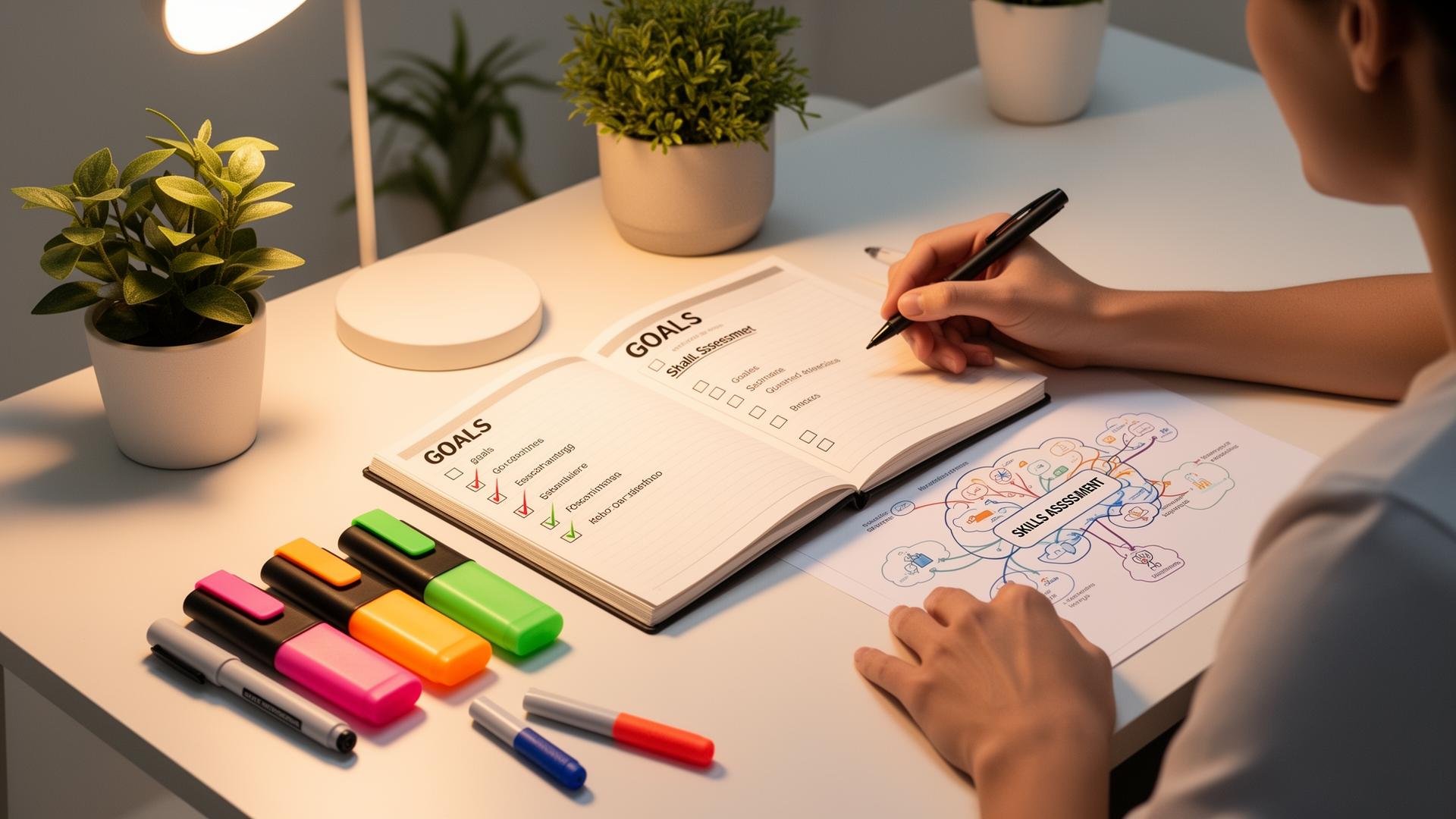
DIY is the standard approach. You can start a PLP on your own using online communities, open-source syllabi, and expert interviews. The required "tools" are a commitment to consistency, a method for note-taking (like a digital garden in Notion or Obsidian), and the discipline to follow your schedule.
Seek a "pro" (mentor) as you advance. A mentor provides invaluable feedback and can shortcut your learning by pointing out common pitfalls. The SOURCE notes that finding a mentor becomes easier once you have demonstrated commitment through self-study. Think of a mentor as an expert consultant for your DIY project, not a requirement to start.
Your first contact should be with yourself for an honest skill audit. Then, turn to curated communities of practice.
Start with online expert communities. Platforms like Reddit or Discord for your specific field of interest are excellent for initial guidance and resource recommendations. You can also seek out open-source syllabi from universities or experts, and listen to expert interviews (podcasts, webinars) to understand the landscape.
Later, seek a mentor. As your plan progresses and you build a portfolio of work, you can reach out to potential mentors. At this stage, you're not asking for a roadmap but for specific feedback, which is a more compelling and respectful request.
For personal learning plans, the "official contacts" are the creators of high-quality, enduring educational resources and the platforms that host learning communities.
- Resource Creators: Seek out authors of 'Lindey-effect' resources-books or courses that have remained relevant for years. These are considered the gold standard in their field.
- Community Platforms: Use forums on Reddit, Discord, or dedicated niche community sites to connect with peers and experts.
- Learning Tools: Utilize digital note-taking tools like Notion, Obsidian, or Roam Research to build a permanent, searchable knowledge base.
Best First Contact: Use online communities and curated expert syllabi to guide your initial resource selection and planning.
In the context of skill development, "verification" replaces a warranty claim. Your plan must include methods to prove mastery to yourself.
- Define your verification method at the start. This is your "proof of completion." It could be a functional portfolio project (e.g., a live website), a recognized certification, or successfully teaching the concept to someone else.
- Build "micro-projects" every two weeks. Don't wait until the end. Create small applications of your knowledge to test your understanding in real-time and reveal gaps.
- Use the Feynman Technique. Try to explain the concept you just learned in simple terms, as if to a ten-year-old. If you can't, you haven't mastered it yet.
- Assess against your original objective. Your plan is "complete" when you have met the specific, verifiable goal you set in Step 1.
State-Specific or Local Checks
While personal learning doesn't involve state licensing in the traditional sense, you should perform "industry-standard" checks.
Check current job descriptions and industry trends. If your goal is career-related, regularly review job postings for the role you're targeting. This ensures the skills in your plan remain in demand. Talk to professionals in the field to understand the real-world application of the skills you're learning. This verifies that your self-directed curriculum aligns with market needs.
Before investing money in a course, book, or other learning resource, ask these questions:
- Is this considered a gold-standard or "Lindey-effect" resource by experts? Has it remained relevant for years?
- Does it offer active challenges (projects, exercises) or is it just passive content? Application is key.
- Is it appropriate for my current skill level? Beware of "expert blindness" where material is too advanced for a beginner.
- Can I find credible reviews or recommendations from within the learning community?
- Does it align directly with a specific sub-skill identified in my competency map?
Be cautious of these common pitfalls in the learning process:
- The Illusion of Competence: Feeling smart from consuming content but being unable to apply it.
- Tutorial Hell: Watching endless videos without ever building anything or solving real problems.
- Source Fatigue: Collecting dozens of resources on one topic instead of deeply engaging with 1-2 of the best.
- Unrealistic Timelines: Creating a plan that doesn't account for your job, family, or other commitments.
- Lack of Verification: Having no concrete way to prove to yourself that you've actually learned the skill.
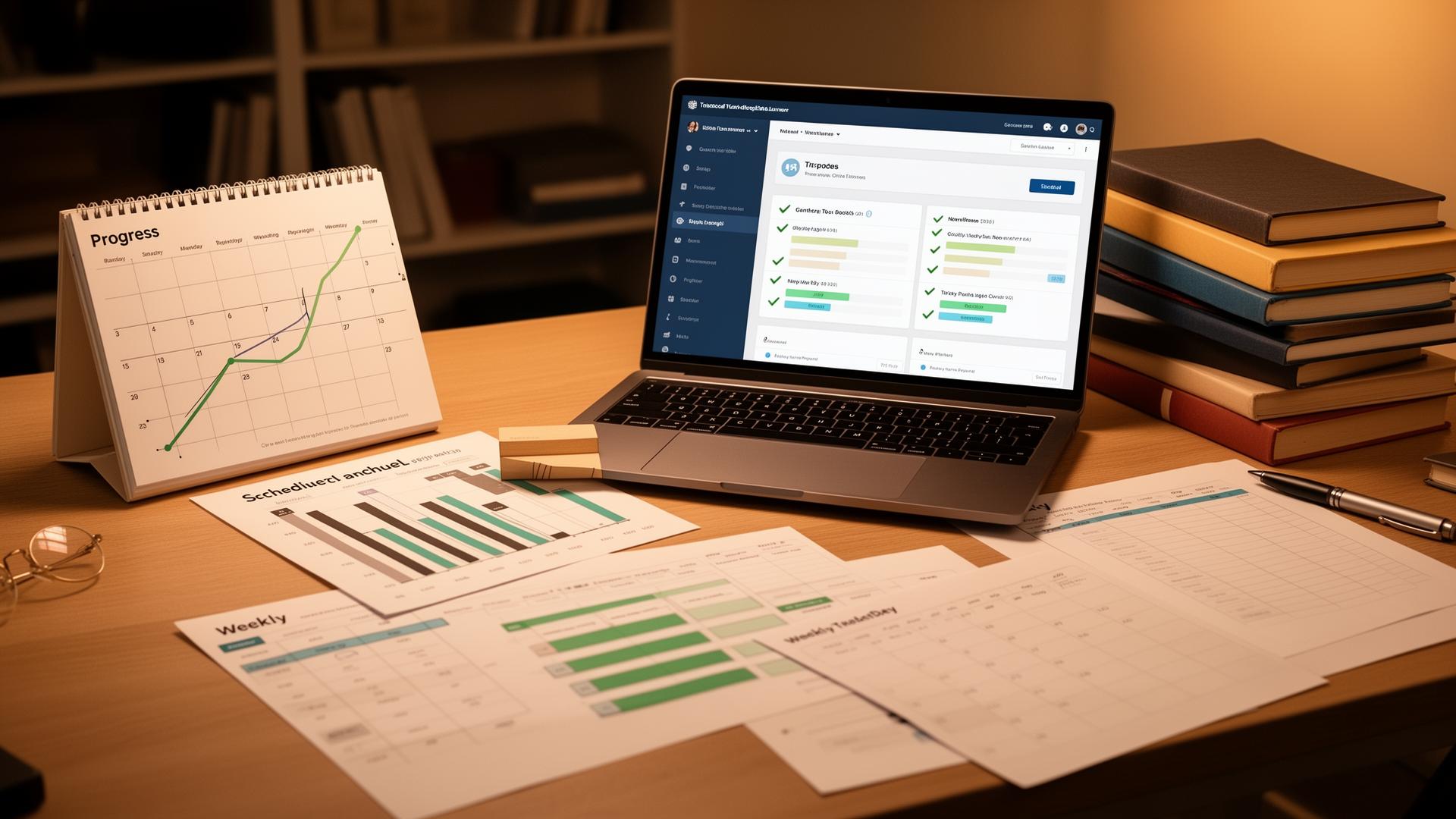
Red Flag: Falling into 'tutorial hell'-consuming endless content without a project to apply it. This is a major sign your plan lacks structure.
Practical Step-by-Step Guidance
Follow these four steps to build an effective personal learning plan.
Step 1: Identify the Skills Gap (The Audit) Work backward from your goal. If you want to be a full-stack developer, study job descriptions. Create a 'Skill Matrix' and grade yourself from 1-5 on each necessary competency. Be brutally honest. The gap between your current scores and the target is where your plan must focus.
Step 2: Curate High-Quality Resources (The Filter) Your job is to filter signal from noise. Don't grab twenty books. Find the two or three that are considered the gold standard. Apply the 80/20 rule: 20% of resources will give you 80% of the understanding. Prioritize resources with active challenges over passive ones.
Step 3: Schedule for Reality (The Execution) Avoid overly ambitious schedules. Look for sustainable pockets of time. Thirty minutes of focused, daily practice is better than a six-hour marathon every two weeks. Use techniques like the Pomodoro method. Treat these time blocks as non-negotiable appointments.
Step 4: Implement the 'Build-Measure-Learn' Cycle Don't wait. Build a small project every two weeks. If learning graphic design, create a movie poster with a specific constraint. This forces you to encounter and solve real problems, cementing knowledge far better than theory alone.
Key Step: Schedule short, daily learning sessions as non-negotiable appointments. Consistency beats infrequent marathons.
Frequently Asked Questions
How long should a personal learning plan be? A good plan usually covers a three to six-month window. This is long enough for significant progress but short enough to adapt to changing trends or interests. Avoid planning for an entire year upfront.
Do I need a mentor to make a plan work? You can start successfully on your own using online communities and expert resources. A mentor provides invaluable feedback and can shortcut learning, but they are not a requirement to begin. Demonstrating commitment through self-study often makes finding a mentor easier later.
What if I realize I don’t like the skill I’m learning? This is a benefit of a PLP. If you follow your plan for a month and decide the skill doesn't align with your goals, you can pivot strategically. This is a calculated decision based on experience, not quitting out of boredom.
How many skills should I try to learn at once? Focus on one 'Primary Skill' at a time. You might pair it with one 'Supporting Skill' (e.g., Data Science as primary, Technical Writing as supporting). Attempting to master three or more complex skills simultaneously leads to cognitive overload and mediocre results in all of them.
How do I know when I have 'finished' a learning plan? Completion is defined by your initial verification methods. If your goal was to build a website, you're finished when it is live and functional. A PLP should have a clear finish line for a sense of accomplishment before starting the next chapter.
My employer doesn't offer professional development. Can I still use a PLP? Absolutely. Self-directed PLPs are often more effective because they aren't tied to corporate compliance training. Use your PLP to build 'career capital' that makes you more valuable, regardless of your current company's policies.
The primary factual source for this article is the provided DOCX source on personal learning plans. The concepts of the "illusion of competence," "tutorial hell," the 80/20 rule, and the Build-Measure-Learn cycle are drawn from this source. All recommended steps, structures, and warnings are based on this source material.
Verification Reminder: The field of skill development and preferred learning resources evolve. Before committing to a long-term plan, re-check current industry job descriptions, consult recent reviews of educational resources, and engage with current online communities to ensure your path aligns with present-day standards and opportunities.
Building a personal learning plan is an investment in your future capability. The strategies outlined are for informational purposes to help you structure your self-directed education. For career-specific upskilling, consider verifying your learning objectives with professionals in your target industry. Remember, the most successful learners are those who take complete ownership of their educational journey. Start by mapping your skills gap, stay consistent, and adjust your plan as you grow.

About the TDL Expert Panel
TDL Expert Panel · TheDigitalLife Editorial Team
TDL Expert Panel is the editorial team behind TheDigitalLife. The team researches, reviews, and creates practical guides to help everyday readers make better decisions about home repair costs, refunds, AI tools, digital safety, productivity, and useful online resources. Each guide is written to be clear, useful, and easy to understand.