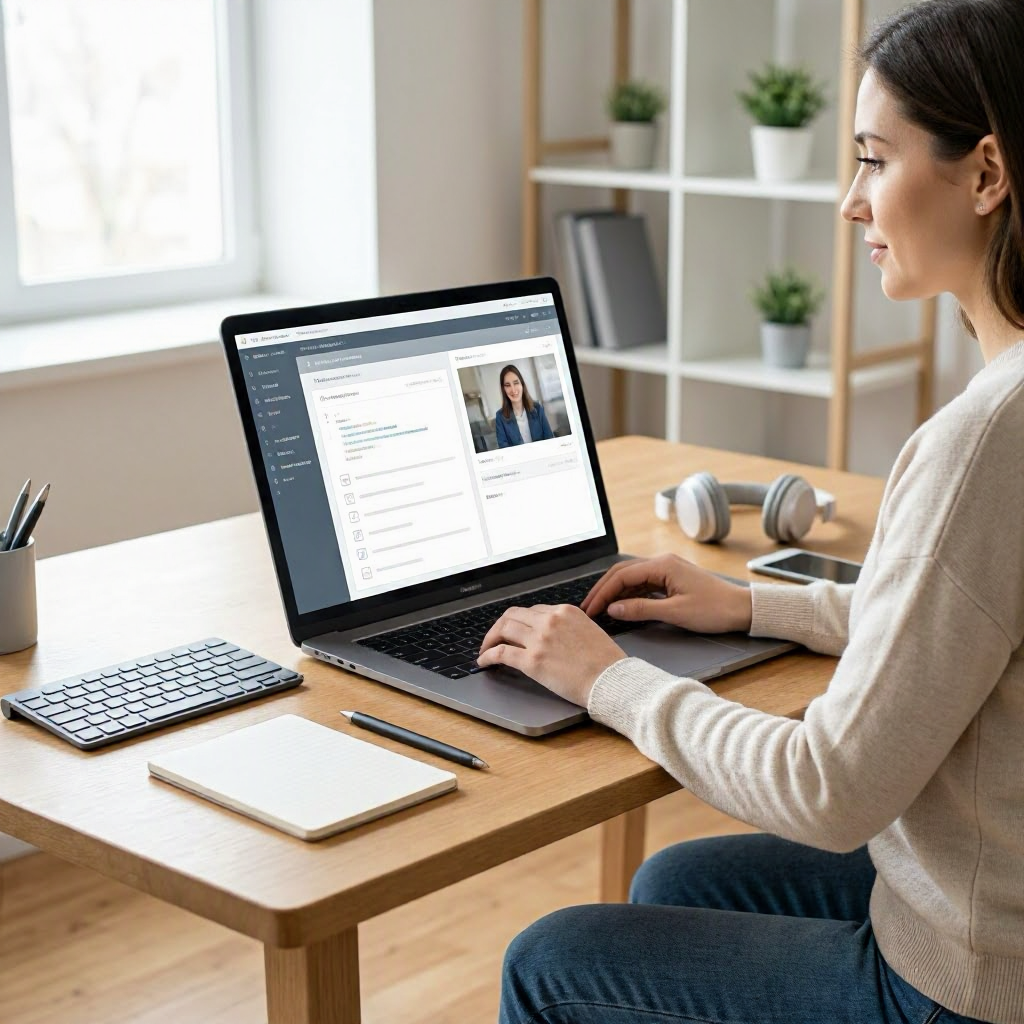
Master Digital Skills for Free in 2026
In today's digital world, being skilled with technology is more important than ever. This is true whether you’re looking to start a new career, get better at your current job, or even launch your own small business. The good news is that you don’t need to spend a lot of money to learn these valuable skills. A huge number of high-quality resources are available online for free.
This guide will walk you through the process of picking the right skill for you, finding the best free courses, and proving what you’ve learned to potential employers or clients. We’ll cover everything from coding to marketing, helping you navigate the many free options without feeling overwhelmed.
You can master valuable digital skills for free by using reputable online learning platforms. The key steps are to focus on one high-demand skill first, follow structured free courses from sources like Google and freeCodeCamp, and then build a portfolio of projects to prove your abilities. Your main investment will be time and dedicated practice, not money.
This guide will help you: - Understand why digital skills ar
This guide will help you:
- Understand why digital skills are essential today.
- Choose your first high-demand digital skill.
- Find the top free platforms for training.
- Follow a structured learning path.
- Use YouTube effectively for learning.
- Build a portfolio to showcase your work.
- Network with online communities.
- Avoid common learning pitfalls.
- Monetize your new skills.
| Item | Detail |
|---|---|
| Typical Cost | $0 for all learning resources and platforms mentioned. |
| DIY Cost | No monetary cost. Investment is your time and effort. |
| Best First Contact | The official websites for free learning platforms (e.g., Google Digital Garage, freeCodeCamp). |
| Main Safety Warning | Avoid "tutorial hell" by balancing learning with hands-on project building. |
| Warranty Proof Needed | Not applicable for free courses. For certifications, your course completion certificate is your proof. |
Who should I call first
- Who should I call first? This is not a service; you contact the learning platforms directly online.
- What will it cost? The training resources themselves cost $0.
- What proof is needed for a certificate? Completing the course requirements, like projects or exams, is needed for platforms that offer free certificates.
- What are the warning signs? Be wary of feeling stuck only watching tutorials without practicing, and avoid prioritizing collecting certificates over building real skills.
- When should I avoid DIY? This is a self-learning process; "DIY" is the entire method. The key is to stay structured and not try to learn too many skills at once.
This table summarizes the core free resources and paths discussed.
| Main customer question | Best first contact | Estimated cost range | Important URLs |
|---|---|---|---|
| Where can I learn digital marketing for free? | Google Digital Garage | $0 | Google Digital Garage |
| Where can I learn to code for free? | freeCodeCamp | $0 | freeCodeCamp |
| Where can I get free marketing certifications? | HubSpot Academy | $0 | HubSpot Academy |
| Can I access university courses for free? | Coursera or edX (use "Audit" option) | $0 (without certificate) | Coursera, edX |
The most important fact is that all the primary learning resources and platforms recommended in this guide are completely free. You do not need to pay for courses, certifications, or access to high-quality educational materials from sources like Google, freeCodeCamp, HubSpot Academy, Khan Academy, or YouTube.
The only potential costs mentioned are optional. For example, platforms like Coursera and edX offer paid certificates, but you can audit their university courses for free. Any costs associated with monetizing your skills later, such as fees on freelancing platforms, are separate from the learning phase.
Average Cost: $0 for all core educational resources.
Since this is about self-education, the entire process is a "DIY" project. The comparison is really between structured self-learning and formal, paid education.
When DIY (Self-Learning) Is the Right Path:
- You are motivated and can follow a structured plan.
- You have consistent time to dedicate to practice.
- Your goal is to build specific, practical skills without the cost of a degree or bootcamp.
- You are comfortable using online communities for support when you get stuck.
When to Consider Formal "Pro" Education (Like a Degree or Bootcamp):
- You need a highly structured environment with set schedules and deadlines.
- You value having a dedicated instructor for immediate feedback.
- Your career goal absolutely requires a formal degree or diploma.
- You have the budget for significant tuition costs.
The main risk of the DIY approach is a lack of structure, which can lead to giving up. This is mitigated by using the roadmaps and project-based learning emphasized in the guide.
For learning digital skills, you don't call anyone-you visit websites. Your first point of contact should always be the official website of the free learning platform that matches your chosen skill.
- For a broad digital marketing start, go to Google Digital Garage.
- For learning to code, start at freeCodeCamp.
- For in-depth marketing certifications, visit HubSpot Academy.
- For foundational knowledge in many subjects, use Khan Academy.
All contacts are online resources. Here are the key official platforms and their websites:
- Google Digital Garage & Google Career Certificates: learndigital.withgoogle.com/digitalgarage
- freeCodeCamp: www.freecodecamp.org
- HubSpot Academy: academy.hubspot.com
- Coursera: www.coursera.org
- edX: www.edx.org
- Khan Academy: www.khanacademy.org
This does not apply to free educational resources. For platforms that offer free certificates (like Google or HubSpot), your proof of completion is the digital certificate you earn after finishing all course requirements, such as passing an exam or completing projects. There is no warranty or refund process for free content.
State-Specific or Local Checks
There are no state or local agencies to contact for learning free digital skills online. The verification step is ensuring you are on the official, legitimate website of the learning platform to access their free materials.
Since the guide focuses on free resources, the key question is whether a paid option is necessary. Before you spend any money on a course or bootcamp, ask yourself:
- Can I learn this same skill for free through the platforms listed?
- Does this paid program offer a significant advantage (like job placement) that the free resources do not?
- Have I fully utilized the free "audit" options on platforms like Coursera?
- Can I build a strong portfolio with free resources first to see if I enjoy the work?

While learning, be aware of these common pitfalls: - Tutor
While learning, be aware of these common pitfalls:
- Tutorial Hell: Spending all your time watching tutorials without building your own projects.
- Chasing Certificates Over Skills: Prioritizing collecting course certificates instead of demonstrating practical ability through a portfolio.
- Trying to Learn Everything at Once: Jumping between too many skills (like Python, SEO, and Photoshop) without mastering one first.
- Isolation: Learning completely alone without engaging with online communities for support and feedback.
Practical Step-by-Step Guidance
Follow this actionable plan to start learning a digital skill for free.
- Choose One Skill. Pick one high-demand area to start, such as Data Analytics, Digital Marketing, Coding, or Design. Don't try to learn multiple skills at once.
- Pick Your Primary Platform. Based on your skill choice, go to the corresponding free platform (e.g., Google Digital Garage for marketing, freeCodeCamp for coding).
- Follow a Structured Roadmap. Use the learning paths provided in this guide to give your study a clear sequence and timeline.
- Learn Actively. When using YouTube or tutorials, follow along by doing the work yourself-code, design, or analyze data as you watch.
- Build a Portfolio Immediately. Start creating projects from day one. For marketers, this could be a blog. For coders, it's a GitHub account. For designers, it's a Behance profile.
- Join a Community. Find relevant Discord servers, subreddits, or LinkedIn groups to ask questions and stay motivated.
- Apply Your Skills. Look for small freelance gigs, internships, or personal projects to turn your learning into real-world experience.
Call a Pro If: You feel completely stuck and cannot find answers through official documentation or community help. In this context, a "pro" might be a mentor found through networking or a paid tutor for a specific, advanced problem.
Frequently Asked Questions
Do I need a degree to get a job with these skills? No, many employers in digital fields prioritize demonstrable skills and a strong portfolio over formal degrees. Your portfolio of real projects is your most important credential.
How long does it take to learn a digital skill for free? It varies by skill and dedication. The structured roadmaps in this guide suggest a four-month timeline to gain foundational proficiency in areas like digital marketing, front-end web development, or data analysis.
Are the free certificates from Google or HubSpot worth anything? Yes, these certificates are recognized by the industry and can enhance your resume. They show you have completed practical, career-focused training. However, your portfolio of work is always more valuable than any certificate.
What if I get stuck or don’t understand something? This is normal. Use the online communities mentioned, like Discord servers or subreddits (e.g., r/webdev, r/marketing). Often, a quick search or a politely asked question will get you the help you need.
Can I really make money from skills I learned for free? Absolutely. Once you have a solid portfolio, you can monetize your skills through freelancing platforms (Upwork, Fiverr), applying for entry-level jobs or internships, or starting your own projects, like selling web templates or growing a niche website.
What computer or software do I need to start? You can start with a basic computer and an internet connection. The free tools listed (like Canva, Figma, Google tools, and code editors) are either web-based or have free versions available for download.
This guide is based on the factual information about free digital skills platforms. All links and platform names are verified as legitimate and widely used educational resources.
- Google Digital Garage: Offers the free "Fundamentals of Digital Marketing" course certified by IAB Europe and The Open University.
- freeCodeCamp: Provides a comprehensive, interactive coding curriculum.
- HubSpot Academy: Source of free, industry-respected marketing certifications.
- Other Platforms: Coursera, edX, Khan Academy, and YouTube are all established sources of free learning.
Always check the official websites directly for the most current course offerings, as platforms may update their free catalogs over time.
The path to learning digital skills for free is open to anyone with dedication. Remember that your practical portfolio is more valuable than any certificate. While this guide provides a trusted roadmap, your success depends on consistent practice and real-world application. Start with one skill, use the free resources listed, and begin building your future today.
Do Not Ignore: The pitfall of "tutorial hell." Actively build projects with the skills you learn to ensure you can actually apply them.

About the TDL Expert Panel
TDL Expert Panel · TheDigitalLife Editorial Team
TDL Expert Panel is the editorial team behind TheDigitalLife. The team researches, reviews, and creates practical guides to help everyday readers make better decisions about home repair costs, refunds, AI tools, digital safety, productivity, and useful online resources. Each guide is written to be clear, useful, and easy to understand.