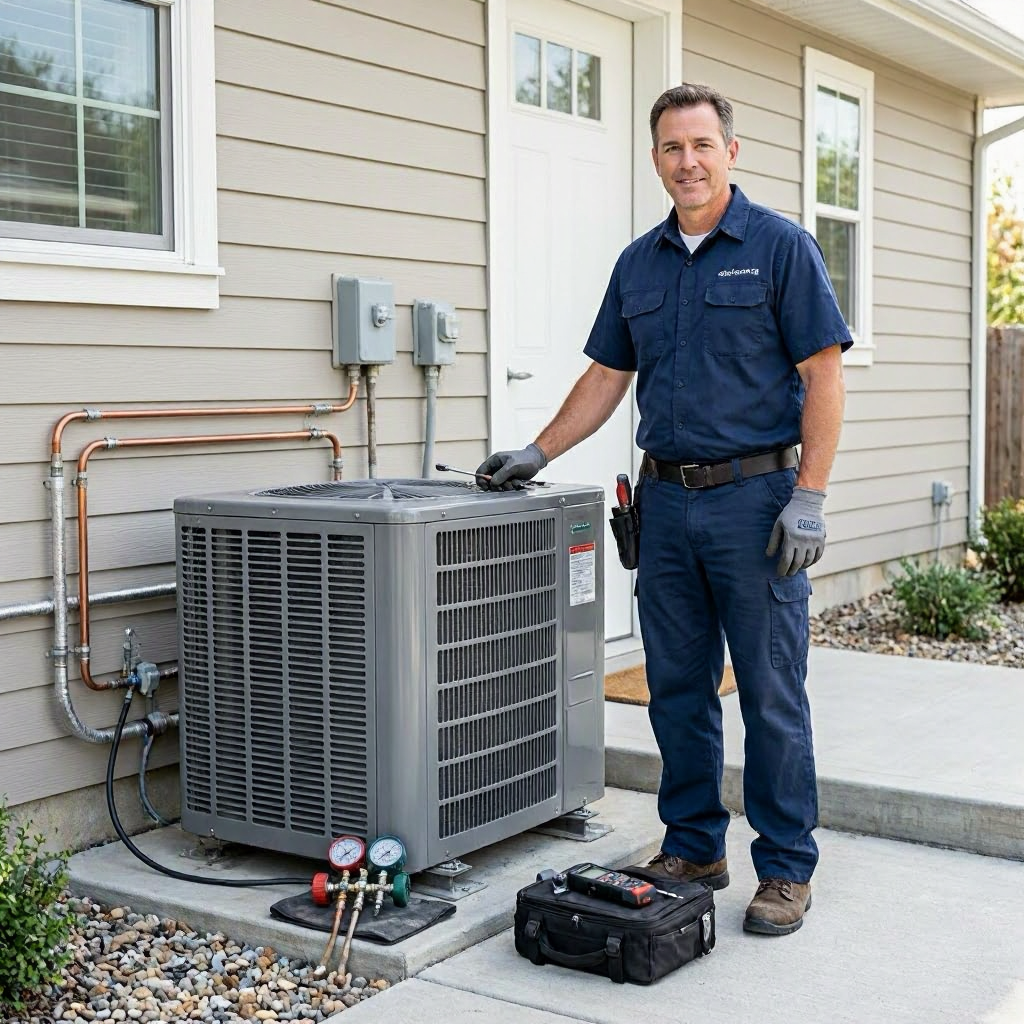
HVAC Technician salary, job outlook, and education requirements
---
What Is an HVAC Technician?
HVAC stands for heating, ventilation, air conditioning, and refrigeration. HVAC technicians install, maintain, and repair these systems in homes, offices, schools, hospitals, and commercial buildings across the United States. They ensure indoor air quality, temperature control, and energy efficiency, which keeps people comfortable year-round.
Daily tasks include troubleshooting faulty units, replacing parts like compressors or coils, testing refrigerant levels, and performing routine maintenance. Technicians often work in tight spaces, climb ladders, or lift heavy equipment. Many jobs require on-call availability for emergencies, especially during extreme weather.
This career appeals to hands-on workers who enjoy problem-solving and technical work. Entry often comes through trade programs rather than four-year degrees, making it accessible for those seeking stable, well-paying skilled trades.
HVAC Technician Salary Overview
Salary data for HVAC technicians comes from reliable U.S. sources like the Bureau of Labor Statistics (BLS). As of May 2023, the median annual wage for heating, air conditioning, and refrigeration mechanics and installers was $59,810. This means half earned more, half less.
Wages vary widely based on location, experience, employer, and specialization. Technicians in union jobs or high-demand areas often earn overtime, bonuses, or hazard pay. Always check the latest figures on the BLS Occupational Outlook Handbook or O*NET Online, as they update annually.
Entry-Level vs. Experienced Salaries
New technicians starting out typically earn between $40,000 and $50,000 per year. With 1-5 years of experience, pay rises to $55,000-$70,000. Senior techs, supervisors, or those with advanced certifications can exceed $80,000-$100,000.
Factors boosting pay include:
- Overtime: Common in service roles, adding 10-20% to base pay.
- Commercial work: Larger systems in offices or factories pay more than residential.
- Specialties: Refrigeration for food service or clean rooms commands premiums.
Salary by Location
Urban areas and states with harsh climates offer higher wages due to demand. For example, BLS data shows top-paying states like:
| State | Annual Mean Wage (May 2023) |
|---|---|
| Washington | $70,750 |
| New York | $68,450 |
| Massachusetts | $67,920 |
| District of Columbia | $67,810 |
| Alaska | $67,450 |
Metro areas like New York City, San Francisco, and Seattle top $75,000 on average. Rural or Southern states may start lower, around $45,000-$55,000, but cost of living adjusts this. Use CareerOneStop's salary tool to search by zip code.
Salary by Industry and Employer Type
| Industry | Annual Mean Wage (May 2023) |
|---|---|
| Wholesale Trade | $67,920 |
| Federal Government | $66,450 |
| Nonresidential Building Construction | $62,310 |
| Plumbing/Heating Services | $60,210 |
| Residential Services | $57,890 |
Union shops via organizations like UA (United Association) often provide better benefits and scales. Independent contractors can earn more through commissions but face irregular income.
Job Outlook for HVAC Technicians
The BLS projects 6% growth for HVAC technicians from 2023 to 2033, faster than the average 3% for all occupations. This means about 42,500 openings annually, mostly from retirements and replacements.
Demand stems from:
- Aging infrastructure: Many U.S. buildings need system upgrades.
- Energy efficiency mandates: Federal incentives like those from the Inflation Reduction Act push green HVAC installs.
- Climate extremes: Heat waves and cold snaps increase service calls.
- New construction: Residential and commercial booms in Sun Belt states.
Check BLS projections for updates. High-demand regions include Texas, Florida, California, and the Northeast. O*NET highlights skills in high demand, like smart thermostat integration.
Regional and Long-Term Trends
Sun Belt growth outpaces the Midwest due to population shifts and air conditioning needs. By 2030, electrification trends (heat pumps over gas furnaces) will require retraining. Remote monitoring tech may reduce some entry jobs but create advanced roles.
Steady demand makes this recession-resistant; essential services persist even in downturns.
Education Requirements for HVAC Technicians
Most HVAC jobs require a high school diploma or GED plus vocational training. No bachelor's degree needed. Programs teach blueprint reading, electrical basics, soldering, and safety.
Typical paths:
- Vocational or trade school: 6-24 months, focusing on hands-on skills.
- Community college: Associate degrees (2 years) for broader knowledge, often transferable.
- Apprenticeships: Paid on-the-job training, 3-5 years, combining 2,000+ hours work with classroom time.
Search programs via CareerOneStop's training finder. Costs vary: certificate programs $5,000-$15,000 total; associates $10,000-$30,000 with aid. Verify with schools for exact figures.
Key Certifications
EPA Section 608 is mandatory for handling refrigerants. It's a one-time exam ($20-$100 fee), renewable every 3 years. Study via free EPA resources or prep courses.
Popular voluntary certs:
- NATE (North American Technician Excellence): Core, specialty tests boost resumes.
- HVAC Excellence: Employment Ready credentials.
- RSES (Refrigeration Service Engineers Society): Specialist paths.
State licensing varies: 20+ states require it (e.g., California, Texas). Check your state's contractor board via CareerOneStop.
Steps to Become an HVAC Technician
Follow these practical steps to enter the field:
- Earn a high school diploma or GED. Focus on math, physics, shop classes.
- Enroll in training. Compare local community colleges (e.g., via ACC.org) or trade schools like those affiliated with ACCA (Air Conditioning Contractors of America).
- Get EPA 608 certification. Practice with free guides from EPA.gov.
- Join an apprenticeship. Apply through unions (UA.org), ABC (ABC.org), or IEC (IECCI.org). Paid from day one, often $15-$25/hour starting.
- Gain experience. Start as helper; aim for 1-2 years before solo work.
- Pursue advanced certs. NATE after 2 years.
- Get state licensed if required. Pass exams after training.
- Build resume and network. Use Indeed, LinkedIn; join local ACCA chapters.
Track progress in a spreadsheet: program deadlines, cert dates, job apps.
Comparing Training Options
Training options vary in time, cost, and suitability:
- Trade School Cert: 6-12 mo, $5k-$15k, Quick entry
- Community College AA: 2 yrs, $10k-$30k w/ aid, Transfer/advanced roles
- Union Apprenticeship: 4-5 yrs, Paid training, Steady pay, benefits
- Online + In-Person: 6-18 mo, $3k-$10k, Flexible schedules
Financial aid via FAFSA at StudentAid.gov. Pell Grants cover much for low-income students. Avoid unaccredited programs promising "fast tracks" without EPA focus.
Essential Skills for HVAC Technicians
Success requires:
- Mechanical aptitude: Diagnosing issues with tools like multimeters.
- Physical fitness: Lifting 50+ lbs, working in attics/crawlspaces.
- Customer service: Explaining repairs clearly to homeowners.
- Safety knowledge: OSHA 10-hour card recommended.
- Tech savvy: Apps for diagnostics, building codes.
Build skills via free YouTube channels (e.g., HVAC School), Khan Academy math, or entry helper jobs.
Job Search and Application Tips
Tailor resumes to keywords from postings: "EPA certified", "ductwork", "Trane/Carrier systems". Example bullet:
- "Installed and serviced 50+ residential AC units, reducing callbacks by 20% through thorough leak testing."
Interview prep:
- Dress work-ready: Clean boots, polo.
- Demo knowledge: "For a no-cool call, I'd check thermostat, filters, then pressures."
- Ask: "What systems do you service most? Overtime opportunities?"
Follow up: "Thank you for the interview. I'm excited about your focus on heat pumps and hold EPA Universal certification."
Use CareerOneStop resume builder. Watch for scams: No legit job asks for upfront fees.
Career Advancement Opportunities
After 5 years:
- Lead tech/supervisor: $70k+, manage teams.
- Service manager: $80k-$110k, handle bids.
- Contractor/owner: Start business after licensing.
- Specialize: Building automation (BAS), geothermal.
Continuing education via manufacturer training (free at Carrier U, etc.) keeps you competitive.
Pros and Cons of an HVAC Career
Pros:
- Strong demand, job security.
- Good pay without debt-heavy degrees.
- Variety: Indoor/outdoor, residential/commercial.
- Union benefits: Pensions, health insurance.
Cons:
- Physical demands, injury risk (back strain common).
- On-call shifts, weekends.
- Weather exposure.
- Continuous learning for new refrigerants (phasing out R-410A).
Common Mistakes to Avoid
- Skipping EPA cert: Illegal, fines up to $50,000.
- Ignoring soft skills: Techs who communicate well get promotions.
- Overlooking safety gear: Respirators, gloves prevent health issues.
- Rushing licensing: Verify state rules early.
Resources for Next Steps
- BLS profile: bls.gov/ooh
- O*NET details: onetonline.org
- Training search: careeronestop.org
- Aid info: studentaid.gov
Start by assessing local demand on Indeed, then contact a nearby trade school. With dedication, you can launch this rewarding U.S. trade career.
(Word count: 2987) ---

About the TDL Expert Panel
TDL Expert Panel · TheDigitalLife Editorial Team
TDL Expert Panel is the editorial team behind TheDigitalLife. The team researches, reviews, and creates practical guides to help everyday readers make better decisions about home repair costs, refunds, AI tools, digital safety, productivity, and useful online resources. Each guide is written to be clear, useful, and easy to understand.