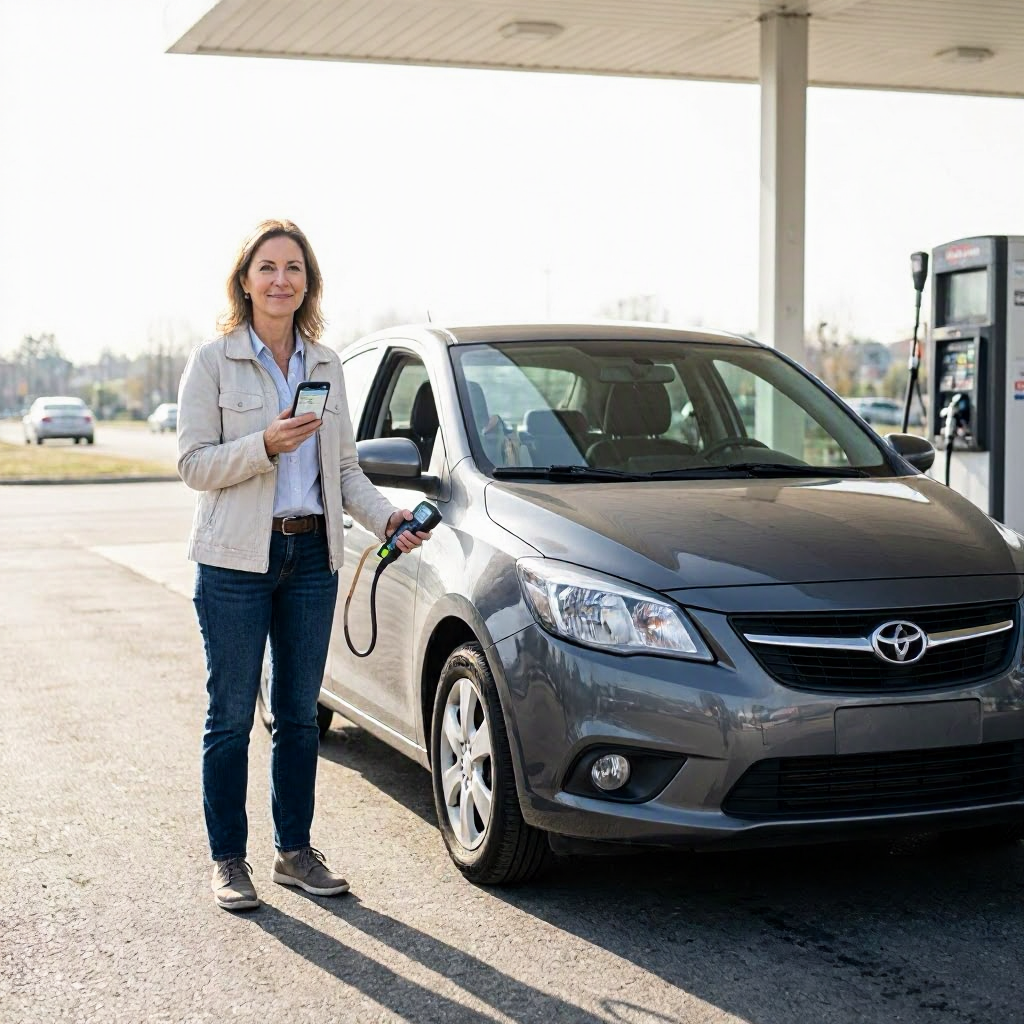
How to save money on gas for commuting in 2026
---
Why Gas Costs Matter for Your 2026 Commute
Commuting eats up a big chunk of many US workers' budgets, especially with gas prices that can fluctuate based on global events, supply chains, and seasonal demand. In 2026, expect similar trends as in recent years, with average national prices hovering around recent highs depending on your state, from lower in the Midwest to higher on the coasts. For a typical commuter driving 30 miles round-trip five days a week in a sedan getting 25 MPG, that's roughly 600 gallons a year at $3.50 per gallon, or over $2,000 annually, before taxes and fees.
This adds up fast for families, gig workers, or single-income households stretching every dollar. The good news is you can cut these costs without buying a new car or moving closer to work. Start by reviewing your last three months of gas receipts and credit card statements to see your real spend. Track miles driven via your odometer or apps like GasBuddy to calculate your personal cost per mile.
Focus on changes that fit your routine, like tweaking driving habits or combining errands. These steps help lower gas for commuting specifically, not general car use. Always prioritize safety, such as avoiding aggressive maneuvers that risk accidents.
Track Your Current Gas Spending First
Before changing anything, know exactly where your money goes. Pull up your bank app or statements for the past 60 days and highlight every gas purchase. Note the station, amount, price per gallon, and odometer reading if available.
Calculate your baseline:
- Total miles commuted divided by total gallons bought equals your MPG.
- Multiply gallons by average price per gallon for your yearly estimate, assuming steady commuting.
Use a simple spreadsheet or notebook. List weeks like this:
| Week | Commute Miles | Gallons Used | Price/Gallon | Total Cost |
|---|---|---|---|---|
| 1 | 150 | 6 | $3.45 | $20.70 |
| 2 | 150 | 5.8 | $3.50 | $20.30 |
Adjust for your numbers. For renters in high-cost areas like California or New York, this might show $250 monthly; for Midwest homeowners, closer to $150. Review weekly to spot patterns, like filling up mid-week when prices dip.
Set a gas budget cap, say 5-10% of take-home pay, and track against it. Apps from your bank or free tools like Mint can automate this. Check for employer reimbursements if your job qualifies under IRS rules for business miles.
Keep all receipts for at least three months. This baseline helps measure savings later and supports tax claims if applicable.
Drive Smarter to Boost Fuel Efficiency
Your right foot controls a big part of gas use. Slowing acceleration and maintaining steady speeds can improve MPG by 10-20% without special equipment. Here's how:
- Ease into acceleration: Avoid flooring it from stops. Aim for 0-60 MPH in 10-15 seconds max. This cuts fuel burn during commuting merges.
- Keep steady speeds: Cruise control on highways saves 5-10% on long drives. Match traffic flow to avoid jackrabbit starts.
- Minimize idling: Turn off the engine if stopped over 30 seconds, like at rail crossings common in Rust Belt commutes. Modern cars restart easily.
- Right-lane highway driving: Stay in slower lanes to avoid speed changes. For truckers or delivery drivers, this adds up fast.
Coast to stops instead of braking hard. Use eco-mode if your car has it, standard on many 2015+ models. For families with kids, combine school drop-offs with commutes to shorten total miles.
Anticipate traffic using apps like Waze or Google Maps. Shaving 5 miles daily via shortcuts saves $100+ yearly. Test changes one week at a time and recalculate MPG.
Optimize Vehicle Maintenance for Better MPG
A poorly tuned car guzzles gas. Basic upkeep pays off quickly for commuters. Start with these checks, doable at home or a trusted shop:
- Tire pressure: Underinflated tires drop MPG by 3%. Check monthly when cold, using the door jamb sticker PSI. Rotate every 5,000-8,000 miles.
- Air filter: Dirty ones reduce efficiency 10%. Replace yearly or every 12,000 miles; easy DIY with a $15 part.
- Oil changes: Fresh synthetic oil improves MPG 1-2%. Follow your manual's interval, often 5,000-10,000 miles.
- Align wheels: Misalignment causes drag. Get checked yearly, especially after potholes.
Clean out excess weight: Remove roof racks when not needed (saves 1-2 MPG) and trunk clutter (every 100 lbs cuts 1-2%). For older cars common among budget-conscious seniors, spark plugs and fuel injectors matter too.
Schedule via your phone calendar. Track costs and MPG pre/post to confirm savings. Visit energy.gov/energysaver for free checklists on fuel-saving maintenance.
Avoid skipping safety items like brakes just to save; they prevent costly accidents.
Buy Gas Strategically Without the Hassle
Not all stations charge the same. Shop smart to shave 10-20 cents per gallon:
- Hunt apps first: GasBuddy or AAA apps show real-time prices nearby. Filter for your commute route.
- Buy mid-week: Prices often lowest Tuesdays-Wednesdays. Avoid weekends.
- Cash or debit: Skip credit card fees at some pumps.
- Top-tier gas: Brands like Shell, Exxon meet standards reducing deposits. Check top-tiergas.com for stations; worth it long-term for engine health.
For warehouse club members (Costco, Sam's), mid-grade there beats premium elsewhere sometimes. Compare total cost: gallons times price, plus any membership prorated.
Loyalty programs like Exxon Mobil Rewards or BPme give 3-10 cents off. Sign up via app, link your card. Watch for limits.
Avoid "club" memberships at indie stations; read terms for hidden fees. Never prepay without pumping first to dodge scam pumps.
In high-tax states like Illinois, note state averages via AAA. Fill up before long holidays when prices spike.
Explore Carpooling and Rideshare Savings
Solo driving costs most. Pooling halves your share:
- Carpool with coworkers: Use apps like Waze Carpool or Bump. Split gas evenly via Venmo.
- Vanpool programs: Check your employer or state transit sites for subsidized options in areas like Texas or Florida.
- Rideshare alternatives: UberPool or Lyft Shared for occasional days, but calculate per-mile vs. driving.
For gig workers, batch deliveries to mimic commuting efficiency. Families can sync schedules: one parent drives kids, other carpools.
Estimate savings: 30-mile commute, four days carpooling saves $400+ yearly. Track shared costs in a group chat.
Public transit fits some: Amtrak, buses, or ferries in coastal cities. Get employer transit subsidies via IRS Section 132(f). Check local apps for schedules.
| Commuting Option | Pros for Gas Savings | Considerations for US Workers |
|---|---|---|
| Solo Drive | Flexible schedule | Full gas cost, wear/tear |
| Carpool (2 ppl) | 50% gas split | Coordinate pickups |
| Public Bus | $0 gas, fixed fare | Fixed routes, time |
| Bike/Walk | Free fuel | Short distances, weather |
Customize to your area; verify fares via official transit sites.
Public Transit, Biking, and Walking for Shorter Trips
If your commute is under 10 miles, non-car options shine:
- Buses and trains: Monthly passes often $50-150, vs. $200+ gas. Low-income? Check state programs via 211.org.
- E-bikes or scooters: Dockless rentals for urban commuters save 90% vs. gas. Buy used for $300-500.
- Walking: Ideal for 1-2 miles; pair with podcasts.
Employer perks: Many offer transit reimbursements up to $315/month tax-free in 2026 (IRS.gov). Remote hybrid schedules cut weeks driven.
For seniors or caregivers, community vans via AARP resources. Track time saved too, as less driving means less maintenance.
Test a car-free week: Use savings for a treat.
Work-from-Home and Schedule Tweaks
Not all savings need vehicle changes. Talk to your boss:
- Hybrid remote: Even two days home halves gas. Common post-pandemic.
- Flexible hours: Shift to 10-6 avoids peak traffic, boosting MPG.
- Relocate closer: Weigh rent savings vs. move costs for long-term.
Gig workers: Stack jobs geographically. Students: Campus shuttles free.
Document requests in email for records.
Gas Rewards, Credit Cards, and Apps
Earn back without extra spending:
- Cash-back cards: 3-5% on gas from Chase or Citi. Pay off monthly.
- Grocery/gas links: Kroger, Safeway apps double rewards.
- Upside or GetUpside: Scan receipts for cash back, verified via app.
Link to bank for auto-tracking. Beware scams: Only official apps; never share CCV.
For fleets, fleet cards via WEX. Families: Share one rewards account.
Compare: 5% back on $200/month saves $120/year.
Tax Deductions for Commuters
Uncle Sam helps if qualifying:
- Mileage deduction: Standard rate (check IRS.gov for 2026) for business miles. Log via app.
- No home office for pure commuters, but gig/self-employed yes.
- Clean vehicle credits: Up to $7,500 for EVs/hybrids via IRS.
Keep logs: date, miles, purpose. Use IRS Publication 463.
Consult tax pro; not advice.
Long-Term Shifts: Hybrids, EVs, and Beyond
For 2026 budgets, plan ahead:
- Trade-up wisely: Hybrids like Toyota Prius get 50+ MPG. Calculate total ownership via Edmunds.
- EV incentives: Federal tax credits; state rebates. Charge at home cheap vs. gas.
- Right-size car: Downsize from SUV if possible.
Finance via credit union. Test drive; factor insurance hikes.
Energy.gov/energysaver has calculators.
Avoid Gas-Saving Scams and Myths
Watch for:
- Fake apps promising 50 cents/gallon.
- Fuel additives claiming 30% MPG; FTC warns most ineffective.
- "Miracle" devices on magnets.
Verify via consumer.ftc.gov. Stick to proven steps.
Build Your 2026 Gas Savings Plan
- Track one month baseline.
- Pick 2-3 habits: tires, steady driving.
- Test alternatives weekly.
- Review quarterly, adjust.
Realistic goal: 10-30% cut, or $200-600/year. Families save more via pooling.
For low-income, energy assistance via consumerfinance.gov.
Keep a folder: receipts, logs, confirmations. Celebrate milestones.
This plan fits US commuters from Florida fields to Seattle tech, making 2026 cheaper. ---

About the TDL Expert Panel
TDL Expert Panel · TheDigitalLife Editorial Team
TDL Expert Panel is the editorial team behind TheDigitalLife. The team researches, reviews, and creates practical guides to help everyday readers make better decisions about home repair costs, refunds, AI tools, digital safety, productivity, and useful online resources. Each guide is written to be clear, useful, and easy to understand.