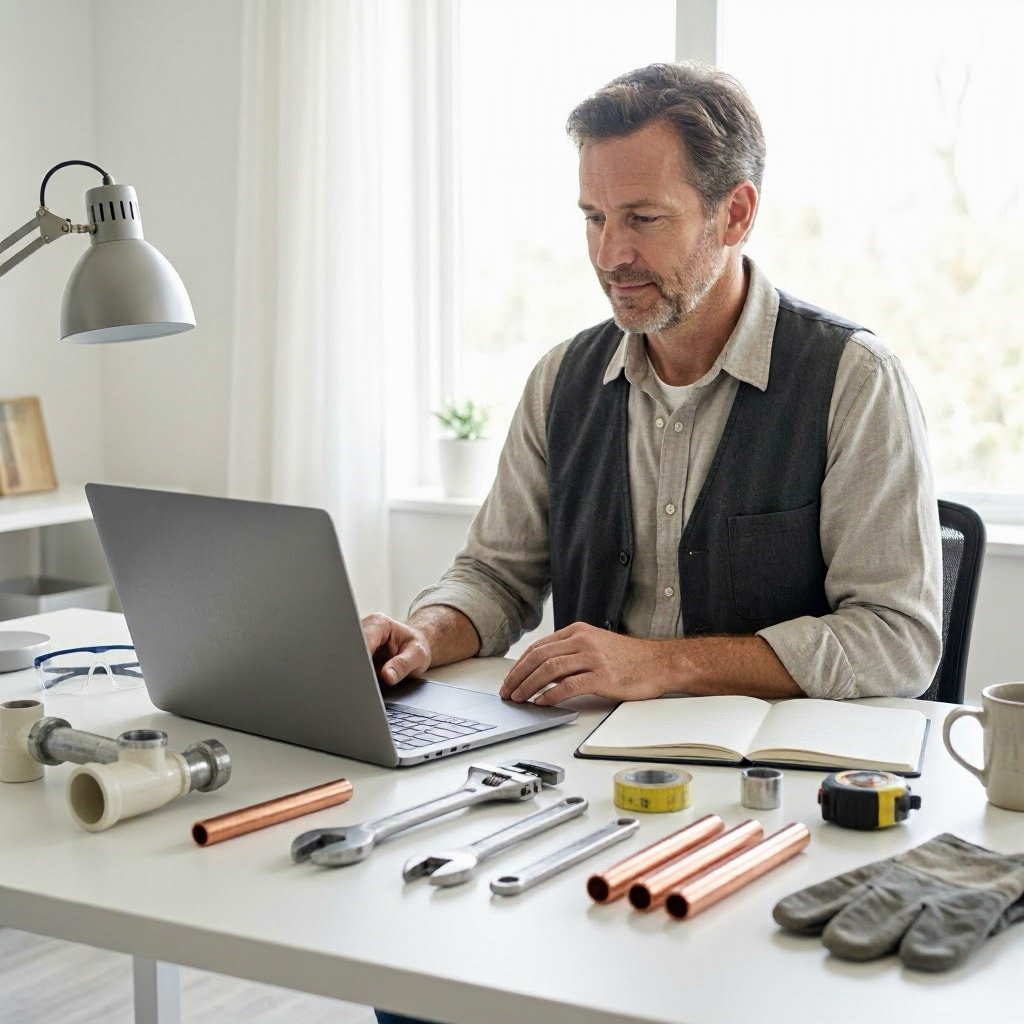
How to become a plumber in the USA
Why Pursue a Plumbing Career in the USA?
Plumbing offers a stable, hands-on career with strong demand across the country. As essential workers, plumbers install, repair, and maintain pipes, fixtures, and systems for water, gas, and drainage in homes, businesses, and industrial sites. This field suits those who enjoy problem-solving, physical work, and independence.
Many enter without a college degree, starting through apprenticeships that pay while you learn. The U.S. Bureau of Labor Statistics (BLS) projects steady need due to construction growth and aging infrastructure. Expect variety, from residential service calls to large commercial projects.
A plumbing career provides job security and potential for self-employment. Union or non-union paths both lead to solid opportunities, especially in growing states like Texas, Florida, and California.
What Does a Plumber Do Daily?
Plumbers handle tasks like installing water heaters, fixing leaks, unclogging drains, and reading blueprints. Emergency calls might involve burst pipes at odd hours, while new construction means laying pipe systems.
Specialties include residential service, commercial, industrial, or green plumbing for sustainable systems. Entry-level helpers assist journeymen, learning on the job.
Work environments vary: homes (60% of jobs per BLS), apartments, factories, or schools. Most work full-time, with 10% self-employed. Overtime and on-call shifts are common, especially for service plumbers.
Education Requirements for Plumbers
No four-year degree is needed, but a high school diploma or GED is the starting point. Focus on shop classes, math (algebra, geometry), and physics if still in school. These build foundational knowledge for pipe measurements and fluid dynamics.
Post-high school options include:
- Trade or vocational schools: 6-12 month programs teaching basics like soldering and blueprint reading. Community colleges offer associate degrees in plumbing technology (1-2 years).
- Online courses: Supplements for theory, but hands-on training can't be fully online.
- Pre-apprenticeship programs: Short courses (4-8 weeks) to prepare for apprenticeships, often through workforce centers.
Check program quality via the school's website and reviews from the Better Business Bureau. Avoid programs promising "instant certification" without supervised hours, as they rarely lead to licenses.
Costs vary by location and length; community colleges often cost $3,000-$10,000 total, with financial aid available via FAFSA at StudentAid.gov. Verify exact figures with the school.
Apprenticeships: Your Main Path to Expertise
Apprenticeships are the gold standard, combining 4-5 years of paid on-the-job training (about 2,000 hours per year) with classroom instruction (144+ hours annually). You earn wages starting at 40-50% of journeyman pay, increasing yearly.
How to find one:
- Contact local unions like UA (United Association) chapters via ua.org.
- Use non-union groups through Associated Builders and Contractors (ABC) or Plumbing-Heating-Cooling Contractors (PHCC).
- Search CareerOneStop.org's apprenticeship finder or state workforce agencies.
Requirements typically include being 18+, passing a drug test, and having a driver's license. Some prefer mechanical aptitude tests.
During training, you'll shadow licensed plumbers, learning codes, safety, and installations. Track hours and complete coursework for credit toward licensing.
Licensing: State-by-State Essentials
All states except a few (like Nebraska) require licenses for plumbers. Journeyman licenses need apprenticeship completion plus exams; master level adds experience and business exams.
Steps to get licensed:
- Complete apprenticeship or equivalent hours.
- Pass written and practical exams (e.g., via state boards or Prometric).
- Apply through your state licensing board (find via careeronestop.org).
For example, California requires 4-5 years experience; Texas has city-level licenses. Renewals every 1-2 years with continuing education.
Check your state's plumbing board website for exact rules. Fees range from $50-$500, but confirm locally. Unlicensed work risks fines.
| State Licensing Basics | Key Requirement | Where to Check |
|---|---|---|
| California | 4 years journeyman experience for master | stateplumbingboard.ca.gov |
| Texas | Local city licenses, 4 years training | tdil.texas.gov or city sites |
| Florida | 4 years experience, DBPR exam | myfloridalicense.com |
| New York | City/county licenses, apprenticeship | ny.gov or local DOB |
Verify all details on official state sites, as rules change.
Essential Skills Every Plumber Needs
Core skills include:
- Mechanical aptitude: Understanding tools like pipe cutters, torches, and threaders.
- Problem-solving: Diagnosing issues like low pressure or backups.
- Physical fitness: Lifting 50+ lbs, working in tight spaces or heights.
- Math and reading: Calculating pipe lengths, interpreting codes.
Build them via high school vocational classes, YouTube tutorials (e.g., official plumbing channels), or pre-apprenticeship programs. Practice with home projects under supervision, like installing a faucet.
Soft skills matter: customer service for homeowners, teamwork on crews, and safety awareness to avoid OSHA violations.
Job Outlook and Realistic Earnings
The BLS reports 59,000 plumber jobs added yearly through 2032, with 2% growth (average for all occupations). Demand stays high in Sun Belt states and urban areas.
Median pay was $60,090 in 2022 (BLS), varying by location:
- Lowest 10%: $37,250
- Highest 10%: $101,190
Journeymen earn $25-$40/hour; masters $40-$60+. Self-employed can exceed $100,000 with a business. Factors include union status, overtime, and specialization (e.g., medical gas systems).
Use BLS.gov/ooh for local data. No guarantees—entry pay starts lower.
Step-by-Step Guide to Becoming a Plumber
Follow these practical steps:
- Earn your high school diploma or GED. Take relevant classes.
- Gain initial experience. Volunteer for maintenance at school or family businesses.
- Enroll in pre-apprenticeship or trade school (optional but helpful).
- Apply for apprenticeships. Prepare a basic resume highlighting math, shop, and physical work.
- Complete training and log hours.
- Pass licensing exams. Study via board-approved materials.
- Land your first journeyman job.
Track progress in a spreadsheet: dates, hours, skills learned.
Preparing Your Resume and Application for Plumbing Jobs
Tailor your resume to highlight transferable skills. No experience? List high school projects, auto repair, or construction labor.
Sample resume bullets:
- Repaired residential plumbing fixtures during family home renovations, reducing leaks by proper soldering techniques.
- Excelled in high school welding class, fabricating metal components to precise measurements.
- Maintained tools and equipment for school maintenance team, ensuring safety compliance.
Keep it one page. Include certifications like OSHA 10-hour (get via osha.gov).
For applications, write a cover letter: "I'm eager to join your apprenticeship program, bringing strong mechanical skills from [experience]."
Finding Apprenticeship and Entry-Level Jobs
Search:
- Job boards: Indeed, LinkedIn (filter "plumber apprentice"), Monster.
- Union halls: UA locals host open houses.
- Contractor associations: ABC chapters post openings.
- State resources: American Job Centers via careenonestop.org.
Network at home shows or LinkedIn groups like "Plumbers USA." Cold-call local shops: "Hi, I'm seeking apprenticeship opportunities. Do you hire helpers?"
Job scam red flags: Upfront fees, "guaranteed" jobs without interviews, or vague companies. Verify employers via BBB.org.
Nailing Plumbing Job Interviews
Interviews test skills and fit. Expect:
- Technical questions: "How do you solder copper pipe?" Practice answers.
- Behavioral: "Describe fixing a leak under pressure." Use STAR method (Situation, Task, Action, Result).
Sample answer: "In shop class, a pipe burst during a demo (Situation). I isolated the leak, soldered a new joint, and tested pressure (Action). It held, preventing water damage (Result)."
Dress clean (work boots, jeans, polo). Bring tools for demos. Ask: "What does a typical first-year apprentice day look like?"
Follow up: "Thank you for the interview. I'm excited about contributing to your team and available for a skills test."
Continuing Education and Career Advancement
Once licensed, pursue:
- Specialty certifications: Backflow prevention (via ASSE), medical gas (via CSA).
- Master plumber status: 2-5 years journeyman experience + exam.
- Business skills: For self-employment, take courses on QuickBooks or contracting via SBA.gov.
Join unions for benefits training. Advance to foreman, inspector, or owner-operator.
Common Mistakes to Avoid
- Skipping math prep: Practice measurements daily.
- Ignoring safety: Always prioritize PPE; accidents sideline careers.
- Rushing licensing: Incomplete hours mean illegal work.
- Poor record-keeping: Log everything for audits.
- Falling for scams: Legit apprenticeships never charge you.
Tools and Gear to Start With
Invest gradually. Basics: tape measure, pipe wrench, level ($100-300 total). Apprenticeships often provide tools.
Buy quality from Home Depot or plumbing suppliers. Maintain them for professionalism.
Women and Minorities in Plumbing
Fields welcomes diverse entrants. Programs like Women in Apprenticeship and Nontraditional Occupations (WANTO) via DOL offer support. UA has outreach for underrepresented groups.
Self-Employment: Becoming Your Own Boss
After 5-10 years, get a contractor license (state-specific). Build a client base via Angi or word-of-mouth. Factor insurance ($1,000-$5,000/year) and van costs.
Start small: side gigs as a licensed journeyman.
Realistic Timeline to Journeyman
- Year 1: Apply, start apprenticeship ($15-20/hour).
- Years 2-4: Skill-building, raises to $25+/hour.
- Year 5: License, $30-40/hour jobs.
Patience pays; many succeed in under 5 years with dedication.
This path demands effort but rewards with stability. Start today: visit bls.gov/ooh/construction-and-extraction/plumbers-pipefitters-and-steamfitters.htm and your local job center. Your next step is researching apprenticeships in your area.

About the TDL Expert Panel
TDL Expert Panel · TheDigitalLife Editorial Team
TDL Expert Panel is the editorial team behind TheDigitalLife. The team researches, reviews, and creates practical guides to help everyday readers make better decisions about home repair costs, refunds, AI tools, digital safety, productivity, and useful online resources. Each guide is written to be clear, useful, and easy to understand.