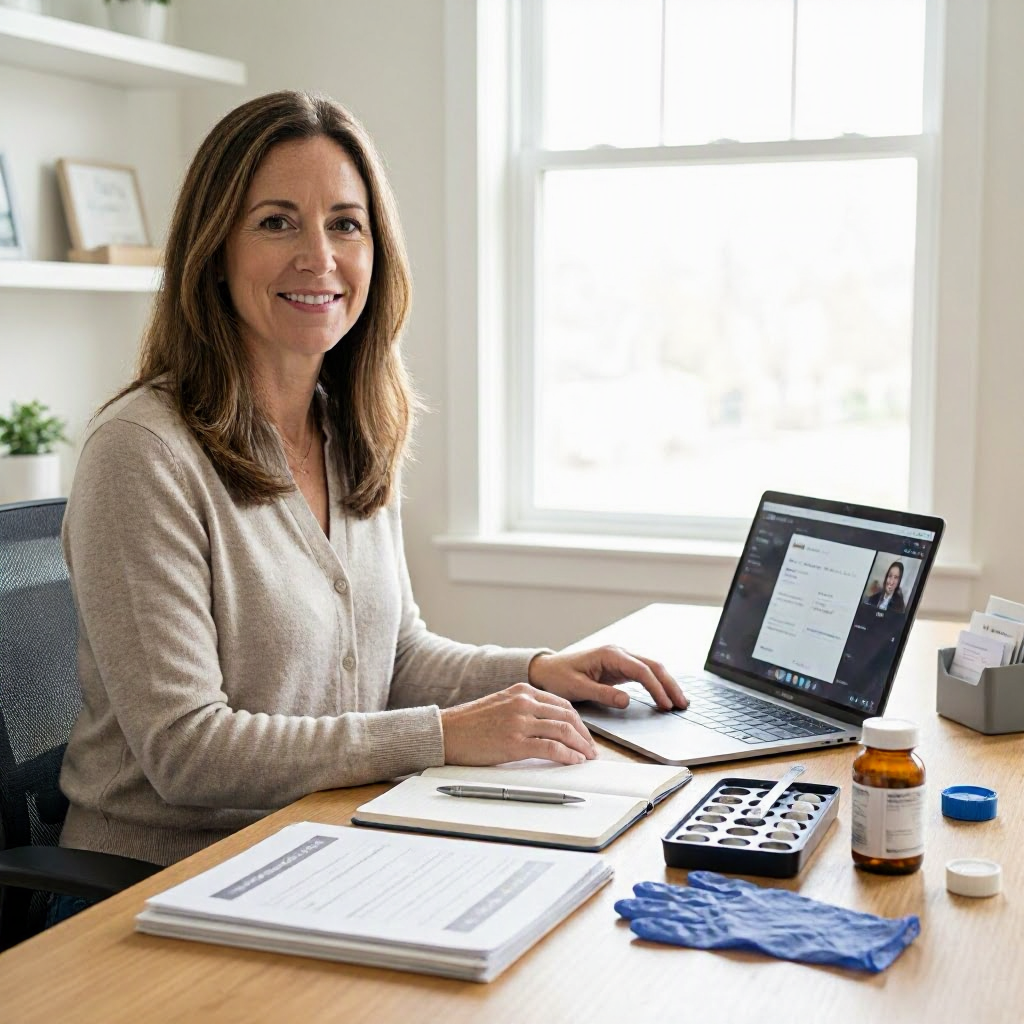
How to become a pharmacy technician in the USA
What Does a Pharmacy Technician Do?
Pharmacy technicians help pharmacists dispense medications and manage prescriptions. They count pills, mix compounds, label bottles, and update patient records. In retail settings like CVS or Walgreens, they handle customer questions about over-the-counter drugs and insurance claims.
In hospitals or clinics, technicians prepare IV medications, manage inventory, and assist with sterile compounding. Daily tasks include verifying dosages, entering data into pharmacy software, and ensuring compliance with HIPAA privacy rules. Entry-level roles focus on support, while experienced techs may train others or handle specialized duties.
The role requires attention to detail, basic math skills, and customer service. Most work full-time, with some evenings, weekends, or holidays in retail. According to the U.S. Bureau of Labor Statistics (BLS), pharmacy technicians held about 481,500 jobs in 2023, mostly in pharmacies and drug stores.
Why Pursue a Career as a Pharmacy Technician?
This career offers steady demand in healthcare, a field growing due to an aging population. BLS projects 9% job growth from 2023 to 2033, faster than average, with around 78,100 openings yearly from retirements and turnover. Entry barriers are low compared to nurses or pharmacists, making it accessible for career changers or high school graduates.
Median annual wage was $40,300 in May 2023 per BLS, with top earners over $50,950. Pay varies by location, experience, and setting, higher in hospitals or California. Benefits often include health insurance, retirement plans, and tuition reimbursement for advancement.
Drawbacks include standing for long shifts, repetitive tasks, and stress during busy periods. Exposure to medications requires safety precautions. Still, many use it as a stepping stone to pharmacy school or other roles like medical assisting.
Step 1: Assess Your Fit and Meet Prerequisites
Start by evaluating if the role suits you. Do you enjoy healthcare, math, and interacting with people? Shadow a technician at a local pharmacy or volunteer to test interest. Reliable transportation helps, as jobs cluster in populated areas.
Minimum requirement: high school diploma or GED. Most employers verify this via transcripts. If you lack it, enroll in adult education at a community college or online via GED.com. No college degree needed for entry, but strong grades in biology, chemistry, and math strengthen applications.
Background checks are standard due to handling controlled substances. Disclose any criminal history upfront, as some states bar felons from registration. Good physical health matters for lifting supplies.
Step 2: Choose and Complete Training
Formal training boosts hireability, though some employers train on-the-job. Programs last 4-24 months, covering pharmacology, pharmacy law, calculations, and inventory.
Types of Programs
- Certificate programs (4-12 months): Fastest entry, offered by community colleges, vocational schools, or online providers like Penn Foster. Focus on essentials.
- Associate degrees (2 years): Deeper knowledge, transferable credits. Ideal for advancement.
- On-the-job training: Common in retail chains like Rite Aid, 3-6 months paid.
Search CareerOneStop.org for local programs. Prioritize those aligned with certification exams.
How to Pick a Quality Program
Compare via these steps: 1. Check if it prepares for PTCB or ExCPT certification. 2. Verify regional accreditation via CHEA.org or state education departments. 3. Read reviews on Niche.com or Reddit's r/PharmacyTechnician. 4. Contact admissions for completion rates and job placement (ask directly). 5. Confirm hands-on experience like externships.
Costs vary: community college certificates $1,000-$5,000, private/online $2,000-$10,000. Check FAFSA at StudentAid.gov for aid if eligible. Avoid unaccredited programs promising "guaranteed jobs," as credentials may not transfer.
Enroll, maintain a 3.0 GPA, and build a study schedule: 10-15 hours weekly outside class. Use free resources like Khan Academy for math refreshers.
Step 3: Earn Certification
Certification proves skills and is required in 21 states plus D.C. for registration. Two main options:
| Certification | Provider | Exam Details | Cost | Renewal |
|---|---|---|---|---|
| PTCB Certified Pharmacy Technician (CPhT) | Pharmacy Technician Certification Board (PTCB) | 90 questions, 2 hours; covers knowledge and skills | $129 exam + training | Every 2 years, 20 CE hours |
| ExCPT | National Healthcareer Association (NHA) | 100 questions, 2 hours; similar topics | $117 exam | Every 2 years, 20 CE hours |
PTCB is most recognized, accepted nationwide. Prep with official study guides ($40-100), practice tests on PTCB.org, or programs like Excelsior College review courses. Aim for 80% on mocks.
Register online, schedule via Pearson VUE centers. Retake if needed (wait 14 days). Display cert on resume and LinkedIn.
Step 4: Handle State-Specific Requirements
Pharmacy is state-regulated. All states require background checks; 27 mandate licensure/registration post-certification.
- Registration states (e.g., Texas, Florida): Apply via state board after training/cert.
- Licensure states (e.g., California via CDPH): Exam + fees.
- No requirements: Few states like Alabama, but certification helps.
Visit NABP.net for your state's board (e.g., California Board of Pharmacy). Fees $20-100, renew yearly/biennially. Submit fingerprints via approved vendors like Identogo.
Track deadlines in a spreadsheet: application date, fee paid, approval date. Renew on time to avoid lapsed status blocking jobs.
Step 5: Gain Experience and Build Skills
Entry-level jobs at chain pharmacies welcome new grads. Apply via Indeed, LinkedIn, or company sites (Walgreens careers). Highlight training and cert in cover letters.
Externships during school provide paid experience (10-100 hours). Freelance via apps like Indeed Flex for per diem shifts.
Key skills:
- Pharmacy software (e.g., PioneerRx)
- Sterile compounding (USP 797 standards)
- Customer service scripts: "Let me check that for you right away."
Practice HIPAA compliance: never discuss patients publicly.
Step 6: Craft a Standout Resume and Cover Letter
Tailor to keywords from job postings: "CPhT," "prescription processing," "inventory management."
Resume example bullets:
- Processed 200+ prescriptions daily, ensuring 100% accuracy in retail pharmacy externship.
- Certified PTCB CPhT with 6-month training in pharmacology and calculations.
- Managed inventory for 500+ medications, reducing stockouts by 15%.
Keep to one page, ATS-friendly fonts. Use free templates on Canva or Resume.io.
Cover letter sample opener: "As a newly certified CPhT with hands-on training from [Program], I'm eager to contribute to [Pharmacy]'s team by accurately dispensing medications and supporting patient care."
Step 7: Ace the Job Interview
Interviews mix behavioral and technical questions. Dress business casual (khakis, polo).
Common questions:
- "Walk me through filling a prescription." Answer: Verify order, check allergies/drug interactions via software, count/label, counsel patient.
- "How do you handle a upset customer?" "Listen actively, apologize, resolve per policy, escalate if needed."
- "What's the difference between milligrams and micrograms?" Test math skills.
Prepare STAR responses (Situation, Task, Action, Result). Ask: "What software do you use?" or "Opportunities for advancement?"
Follow up: "Thank you for the interview. I'm excited about the team's focus on patient safety and available to start next month."
Job Search Strategies and Avoiding Scams
Post on LinkedIn: "New CPhT seeking entry-level pharmacy tech role in [City]. Open to retail/hospital."
Network via local Pharmacy Technician Association chapters or ASHP events. Track applications in Google Sheets: company, date applied, status, follow-up date.
Red flags: Jobs demanding upfront fees, fake checks, or no interview. Verify employers on BBB.org or state labor departments.
Salary Expectations and Advancement
BLS median $40,300 (2023), $19.38/hour. Entry: $30,000-$35,000; experienced: $45,000+. Higher in urban areas (NY $45,000+).
Compare offers: salary, benefits (401k match?), shifts. Negotiate: "Based on my CPhT and experience, is there flexibility above $20/hour?"
Advance to lead tech, informatics, or pharmacy school (many employers reimburse). Pursue Compounded Sterile Preparations Technician (CSPT) cert.
Maintaining Certification and Long-Term Success
Complete 20 CE hours biennially via free webinars (PTCB University) or ASHP. Track in provider portals.
Join professional groups like APhA for resources. Update resume yearly.
Your Action Plan Checklist
- Earn GED/diploma if needed (1-3 months).
- Enroll in accredited program (4-12 months).
- Pass PTCB/ExCPT exam.
- Register/license per state board.
- Apply to 10+ jobs weekly.
- Interview and follow up.
- Start work, pursue CE.
Track progress monthly. This path typically takes 6-18 months to first paycheck. Verify details at BLS.gov/ooh, O*NET Online, or your state board for latest info.
(Word count: 2987)

About the TDL Expert Panel
TDL Expert Panel · TheDigitalLife Editorial Team
TDL Expert Panel is the editorial team behind TheDigitalLife. The team researches, reviews, and creates practical guides to help everyday readers make better decisions about home repair costs, refunds, AI tools, digital safety, productivity, and useful online resources. Each guide is written to be clear, useful, and easy to understand.