How to become a HVAC technician in the USA
What Does an HVAC Technician Do?
HVAC stands for heating, ventilation, air conditioning, and refrigeration. As an HVAC technician in the USA, you install, maintain, repair, and upgrade systems that control indoor temperature and air quality in homes, offices, schools, hospitals, and commercial buildings.
Your daily work involves troubleshooting faulty units, replacing parts like compressors or thermostats, performing routine maintenance, and ensuring systems meet energy efficiency standards. You might work on furnaces in winter, air conditioners in summer, or ventilation systems year-round.
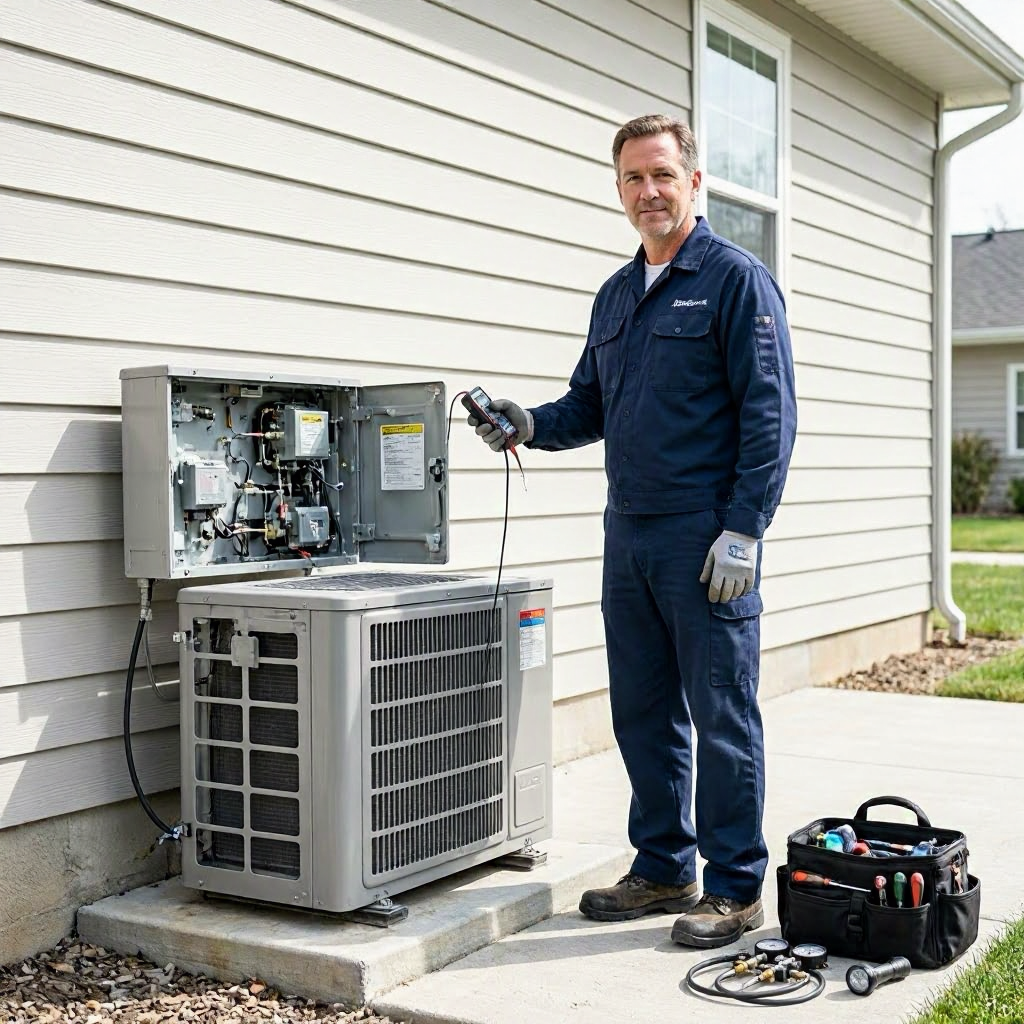
Technicians use tools such as multimeters, gauges, and leak detectors. The job requires physical stamina for climbing ladders, lifting equipment, and working in tight spaces or extreme temperatures. Many roles involve on-call emergency service, especially during heat waves or cold snaps.
Job Outlook and Salary Expectations
The Bureau of Labor Statistics (BLS) projects steady demand for HVAC technicians due to new construction, aging systems needing replacement, and a push for energy-efficient upgrades. Check the latest data at bls.gov/ooh for your state.
Median annual wages hover around $57,000 nationwide, but pay varies by location, experience, and specialization. Entry-level techs often start at $40,000 to $50,000, while experienced ones in high-demand areas like California or New York can exceed $80,000.
Factors influencing salary include union membership, overtime, and working for larger contractors versus small firms. Self-employed techs set their own rates but handle business costs.
O*NET Online (onetonline.org) details skills like mechanical knowledge and customer service. CareerOneStop (careeronestop.org) lists local job postings and training.
Basic Prerequisites to Start
Most HVAC jobs require a high school diploma or GED. Focus on math (algebra, geometry), physics, and shop classes if still in school. Mechanical aptitude helps, so consider vocational electives.
You must be at least 18 years old for most programs and apprenticeships due to safety regulations. A valid driver's license is essential, as you'll drive company vans with tools and parts.
No felony convictions involving theft or violence, as employers run background checks. Pass a drug test routinely.
Build foundational skills through free resources like Khan Academy for math refreshers or YouTube channels on basic refrigeration principles.
Step 1: Choose Your Education and Training Path
HVAC training takes 6 months to 2 years, depending on the program. Hands-on learning is key, so prioritize programs with labs and real equipment.
Vocational and Trade Schools
Enroll in accelerated programs at trade schools like those affiliated with the Air Conditioning Contractors of America (ACCA). These last 6 to 12 months and cover EPA regulations, electrical wiring, and brazing.
Costs vary by school and state, typically $5,000 to $15,000 total. Ask about payment plans, employer sponsorships, or Workforce Innovation and Opportunity Act (WIOA) funding through your local American Job Center.
Community Colleges
Associate degrees in HVAC technology take 2 years and include general education credits transferable to bachelor's programs. Examples include programs at community colleges in Texas or Florida with strong industry ties.
These cost less per credit than universities, often $3,000 to $10,000 for in-state residents. Check for Pell Grants via StudentAid.gov.
Apprenticeships
Registered apprenticeships through the U.S. Department of Labor combine paid on-the-job training (4-5 years) with classroom instruction. Earn while you learn, starting at $15 to $20 per hour.
Search openings at apprenticeship.gov or through unions like UA (United Association). Sponsors include HVAC contractors and manufacturers.
Online and Hybrid Options
Introductory courses from Penn Foster or Ashworth College provide theory but pair them with in-person labs. Avoid fully online programs lacking hands-on components, as employers value practical skills.
| Training Path | Duration | Cost Range (USD) | Best For |
|---|---|---|---|
| Trade School | 6-12 months | $5,000-$15,000 | Quick entry to workforce |
| Community College (Associate) | 2 years | $3,000-$10,000 (in-state) | Broader skills, transferable credits |
| Apprenticeship | 4-5 years | Paid (earn $15+/hr) | Hands-on experience, no upfront debt |
| Online/Hybrid | Varies | $1,000-$5,000 | Supplementing other training |
Verify program quality via ACCA accreditation or state licensing board approval. Contact admissions to discuss job placement support.
Step 2: Earn Essential Certifications
Certifications prove your skills and are often required for employment or licensing. Start with the EPA Section 608, mandatory for handling refrigerants.
EPA Section 608 Certification
This covers Type I (small appliances), Type II (high-pressure), Type III (low-pressure), and Universal (all types). Study via self-paced kits ($100-$200) then pass proctored exams at centers like ESCO Institute.
Recertify every 3 years or after refrigerant law changes.
NATE Certification
North American Technician Excellence offers core and specialty exams (air conditioning, heat pumps). Costs $150-$250 per test. Employers like Carrier or Trane prioritize NATE-certified techs.
Other Valuable Certs
- HVAC Excellence: Entry-level employment ready endorsement.
- ACCA Manual series: Quality installation standards.
Prepare with practice exams from the providers' sites. Many training programs include test prep.
Step 3: Navigate State Licensing Requirements
All states except a few (like Wisconsin) require HVAC licensing, but rules vary. Contractors often need licenses, while techs get certified under them.
Check your state's board via the International Code Council (iccsafe.org) or a Google search for "[state] HVAC license board." Common paths:
- Pass a state exam after training.
- Submit proof of 2-4 years experience or 4,000 hours apprenticeship.
- Fees range $50-$300; background check required.
In Texas, get a Class A or B Air Conditioning Contractor license through TDLR. Florida mandates certification via DBPR.
Start as a technician under a licensed contractor to log hours toward your own license. Renew every 1-2 years with continuing education (8-16 hours).
Step 4: Gain Practical Experience
Entry-level jobs as helpers or installers build hours. Apply at local HVAC firms via Indeed or company sites.
Volunteer for shadowing through trade associations. During training, complete internships for references.
Document all work: Keep a log of installations, repairs, and systems handled. This supports licensing applications.
Building Your Resume for HVAC Jobs
Tailor your resume to highlight technical skills, safety training, and certifications. Use a clean format with keywords like "EPA 608 Universal," " brazing copper lines," "troubleshooting ductwork."
Sample bullet points:
- Installed and serviced 50+ residential HVAC systems, ensuring 100% compliance with local codes.
- Diagnosed and repaired refrigeration leaks using electronic detectors, reducing callbacks by 20%.
- Completed 2,000-hour apprenticeship with ABC Plumbing & HVAC, mastering heat pump operations.
List tools proficiently: manifold gauges, recovery machines, oscilloscopes. Include soft skills: "Communicated clearly with customers on maintenance schedules."
Keep it to one page. Use free templates from Resume.io or Canva.
Preparing for HVAC Technician Interviews
Expect technical questions, hands-on demos, and behavioral ones. Research the company via their website and Glassdoor reviews.
Common questions and responses:
- "Walk me through diagnosing a no-cool AC." "Check thermostat, power, then pressures with gauges. Inspect filters, coils, capacitors. Superheat/subcooling verifies charge."
- "How do you handle refrigerant safely?" "Wear PPE, use recovery equipment, follow EPA rules. Never vent."
- Behavioral: "Describe a tough repair." Use STAR method: Situation, Task, Action, Result.
Dress in clean work clothes, khakis, steel-toe boots. Bring tools for demo if asked.
Practice with a mentor. Follow up via email: "Thank you for the interview. I appreciated discussing your commercial service needs. My EPA cert and 1,500 logged hours align with the role."
Finding and Landing HVAC Jobs
Search on BLS-sponsored sites like CareerOneStop, Indeed, LinkedIn, or HVAC-specific boards like HVACJobs.net. Network at ACCA events or local chapters.
Target residential (smaller firms), commercial (larger unions), or manufacturing service. Union jobs offer benefits but require aptitude tests.
Job search checklist:
- Update LinkedIn with certifications; connect with local techs.
- Apply to 5-10 postings weekly.
- Track applications in a spreadsheet: company, date, contact, follow-up.
- Prepare salary questions: "What's the range for this role with my certs?"
- Negotiate offers: Compare benefits, tools provided, overtime.
Watch for scams: Legit employers don't charge for training or kits upfront.
| Job Search Challenge | Next Step |
|---|---|
| No experience | Apply for helper roles or apprenticeships |
| Weak resume | Add certs, quantify achievements (e.g., "Serviced 100 units") |
| Few interviews | Customize cover letters; network on LinkedIn |
| Low offers | Research BLS data for your area; highlight specialties |
Advancing Your HVAC Career
After 2-5 years, specialize in geothermal, controls, or commissioning. Pursue bachelor's in HVAC engineering for management.
Join NCCER for advanced credentials. Track CEUs for license renewal via providers like ESCO.
Self-employed? Get business insurance, contractor license, and market via Google Business Profile.
Median experienced pay reaches $70,000+, per BLS. Stay current with green tech like low-GWP refrigerants.
Avoiding Common Pitfalls
Don't skip EPA cert—fines up to $44,539 per violation. Verify training ROI by alumni outcomes, not promises.
Compare programs: Visit campuses, ask grads about job leads. Budget for tools ($1,000-$3,000 starter kit).
Organize documents: Folder for certs, licenses, pay stubs. Use apps like Evernote for logs.
For career changers, leverage military or auto repair experience—both involve diagnostics.
This path demands commitment but offers stability. Start with local job centers for personalized guidance.

About the TDL Expert Panel
TDL Expert Panel · TheDigitalLife Editorial Team
TDL Expert Panel is the editorial team behind TheDigitalLife. The team researches, reviews, and creates practical guides to help everyday readers make better decisions about home repair costs, refunds, AI tools, digital safety, productivity, and useful online resources. Each guide is written to be clear, useful, and easy to understand.