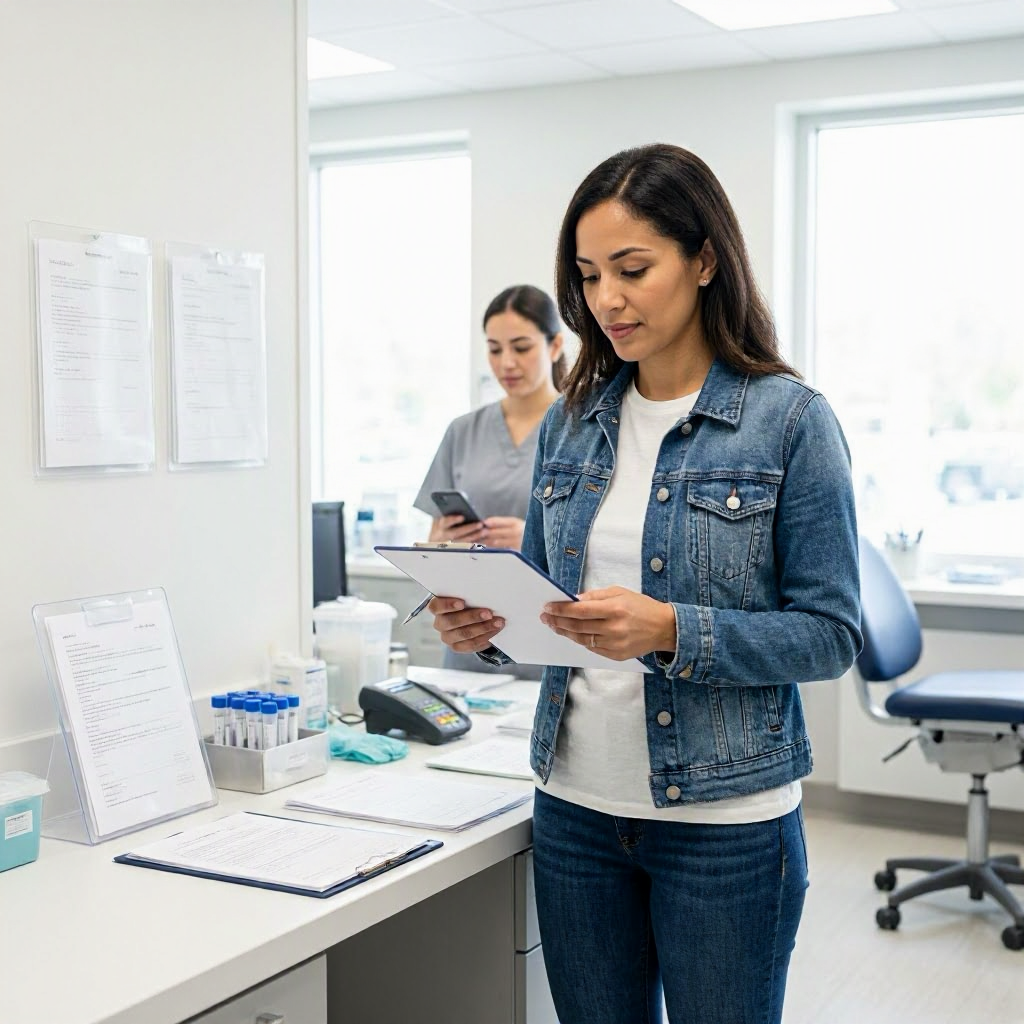
How to avoid surprise lab bills when your doctor is in network
---
Why Surprise Lab Bills Happen Even with an In-Network Doctor
You visit your primary care doctor, who is in-network with your insurance plan. They order blood work or other lab tests as part of your visit. Weeks later, you receive a bill from an out-of-network lab for hundreds or thousands of dollars. This is a common surprise medical bill, especially for lab services.
Labs often operate independently from doctors or hospitals. Your doctor might send samples to a lab that is not in your insurance network, even if the doctor's office is. This leads to balance billing, where the lab bills you for the difference between what your insurer pays and the lab's full charge.
The good news is protections exist. The No Surprises Act, effective since January 1, 2022, limits many surprise bills for insured patients in the US. It applies to most commercial insurance, Medicare Advantage, and some other plans, but not all Medicaid plans. However, lab bills can still slip through if you do not check ahead.
This article walks you through practical steps to verify networks, get cost estimates, and handle bills if they arrive. You will learn what documents to gather, questions to ask your doctor, lab, and insurer, and how to protect yourself without delaying needed care.
Understanding the No Surprises Act and Lab Bills
The No Surprises Act protects against surprise billing in three main situations: emergency services, air ambulance rides, and non-emergency services from out-of-network providers at in-network facilities. Labs tied to in-network doctors or hospitals often qualify, but standalone labs may not.
Key protections for lab bills:
- If the lab is at an in-network facility (like a hospital lab), you pay only your in-network cost-sharing, such as copay or coinsurance.
- No balance billing allowed beyond your plan's out-of-pocket costs.
- An independent dispute resolution (IDR) process settles payment disputes between your insurer and the out-of-network lab, without involving you.
Not all lab bills qualify. For example, if your doctor sends samples to an independent lab not affiliated with their office or a facility, protections may not apply. Always confirm.
Check the CMS No Surprises page at cms.gov/nosurprises for details. It explains patient rights and how to submit complaints.
Step 1: Check Networks for Your Doctor and Lab Before Tests
Prevention starts with verification. Do not assume your doctor's in-network status covers the lab.
Gather These Documents First
- Your insurance card (note the member ID, group number, and customer service phone).
- Your health plan's summary of benefits or member handbook (find it in your insurer's app or portal).
- Recent explanation of benefits (EOB) statements to understand past lab coverage.
- List of symptoms or reason for tests (to discuss with your doctor).
How to Verify Networks
- Log into your insurer's member portal or app. Search for "find a provider" or "network directory." Enter "laboratory," your ZIP code, and specific tests if possible.
- Call the number on your insurance card. Ask: "Is [lab name or doctor's lab partner] in-network for [specific tests] under my plan?"
- Ask your doctor's office: "Which lab will you use for these tests? Can you confirm they are in-network with my plan [plan name]?"
Document everything: note the date, time, representative's name, and reference number.
Pro tip: Some plans have narrow lab networks. Quest Diagnostics or LabCorp might be preferred, but regional labs vary.
Step 2: Ask Your Doctor About Lab Choices During the Visit
Doctors often use preferred labs, but they can switch if needed.
Questions to Ask Your Doctor or Nurse
Prepare these before or during your appointment:
| Question | Why It Helps |
|---|---|
| Which lab will process these tests, and is it in-network with my insurance? | Confirms network status upfront. |
| Can you use an in-network lab if this one is out-of-network? | Gives options without delaying care. |
| Are these tests subject to prior authorization from my insurer? | Avoids denials later. |
| What is the expected cost for these tests under my plan? | Helps spot high-deductible issues. |
Request this in writing via the patient portal or email. If the office uses an independent lab, ask for alternatives.
If tests are urgent, get them done but follow up immediately after.
Step 3: Request a Good Faith Estimate for Lab Costs
Under federal law, providers must give a good faith estimate (GFE) for non-emergency services if uninsured or self-paying. Insured patients can request one too.
- Ask the doctor's office or lab: "Can you provide a good faith estimate for these lab tests, including charges and what my insurer might cover?"
- The GFE lists expected costs for each service. Compare it to your plan's allowed amounts.
- If scheduled services cost $400+ more than the GFE, you can dispute it.
Insurers must also provide cost estimates upon request for 500+ shoppable services, including some labs. Use your member portal's cost estimator tool.
Step 4: Understand What Affects Lab Test Prices
Lab costs vary widely:
- Test type: Basic blood work ($50-$200 in-network) vs. genetic tests ($1,000+).
- Network status: In-network labs charge negotiated rates; out-of-network can be 2-5x higher.
- Your plan: Deductible, coinsurance (e.g., 20% after deductible), out-of-pocket max.
- Facility fees: Hospital-affiliated labs add extras.
Before tests:
- Use your insurer's portal to estimate costs based on CPT codes (your doctor can provide these, like 80053 for comprehensive metabolic panel).
- Ask: "What CPT codes will these tests use?"
What to Do If a Surprise Lab Bill Arrives
Bills can take 4-12 weeks. Do not pay immediately.
Review Your Bill and Documents
- Gather:
- - The lab bill (check patient name, date of service, provider NPI, CPT codes).
- - EOB from your insurer (shows what they paid/denied).
- - Insurance card and plan details.
- Compare:
- - Does the bill match the EOB? Look for errors like wrong insurer info or unapplied payments.
- - Is there a claim number? Note it.
Common bill errors:
- Duplicate charges.
- No insurance billing (lab forgot to submit claim).
- Wrong coding.
Request an itemized bill from the lab: "Please send an itemized statement with CPT codes and charges."
Contact the Lab Billing Office
Call the number on the bill within 30-120 days (check bill for deadlines). - Script: "I received this bill for tests ordered by [doctor], who is in-network. My EOB shows [insurer paid X]. Why am I billed the balance? Was a claim submitted?" - Ask: "Are you participating in the No Surprises Act IDR process?" - Request they rebill insurance if not done.
Get written confirmation of any adjustments.
Contact Your Insurer
Use the official phone/app/portal. - Questions: - "Was the lab in-network for these services?" - "Why was the claim denied/paid low? Any prior auth needed?" - "What is the allowed amount for these CPT codes?" - If out-of-network, ask if protections apply (e.g., facility-based).
Keep notes: rep name, date, claim #.
Dispute or Appeal a Surprise Bill
If unresolved:
- Submit a patient-provider dispute if No Surprises Act applies (open enrollment notice or bill triggers 30-day window).
- - Use CMS form at cms.gov/nosurprises.
- - Provider and insurer negotiate first; if no agreement, IDR.
- Insurer appeal: For coverage issues, appeal within your plan's deadline (often 180 days). Gather EOB, bill, doctor's notes.
- State insurance department: File a complaint if balance billed illegally. Find yours via naic.org.
For medical debt concerns, see CFPB resources at consumerfinance.gov/rules-policy/medical-debt. They cover credit reporting pauses for paid medical debts.
| Dispute Type | Who to Contact First | Deadline Tip |
|---|---|---|
| No Surprises Act violation | Provider billing office, then CMS portal | 30 days from notice |
| Coverage denial | Insurer appeals dept. | Plan-specific, often 180 days |
| Billing error | Lab billing, insurer | Before payment due date |
Negotiate or Reduce the Bill
Even protected bills can have high cost-sharing.
- Financial assistance: Ask lab/hospital: "Do you offer charity care, discounts, or payment plans based on income?" Provide tax returns, pay stubs.
- Prompt pay discount: Some labs reduce 20-50% for quick cash payment.
- Payment plan: Interest-free options often available. Get terms in writing.
- Collections caution: Do not ignore; negotiate before agency involvement. Debts under $500 often not reported to credit bureaus.
Do not agree to payments you cannot afford. Document all agreements.
Long-Term Prevention Strategies
- Choose PCPs with in-network labs: Ask during selection: "What labs do you use?"
- Use insurer tools: Apps like UnitedHealthcare's estimator or Blue Cross cost lookup.
- Telehealth labs: Some services partner with in-network phlebotomy.
- Annual review: Check network changes during open enrollment (Nov-Dec).
For Medicare patients: Original Medicare has no surprise billing protections for non-emergencies; Medicare Advantage varies. Check Medicare.gov.
Medicaid: Protections depend on state; contact your state agency.
Protect Yourself from Scams Related to Lab Bills
Scammers pose as labs or insurers:
- Unsolicited calls demanding immediate payment.
- Links to "pay bill" sites asking for SSN or bank info.
- Threats of collections or arrest.
Verify via official bill statement numbers. Hang up and call back using insurer/lab websites. Report to FTC at reportfraud.ftc.gov.
Checklist: Avoiding and Handling Surprise Lab Bills
Use this before, during, and after tests:
- Before visit:
- - Verify doctor's and potential labs' network status.
- - Note deductible/coinsurance status.
- At visit:
- - Confirm lab choice and request GFE.
- - Get CPT codes if possible.
- After tests:
- - Watch for EOB (insurer sends within 30 days).
- - Compare to any bill.
- If billed:
- - Request itemized bill.
- - Call lab/insurer within 30 days.
- - Document everything.
Keep all records for at least 2 years: bills, EOBs, notes, emails.
By following these steps, you reduce surprise risks and handle them confidently. Always use secure portals and verified contacts to protect your info. If overwhelmed, contact a patient advocate via the Patient Advocate Foundation (patientadvocate.org) or your state's health consumer assistance program.
(Word count: 2487) ---

About the TDL Expert Panel
TDL Expert Panel · TheDigitalLife Editorial Team
TDL Expert Panel is the editorial team behind TheDigitalLife. The team researches, reviews, and creates practical guides to help everyday readers make better decisions about home repair costs, refunds, AI tools, digital safety, productivity, and useful online resources. Each guide is written to be clear, useful, and easy to understand.