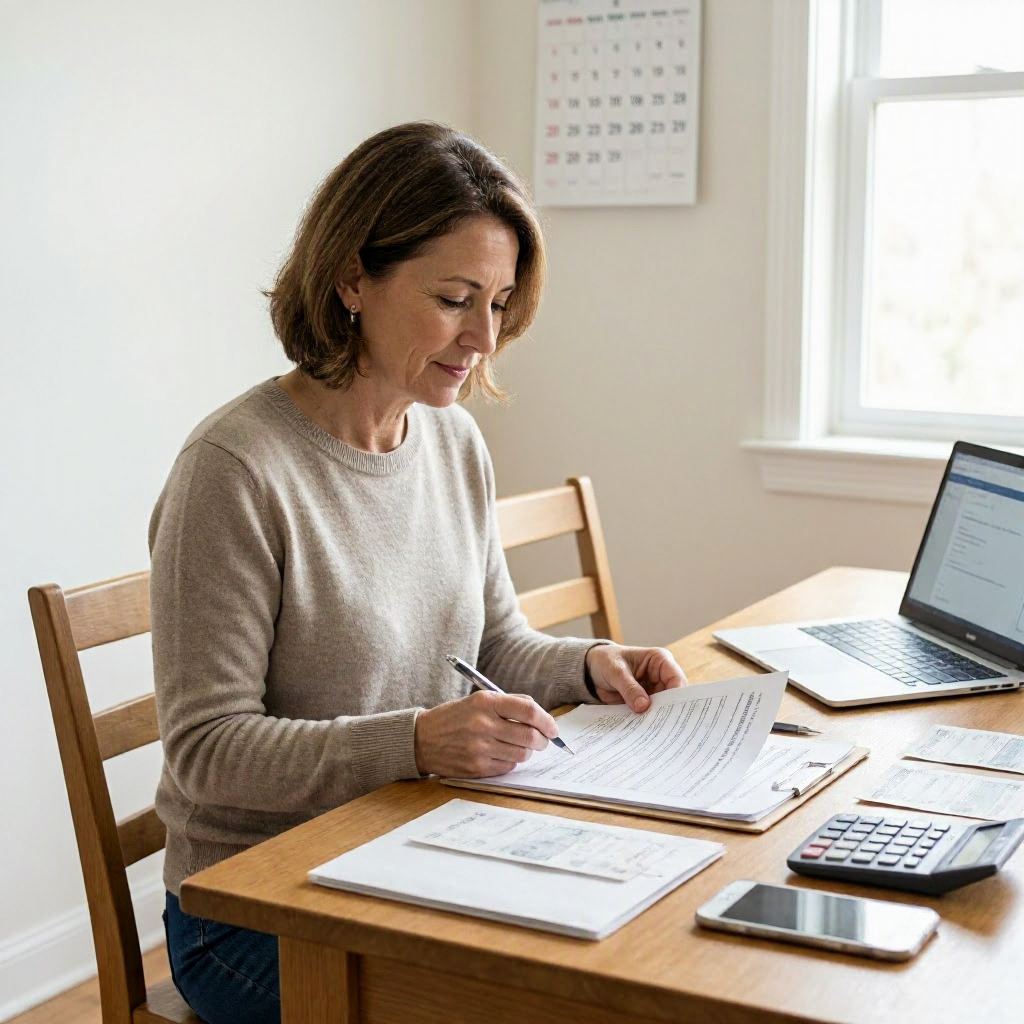
Free School Meals income limits, documents, and deadlines
---
Understanding Free School Meals in the United States
Free school meals help ensure children in public schools, and sometimes private or charter schools, get nutritious breakfasts and lunches at no cost. This benefit comes through the National School Lunch Program (NSLP) and School Breakfast Program, run by the U.S. Department of Agriculture (USDA) with support from state education departments and local school districts. These programs serve millions of students each year, focusing on households facing financial challenges.
Families may qualify based on income, or through automatic eligibility if they receive certain other benefits like SNAP (food stamps). The goal is to support children's health and learning without adding financial stress. Rules can differ by state, school district, and even school year, so always check your local details.
Eligibility Basics for Free School Meals
Eligibility often hinges on household income compared to federal poverty guidelines, but other factors play a role too. Households with income at or below 130% of the federal poverty level may qualify for free meals. This threshold adjusts yearly and by household size, so verify the current figures.
Categorical eligibility can simplify things. Children in households receiving SNAP, TANF (Temporary Assistance for Needy Families), or Medicaid may automatically get free meals without an income application. Foster children, homeless students, and those in migrant families often qualify regardless of income. Schools identify these through direct certification processes.
Other considerations include residency in the school district, enrollment status, and U.S. citizenship or eligible immigration status for the child. Immigration status of parents usually does not affect child eligibility. Contact your child's school or district nutrition office to confirm what applies locally.
State rules add layers. For example, some states expand free meals to all public school students (called "community eligibility"), while others stick closely to federal income tests. Universal free meals were available in many states during COVID-19 waivers, but those have mostly ended, check for ongoing expansions.
Free School Meals Income Limits Explained
Income limits for free meals are set federally but applied locally. They use gross income before taxes, including wages, self-employment, child support, alimony, pensions, Social Security, unemployment, and investment income. Exclusions often cover child support paid out, certain scholarships, and work expenses for the disabled.
Limits scale with household size. A family of four might have a higher threshold than a single parent with one child. The free meals cutoff is typically 130% of the federal poverty level (FPL), while reduced-price meals go up to 185% FPL. These percentages update annually in January based on the prior year's poverty guidelines.
Because limits change, avoid outdated charts. For instance, during economic shifts or inflation, guidelines rise. Your state department of education or school district website posts current tables, often with examples like:
- Household of 1: Lower income cap for free meals.
- Household of 4: Higher cap, adding roughly $5,000, $6,000 per additional member (approximate, verify exact).
Schools calculate household size as adults plus children under 21, or those in school. Shared custody? Income from both homes may count unless legally separated.
To check your potential eligibility:
- Gather recent pay stubs or income records.
- Visit your school district's nutrition page or call the office.
- Use tools on Benefits.gov or your state education site for pre-screeners.
If income fluctuates, like seasonal farm work or gig economy jobs, report an average or lowest recent months, ask your school for guidance. Direct certification skips income proof for SNAP recipients, making it faster.
Common Documents for Free School Meals Applications
Applications require proof to verify eligibility. Gather these before starting to avoid delays. Schools often accept digital uploads, scans, or paper copies.
Here's a checklist of frequently requested documents:
- Proof of all household income: Last 30 days' pay stubs, W-2s, 1099 forms, employer letters, or self-employment records. Unemployment stubs or SSI/SSDI award letters if applicable.
- Household details: List of names, ages, relationships, and Social Security numbers (SSNs) for all members. SSNs help with direct certification matching.
- Identification: Driver's license, state ID, birth certificates, or passports for adults applying.
- Residency proof: Utility bill, lease, mortgage statement, or mail with your address (dated within 60 days).
- Other benefits proof: SNAP EBT card copy, Medicaid card, or TANF notice for categorical eligibility.
- Special circumstances: Foster care letter, homelessness affidavit (school provides), or migrant status docs.
For large households or non-traditional setups (grandparents raising kids, roommates), explain clearly. Schools may waive docs for direct certification cases.
Keep originals safe, make copies or photos. If a document is missing, note why and provide alternatives, like a landlord letter for rent proof. Applications often go through school portals like MySchoolApps or state sites; save upload confirmations.
| Document Type | Why It May Be Needed | Alternatives If Unavailable |
|---|---|---|
| Pay stubs or income letters | Verify gross income against limits | Tax return, employer statement, unemployment printout |
| SSN list for household | Match with benefit databases | Individual Tax ID Numbers (ITINs) if no SSN |
| Utility bill or lease | Confirm district residency | School enrollment letter or mail |
| SNAP/Medicaid card | Automatic free meals eligibility | Benefit award notice or case number |
Application Deadlines and Timelines
Deadlines vary widely, no national cutoff exists. Many districts accept applications year-round (rolling basis), especially for new students or income changes. Others set dates tied to the school year start (August/September) or semester breaks.
Check your school's calendar:
- Summer before school: Priority for fall meals.
- Mid-year: For job loss or household changes.
- End of year: Some close in May/June.
Late applications? Meals start the day after approval, not retroactively. COVID-era extensions have lapsed in most places, but some states offer flexibility, verify.
Processing takes 7–10 business days typically, faster for direct certification (often same-day). Track status via the application portal, confirmation email, or school office call. Save your application ID or confirmation number.
If delayed, follow up politely: "I'm checking on application #XXXX submitted [date]."
Step-by-Step Guide to Applying for Free School Meals
- Start locally: Visit your child's school website, district nutrition page, or pick up a paper form at the office. Search "[your district] free and reduced meals application."
- Gather docs: Use the checklist above. Redact sensitive info like full SSNs if uploading.
- Choose method:
- - Online: Fastest, via district portal (e.g., SchoolCafe, Heartland Applications). Create account if needed.
- - Paper: Download, fill, submit to school cafeteria or mail.
- - In-person: Cafeteria or front office drop-off.
- Fill accurately: Report all income sources; underreporting risks overpayment repayment later.
- Submit and confirm: Get a receipt. Screenshot portal submissions.
- Wait for notice: Approval letter lists effective date and duration (often full year).
- Meals begin: Child gets free breakfast/lunch; no separate card needed in most cases.
For multi-school households, one application may cover siblings. Transfers? Reapply at new school.
Renewals, Recertifications, and Reporting Changes
Most approvals last one school year. Renew by reapplying annually, often with reminders sent home. Direct certification renews automatically if other benefits continue.
Report changes within 10 days:
- Income rise (may shift to reduced-price).
- Household size drop/add.
- Address move (new district? Reapply).
- Lost SNAP eligibility.
Submit updates same way as initial app. Keep proof. Missing renewal? Meals stop until resubmitted.
Handling Denials, Delays, or Issues
Denials come by letter explaining reason (e.g., income over limit, missing docs) and appeal rights. Read carefully for deadlines, often 10–14 days for a hearing.
Appeal steps: 1. Request in writing or via portal within deadline. 2. Gather supporting docs (new pay stubs if income dropped). 3. Attend informal hearing with school hearing official. 4. Decision in days; further appeals to state.
Delays? Call school nutrition director. Overpayment notice? Arrange repayment plan; don't ignore.
For help, contact legal aid or 211.org for navigators.
State and Local Variations
All 50 states participate, but provisions differ:
- California, Maine, Michigan offer universal free meals.
- Others test income strictly.
- Tribal schools have separate rules.
Find yours:
- State department of education "nutrition" or "school meals" page.
- Benefits.gov search "school meals [state]".
- USDA's Food and Nutrition Service (FNS) state directory.
- Call district at 1-XXX-XXX-XXXX (find on site).
211 connects to local help.
Avoiding Scams Around School Meals
Scammers target families with fake "free lunch grant" texts or sites charging fees. Government apps are always free, no payments for processing.
Red flags:
- Unsolicited calls for SSN/bank info.
- Sites mimicking .gov but with .com.
- "Guaranteed approval" promises.
- Gift card requests.
Verify only via school/district sites. Report to FTC.gov or school.
Preparing Your Records for Success
Build a benefits folder:
- All apps, notices, confirmations.
- Doc copies.
- Call logs (date, name, summary).
This aids appeals, audits, or IRS child tax credit claims (school meals data sometimes shares).
Real-Life Scenarios for Families
Single mom, two kids, part-time job: Gross under limit? Apply with stubs, EBT if on SNAP. Approved fast.
Grandparents raising grandkids: Include SSI income; foster-like status may help.
Recent layoff: Report change mid-year for continued free meals.
Military family: BAH (housing allowance) counts as income; check DoD schools.
These steps empower families. Verify locally for peace of mind, benefits support kids' futures.
(Word count: 2987) ---

About the TDL Expert Panel
TDL Expert Panel · TheDigitalLife Editorial Team
TDL Expert Panel is the editorial team behind TheDigitalLife. The team researches, reviews, and creates practical guides to help everyday readers make better decisions about home repair costs, refunds, AI tools, digital safety, productivity, and useful online resources. Each guide is written to be clear, useful, and easy to understand.