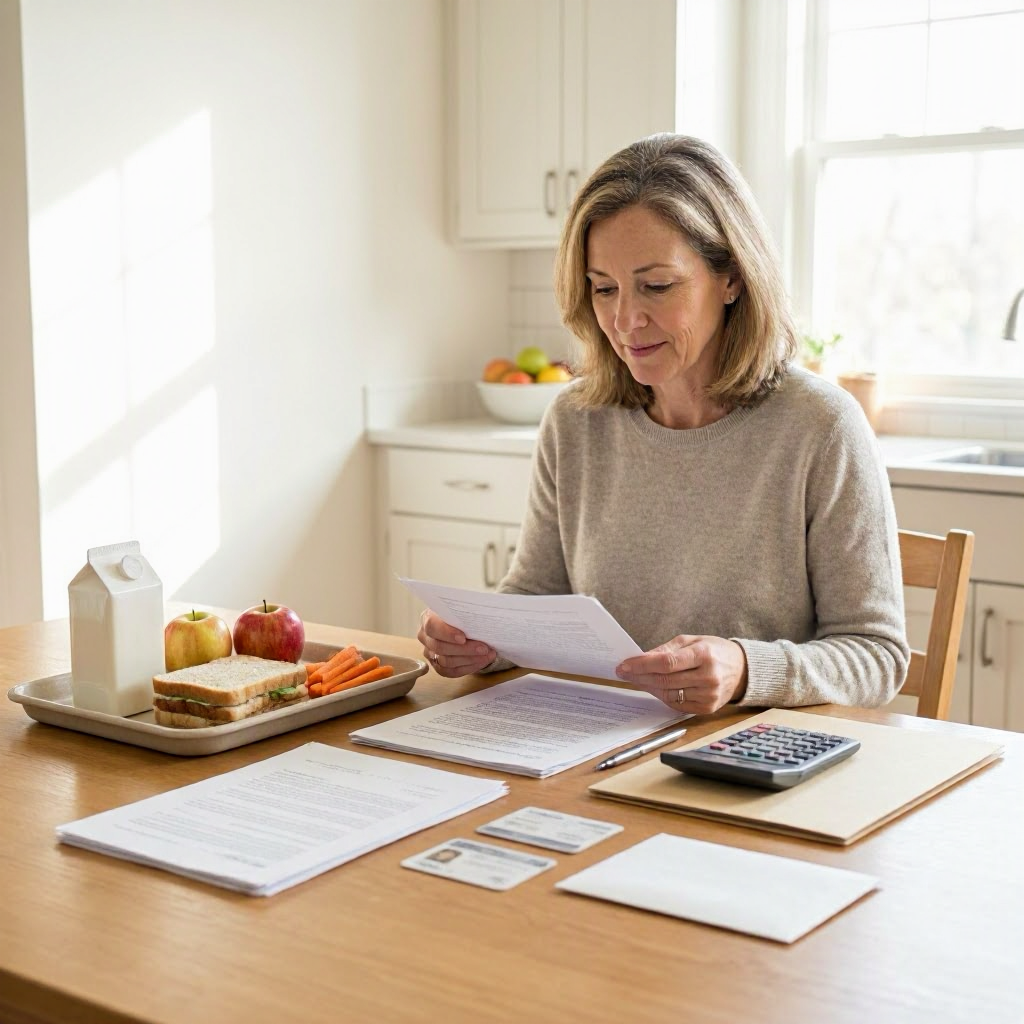
Free School Meals eligibility requirements explained
What Are Free School Meals?
Free school meals provide breakfast and lunch at no cost to eligible children in public schools across the United States. These meals are part of federal programs run by the U.S. Department of Agriculture (USDA), mainly the National School Lunch Program (NSLP) and the School Breakfast Program (SBP). Schools receive federal reimbursement for serving nutritious meals that meet dietary standards.
The goal is to help children from low-income households get healthy food during the school day. This support can reduce hunger, improve focus in class, and support better health. Over 30 million children benefit each year, but eligibility rules ensure aid goes to those who need it most.
Programs operate through state education departments and local school districts. Rules can vary by location, so families should check with their child's school or district for specifics. During the COVID-19 pandemic, many schools offered free meals to all students temporarily, but standard eligibility requirements have returned in most areas.
Who May Qualify for Free School Meals?
Eligibility for free school meals often depends on household income, size, and other factors like participation in other assistance programs. Children may qualify if their family meets federal guidelines set by the USDA. Qualification is not guaranteed and requires verification through an application or automatic checks.
Common qualifiers include families with income at or below a certain percentage of the federal poverty level, typically around 130% for free meals. However, exact limits change yearly and depend on household size. Always verify current thresholds on official USDA or state sites.
Schools check eligibility in two main ways: categorical eligibility for certain program participants or income-based eligibility through household applications. Undocumented children may still qualify regardless of parents' status, as programs focus on the child's need.
Categorical Eligibility
Families receiving benefits from programs like SNAP (Supplemental Nutrition Assistance Program), TANF (Temporary Assistance for Needy Families), or Medicaid (at specific income levels) often qualify automatically. This is called direct certification.
Foster children, homeless students, and those in migrant families may also be directly certified. Schools get data from state agencies to identify these students without a household application. Parents might receive a letter notifying them of automatic approval.
If your child receives these benefits, contact the school to confirm direct certification. This process saves time and paperwork.
Income-Based Eligibility
If not categorically eligible, families apply based on total household income. Income includes wages, self-employment, child support, alimony, unemployment, Social Security, pensions, and investments. Deductions may apply for expenses like childcare or medical costs.
Households must report gross income before taxes. Schools compare it to federal poverty guidelines adjusted for household size and location (Alaska and Hawaii have higher limits).
Example: A family of four in the contiguous U.S. might need income below a specific annual amount to qualify. Check the latest on the USDA's Food and Nutrition Service website or your state's education department site.
How Household Size and Income Are Calculated
Household size counts everyone who lives together and shares meals, including parents, children, grandparents, and others. It excludes non-household members like roommates who buy and prepare food separately.
Income calculation covers the past month or year, depending on the application. Schools may ask for proof from all adult earners. Changes in income, like a job loss, can affect eligibility, so report them promptly.
Federal poverty guidelines update annually in January. For the most current figures, visit Benefits.gov or the USDA site. State agencies post income eligibility tables tailored to their rules.
Here's a simple way to estimate before applying:
- List all household members.
- Add up gross monthly income from all sources.
- Compare to guidelines for your household size on an official site.
This pre-check helps avoid surprises.
Community Eligibility Provision (CEP)
Some schools or districts use the Community Eligibility Provision, where entire schools offer free meals to all students. Schools in high-need areas opt in if at least 40% of students are identified as low-income through direct certification.
Under CEP, no household applications are needed. All kids eat free, reducing stigma and paperwork. Not all schools participate; check your district's policy.
This provision covers about 40% of public schools. Benefits include simpler administration and higher participation rates.
Documents Commonly Needed for Applications
Applications require proof to verify eligibility. Gather these before starting to speed up processing. Schools accept copies, not originals.
Common documents include:
- Photo ID for the adult applying (driver's license, passport, or state ID).
- Proof of income: Recent pay stubs (last 30 days), W-2 forms, tax returns (last year), or award letters for unemployment, workers' comp, Social Security, or pensions.
- Proof of SNAP, TANF, or Medicaid: Case number, approval letter, or Electronic Benefits Transfer (EBT) card number.
- Proof of household size and residency: Lease, mortgage statement, utility bill, or mail with your address.
- Social Security numbers for all household members (or individual taxpayer ID numbers if no SSN).
- Disability or medical info if claiming deductions (doctor's note or SSI award letter).
For foster or homeless families: Court order, shelter letter, or McKinney-Vento liaison contact.
Keep digital scans and paper copies. Schools may request more if info is unclear.
| Document Type | Why It May Be Needed | Examples |
|---|---|---|
| Income Proof | Verify against poverty guidelines | Pay stubs, tax returns, benefit letters |
| ID & SSN/ITIN | Confirm identity and household members | Driver's license, SSN cards |
| Residency Proof | Link to school district | Utility bill, lease agreement |
| Public Assistance | Direct certification | SNAP EBT number, TANF letter |
Step-by-Step Guide to Applying
Start at your child's school or district website. Look for "free and reduced-price meals" or NSLP/SBP application links. Avoid third-party sites charging fees; applications are free.
- Check for direct certification: Ask the school office if your child qualifies automatically.
- Download or get the form: Paper forms are sent home early in the school year; online portals are common.
- Fill out accurately: List all income, household members, and signatures. One form covers all children in the district.
- Attach documents: Upload or mail as instructed.
- Submit: Online, in person, or by mail. Note the date and get a confirmation number or receipt.
- Wait for approval: Processing takes 10 days typically. Meals start immediately if approved.
Track status via the school portal or by calling the cafeteria manager. Respond quickly to requests for more info.
Tip: Apply early in the school year, but you can apply anytime. Approval lasts the full year unless changes occur.
Renewals and Recertification
Eligibility expires at the end of the school year. Schools send renewal forms in summer or early fall. Submit even if nothing changed; missing it stops free meals.
Report changes mid-year: income increase over limits, new household members, or moving out of district. Use the school portal or a change form.
Keep proof of submission: Screenshots, emails, stamped copies. Late renewals may delay benefits until verified.
Checklist for Renewal:
- Review last year's form for accuracy.
- Update income docs.
- Submit by district deadline (often September/October).
- Confirm receipt with school.
What to Do If Denied or Delayed
Read the denial notice carefully. It explains the reason (e.g., income too high, missing docs) and appeal rights.
Steps for denial: 1. Gather supporting documents to counter the reason. 2. Request a fair hearing via the school or district nutrition office (deadline usually 10 days). 3. Attend the hearing or submit written appeal. 4. Keep records of all contacts.
Delays? Follow up politely: "I'm checking status on application #XXXX submitted MM/DD." Contact your state education department if unresolved.
Legal aid or food bank navigators can help with appeals. Success depends on your case; no guarantees.
State and Local Variations
While federal rules set the base, states and districts add details. For example:
- Some states expand eligibility via Medicaid direct certification.
- Application portals differ (e.g., California's online system vs. paper in others).
- Summer meal sites follow similar rules.
Alaska and Hawaii have adjusted poverty levels. Tribal schools have separate programs.
Find your state's info at the USDA's state directory or fns.usda.gov/school-meals. Districts post local rules.
Summer and Non-School Meals
Free eligibility often extends to Summer Food Service Program (SFSP) sites. Eligible kids eat free at approved locations. Check SummerFood.org or call 211 for sites.
Afterschool snacks may also be free under NSLP at qualifying sites.
Avoiding Scams and Unofficial Sites
Scammers target families with fake "free meal" apps charging fees or asking for bank info. Official applications are free through schools.
Red flags:
- Sites demanding payment or gift cards.
- Unsolicited calls/texts for SSNs.
- Ads mimicking USDA.gov.
Verify at fns.usda.gov or school sites. Report scams to FTC.gov or local district.
Benefits Beyond Meals
Free meals reduce family grocery costs (potentially $30-50/week per child). They count toward CACFP for childcare and support WIC eligibility checks.
Improved nutrition links to better grades and health.
Tracking and Recordkeeping Tips
Keep a folder with:
- Application copies and confirmations.
- Approval/denial notices.
- Income proofs submitted.
- Contact logs (dates, names, outcomes).
Screenshots of online portals protect against glitches.
Sample Status Check Email: Subject: Status Update for Free Meals Application #12345 Dear [School Nutrition Director], I submitted my application on [date] for [child's name/ID]. Please advise on status or needed docs. Thank you.
Where to Verify Official Information
- USDA Food and Nutrition Service: fns.usda.gov/school-meals (federal rules, income charts).
- Benefits.gov: Search "school meals".
- State Department of Education: Google "[state] free school meals".
- School/District Website: Nutrition or meals section.
- 211.org: Local help and sites.
Call your school first. Caseworkers or nutritionists guide you.
Hotlines vary by state; find via USDA directory.
Common Questions on Eligibility
Does foster status qualify? Yes, often automatically.
What about private schools? Many participate; check with the school.
Can I apply for just breakfast? Forms cover both; eligibility is the same.
Immigration status? Eligible kids qualify; parents' status usually not checked.
Verify answers with officials, as rules update.
Preparing for Changes in Eligibility
Job gain or household change? Recalculate income. Tools on Benefits.gov help estimate.
Pandemic waivers ended, but watch for extensions via school notices.
Partner Programs and Additional Help
Households near eligibility may get reduced-price meals (income up to 185% poverty). SNAP pre-screeners flag school meal eligibility.
Local food pantries or No Kid Hungry connect to resources.
This comprehensive guide equips you to navigate free school meals. Start with your school for personalized steps. Official verification ensures accuracy.

About the TDL Expert Panel
TDL Expert Panel · TheDigitalLife Editorial Team
TDL Expert Panel is the editorial team behind TheDigitalLife. The team researches, reviews, and creates practical guides to help everyday readers make better decisions about home repair costs, refunds, AI tools, digital safety, productivity, and useful online resources. Each guide is written to be clear, useful, and easy to understand.