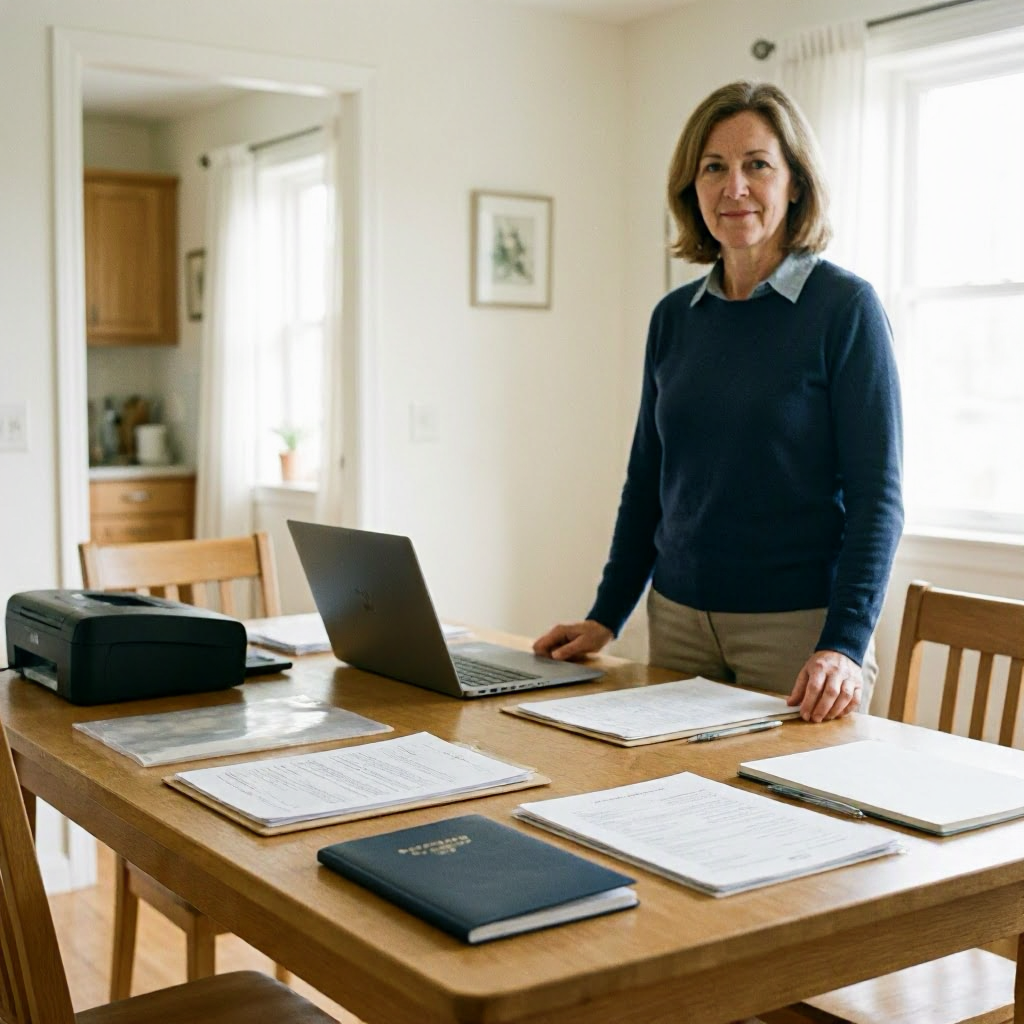
Family-Based Immigrant Visa documents checklist for 2026
Understanding Family-Based Immigrant Visas
Family-based immigrant visas allow U.S. citizens and lawful permanent residents (LPRs, also known as green card holders) to sponsor certain relatives for permanent residence in the United States. These visas lead to green cards, granting the right to live and work permanently.
There are two main types: immediate relative categories with no annual limits and family preference categories subject to numerical caps and priority dates. Immediate relatives include spouses, unmarried children under 21, and parents of U.S. citizens. Preference categories cover other family members, like adult children, siblings, and spouses/children of LPRs.
Immigration rules can change, so eligibility depends on your specific facts and immigration history. Check USCIS.gov and Travel.State.gov for current official instructions. This article provides a general documents checklist for 2026 preparations, but it is not legal advice. A qualified immigration attorney or accredited representative can review your situation.
The Family-Based Immigration Process Overview
The process starts with a petition filed by the U.S.-based sponsor (petitioner) using Form I-130, Petition for Alien Relative. After USCIS approval, cases move to the National Visa Center (NVC) for immigrant visa processing if the beneficiary is abroad, or to adjustment of status if they are in the U.S.
Key stages include:
- Petition approval: USCIS reviews relationship evidence.
- NVC processing: Document submission, fees, affidavit of support.
- Consular processing: Interview at a U.S. embassy or consulate abroad.
- Adjustment of status: Filing Form I-485 inside the U.S., if eligible.
Processing times vary by category, office workload, and case complexity. For preference categories, wait for a current priority date via the monthly Visa Bulletin on Travel.State.gov. Always verify steps on official sites, as procedures evolve.
Who Can Petition and Basic Eligibility Checks
U.S. citizens (age 21+) can petition immediate relatives and preferences. LPRs can petition spouses and unmarried children but not parents or siblings.
Before gathering documents, check:
- Your citizenship or LPR status (via passport, naturalization certificate, or green card).
- Beneficiary's age, marital status, and relationship (immediate relative or preference).
- No bars like prior immigration violations or inadmissibility grounds.
Organize proof early. Keep copies of everything submitted.
Core Documents Checklist by Process Stage
Use this checklist to prepare for 2026 filings. Gather originals where possible, plus English translations certified by the translator. Photocopy all documents before submission.
| Stage | Key Documents | Notes |
|---|---|---|
| Form I-130 Petition | Form I-130, filing fee receipt, petitioner's ID/proof of status, relationship evidence | Submit to USCIS lockbox or online via myUSCIS account. Check USCIS.gov/forms for current fee and address. |
| NVC Immigrant Visa Processing | DS-260 online form confirmation, civil documents (birth/marriage certificates), police certificates, financial docs (Form I-864), photos | NVC assigns case number after I-130 approval. Upload via CEAC portal on Travel.State.gov. |
| Consular Interview | Passport, visa fee receipt, medical exam (sealed), welcome letter, all prior docs | Bring to embassy/consulate. Check specific post instructions. |
| Adjustment of Status (Form I-485) | Form I-485, I-130 approval notice, I-94, medical exam, affidavit of support, photos | File concurrently with I-130 if eligible. Biometrics follow. |
This table covers essentials; expand based on relationship below.
Documents for the Petitioner (Sponsor)
The petitioner proves U.S. status, relationship, and ability to support the beneficiary.
Proof of U.S. Status
- U.S. citizen: U.S. passport, birth certificate, naturalization certificate, or citizenship certificate.
- LPR: Front/back copy of green card (Form I-551).
- Keep updated; renewals may delay cases.
Relationship Evidence
Primary evidence varies by category (detailed below). Include secondary proof like photos, joint accounts, or affidavits from friends/family.
Financial Support (Affidavit of Support)
- Form I-864, Affidavit of Support, or I-864EZ if qualifying alone.
- Tax returns (IRS Form 1040) for last 1-3 years.
- W-2s, pay stubs, employer letter.
- If income short, use joint sponsor's docs.
Sponsors must meet 125% of federal poverty guidelines. Check current levels on USCIS.gov/I-864. Translations needed for foreign docs.
Documents for the Beneficiary (Intended Immigrant)
The beneficiary proves identity, admissibility, and relationship.
Civil Documents
- Birth certificate (long form, with parents' names).
- Marriage certificate (if applicable).
- Divorce/death certificates for prior marriages.
- Police certificates from countries lived in after age 16 (valid 2 years).
- Court/criminal records if any.
Obtain from home country authorities. Apostille if required by consulate.
Identity and Travel Docs
- Valid passport (at least 6 months beyond intended stay).
- Prior U.S. visas, I-94 records (from CBP.gov/I94).
- Two passport-style photos (2x2 inches, per specs on Travel.State.gov).
Medical Examination
- Sealed envelope from panel physician-approved doctor.
- Vaccination records (Form I-693 for adjustment).
List of physicians on Travel.State.gov or USCIS.gov.
Relationship-Specific Document Checklists
Tailor to your category. Immediate relatives have no wait; preferences do.
Spouses (IR1/CR1 or F2A)
- Marriage certificate.
- Proof bona fide: Joint lease/mortgage, bank statements, insurance, photos, travel itineraries, affidavits.
- Divorce decrees for both if prior marriages.
Unmarried Children Under 21 (IR2/CR2 or F2A)
- Birth certificate showing parent's name.
- If adopted: Adoption decree, pre-adoption custody proof.
- If stepchild: Marriage cert of stepparent/stepchild's parent before age 18.
Parents of U.S. Citizen (IR5)
- Petitioner's birth certificate (showing parent's name).
- Proof petitioner is 21+: ID.
Adult Children and Siblings (F1/F3/F4)
- Birth certificates linking family chain.
- Siblings: Petitioner's and beneficiary's birth certs showing same parents.
| Relationship | Primary Evidence | Secondary Evidence Examples |
|---|---|---|
| Spouse | Marriage certificate | Joint finances, photos, correspondence |
| Child | Birth certificate | School records naming parent |
| Parent | Petitioner's birth certificate | Family photos, affidavits |
| Sibling | Both birth certificates | Shared childhood proof |
Documents for Derivatives (Spouse/Children of Beneficiary)
If beneficiary has family, include:
- Marriage/birth certificates linking to principal.
- Same civil docs as principal.
Special Situation Documents
Adopted Children
- Full adoption decree.
- Proof lived with adoptive parent 2 years pre-adoption (Hague or non-Hague rules apply).
Widow(er)s
- Death certificate of deceased U.S. citizen spouse.
- Proof marriage within 2 years before death.
Violence Against Women Act (VAWA) Self-Petitioners
- Form I-360 instead of I-130.
- Evidence of abuse, relationship, good faith marriage.
Fiancé(e)s (Before Marriage)
Note: K-1 visa separate, but converts to CR1 adjustment.
Check category-specific pages on USCIS.gov/forms/family.
Preparing Documents for 2026 Submission
Start early, as visa numbers limit preferences. Monitor Visa Bulletin.
Translations and Certifications
- English translations for non-English docs.
- Translator certification: "I certify this is complete/accurate translation."
Photos and Signatures
- Recent color photos per exact specs.
- Sign forms in black ink; no staples on originals.
Organizing Files
Create folders: Petitioner, Beneficiary, Financial, Relationship, Civil Docs. Scan everything for myUSCIS or CEAC accounts. Keep originals safe.
Submission Tips
- Online: myUSCIS for I-130/AOS; CEAC for NVC.
- Mail: Certified mail with tracking; keep receipts.
- Fees: Pay via bank account; save confirmation.
Deadlines matter—respond to Requests for Evidence (RFEs) promptly.
Checking Case Status and Next Steps
After filing:
- Receipt notice (Form I-797) arrives 2-4 weeks; note receipt number.
- Track on USCIS.gov/casestatus or myUSCIS.
- NVC: CEAC.state.gov; invoice/case numbers issued.
Watch mail/email for biometrics, interviews, RFEs. Processing times on USCIS.gov/processingtimes vary (months to years).
If RFE:
- Read carefully: Note deadline (usually 87 days).
- Submit requested items with cover letter referencing receipt number.
- Keep copy of response.
Travel and Status While Waiting
Pending petitions do not authorize work/travel. Check I-94 for current status. Consult professional before trips, as returns not guaranteed.
Common Mistakes to Avoid
- Incomplete relationship proof: Leads to denials/RFEs.
- Outdated docs: Police certs expire.
- No translations: Delays processing.
- Ignoring priority dates: Premature filing wastes time.
- Poor scans: Blurry uploads rejected.
- Not keeping copies: Hard to replace.
Double-check forms against instructions.
Protecting Your Information and Avoiding Scams
Immigration docs contain sensitive data like A-numbers, passports. Never share with unverified parties.
Red flags:
- Guarantees of approval.
- Requests for gift cards/wire transfers.
- "Notarios" giving advice.
- Fake USCIS emails/calls demanding payment.
Verify help: DOJ list of accredited reps on Justice.gov/eoir. Use USCIS.gov/scams.
When to Contact Qualified Immigration Help
Seek an attorney or accredited rep if:
- Criminal history.
- Prior deportations/overstays.
- Complex family (multiple marriages).
- RFE/denial.
- Financial shortfalls.
Questions to ask:
- Experience with family-based cases?
- Fees and services?
- Provide form copies?
Find via AILA.org or pro bono at Justice.gov/eoir/list-pro-bono-legal-service-providers.
This is general information, not legal advice. Do not rely on this article as a substitute for qualified immigration help. Check USCIS.gov, Travel.State.gov for 2026 updates, as rules change.
Recordkeeping Best Practices
Keep a timeline file:
- Filing receipts.
- Notices (receipt, approval, RFE).
- Screenshots of online status.
- Mailing proofs.
- Interview confirmations.
Store digitally and physically. Update after green card issuance.
Family-based visas reunite loved ones, but preparation is key. Start your checklist now for 2026 success. Verify all on official sites.

About the TDL Expert Panel
TDL Expert Panel · TheDigitalLife Editorial Team
TDL Expert Panel is the editorial team behind TheDigitalLife. The team researches, reviews, and creates practical guides to help everyday readers make better decisions about home repair costs, refunds, AI tools, digital safety, productivity, and useful online resources. Each guide is written to be clear, useful, and easy to understand.