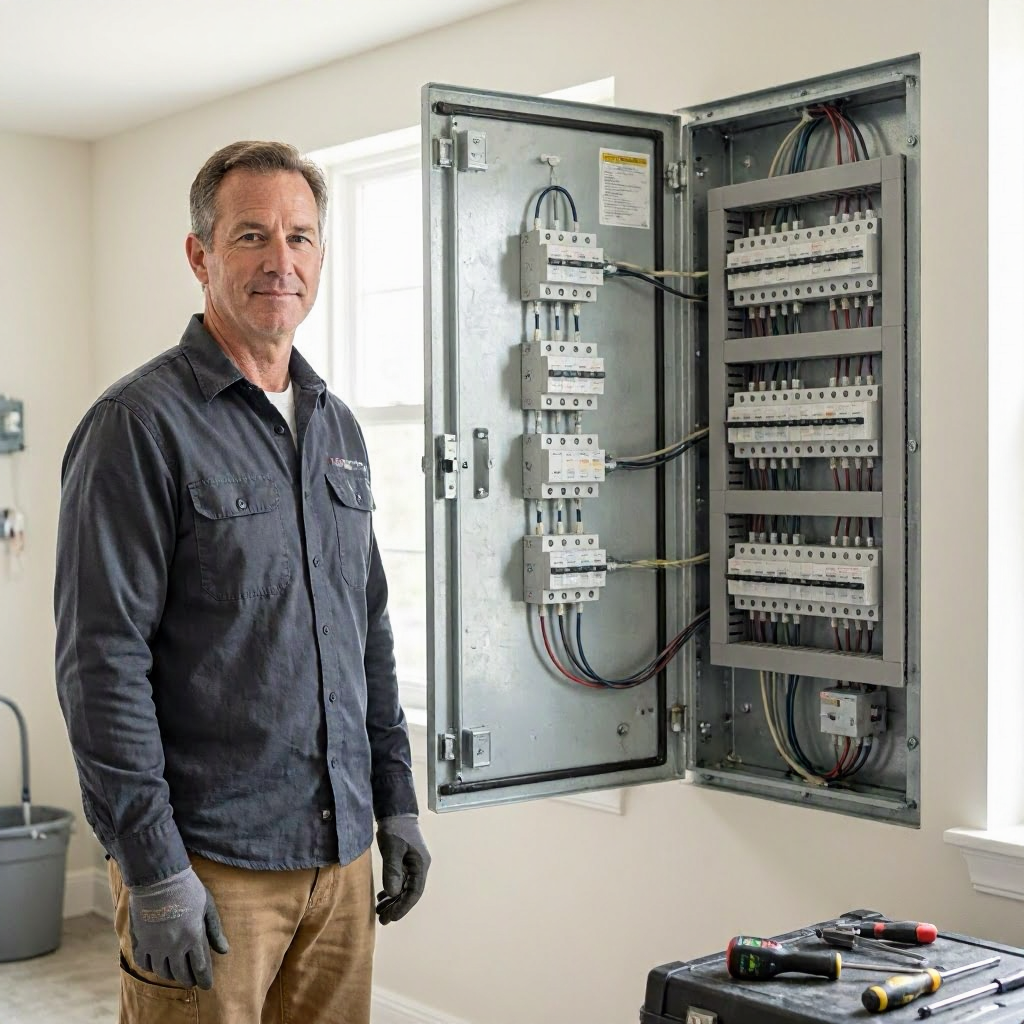
Entry-level electrician resume and interview tips
---
Getting Started as an Entry-Level Electrician
Entry-level electrician positions, often as apprentices or helpers, offer a solid path into a hands-on trade with strong demand across the US. These roles typically require a high school diploma or GED, basic math and reading skills, and a willingness to learn through on-the-job training or vocational programs. You'll assist journeyman electricians with wiring, installations, and repairs while building toward licensure.
Crafting a strong resume and nailing interviews set you apart in a competitive field. Employers like electrical contractors, construction firms, and union locals prioritize safety awareness, reliability, and eagerness to learn. This guide provides step-by-step tips tailored to entry-level applicants, including real-world examples and checklists to help you land that first apprenticeship or helper spot.
Focus on highlighting any related experience, even from high school shop classes or DIY projects, and emphasize transferable skills like problem-solving and physical stamina. Next, review official resources like the Bureau of Labor Statistics (BLS) Occupational Outlook Handbook at bls.gov/ooh for the latest job outlook and requirements.
Entry-Level Electrician Job Requirements and Pathways
Before polishing your resume, understand what employers seek. Entry-level roles rarely demand prior experience but expect foundational knowledge.
Education and Training Basics
Most positions start with a high school diploma or equivalent. Courses in algebra, physics, and shop classes strengthen your application. Many enter via:
- Vocational or trade schools: Community colleges or technical institutes offer certificate programs in basic electricity, often 6-12 months long. Check local options through CareerOneStop.org.
- Apprenticeships: Paid on-the-job training lasting 4-5 years, combining 2,000 hours of work per year with 144+ hours of classroom instruction. Register through state apprenticeship agencies or unions like the International Brotherhood of Electrical Workers (IBEW).
- Pre-apprenticeship programs: Short courses (8-16 weeks) teaching blueprint reading, tools, and safety, ideal for resume-building.
No college degree is needed, but some pursue associate degrees in electrical technology for an edge.
Certifications to Highlight
Entry-level applicants benefit from early credentials: - OSHA 10-hour Construction Safety card (widely required, costs about $25-100 online or through providers). - NFPA 70E electrical safety training. - Entry-level certifications like those from the National Center for Construction Education and Research (NCCER).
State licensing varies; apprentices work under licensed electricians until passing journeyman exams. Tailor your resume to the state's requirements via the National Electrical Contractors Association (NECA) or state boards.
Job Outlook and Realistic Expectations
The BLS projects steady growth for electricians due to construction, renewable energy, and infrastructure needs. Entry-level apprentices earn $15-25 per hour starting, depending on location and union status. Focus on high-demand areas like Texas, Florida, and California, but check local listings on Indeed or union halls.
Verify details on O*NET Online (onetonline.org) for skills like "troubleshooting electrical systems" that appear in 80%+ of postings.
Crafting a Standout Entry-Level Electrician Resume
Your resume should fit on one page, use a clean font like Arial 10-12 pt, and pass applicant tracking systems (ATS) with keywords from the job description: "apprentice electrician," "electrical safety," "blueprint reading," "conduit installation."
Save as PDF named "FirstName_LastName_Electrician_Resume.pdf." Use action verbs like "installed," "tested," "assisted."
Essential Resume Sections
Organize like this:
- Contact Information: Phone, professional email (e.g., john.doe.electrician@gmail.com), city/state, LinkedIn if built for trades.
- Objective or Summary: 3-4 lines tailored to entry-level. Example: "Motivated high school graduate with OSHA 10 certification and hands-on wiring experience from vocational training. Eager to contribute to a union apprenticeship, applying strong math skills and safety focus to support journeyman electricians."
- Skills: Bullet 6-8 relevant ones. Prioritize: Electrical tools (multimeter, wire strippers), Safety protocols (lockout/tagout), Blueprint reading, Math (Ohm's Law), Physical stamina, Teamwork.
- Education: List high school/GED first, then any trade programs. Include GPA if 3.0+, relevant courses, and dates.
- Experience: Even unrelated jobs count if you tie them to skills. For true entry-level, lead with volunteer work, internships, or projects.
- Certifications: Separate section with dates and issuers.
Tailoring for Electrician Roles
Scan 5-10 postings on sites like Monster or IBEW Local job boards. Mirror phrases like "National Electrical Code (NEC) familiarity." Quantify where possible: "Completed 40-hour pre-apprenticeship covering NEC basics."
Omit high school if you have trade school. No photos or personal details like age.
Resume Bullet Examples
Use this format: Action verb + task + result/scope.
| Experience Type | Weak Bullet | Strong Bullet |
|---|---|---|
| Vocational Training | Attended electrical class. | Fabricated and tested basic circuits in 120-hour vocational program, achieving 100% on safety drills. |
| High School Shop | Worked in shop class. | Installed conduit and outlets in school project, following blueprints for 10-station wiring setup. |
| Unrelated Job (e.g., Warehouse) | Stocked shelves. | Operated power tools and lifts safely, handling 500+ lbs daily while adhering to OSHA guidelines. |
| Volunteer/Internship | Helped at community center. | Assisted licensed electrician during habitat build, pulling wire for 200 ft runs under supervision. |
| Personal Project | Fixed home wiring. | Troubleshot and replaced outlets in home garage, using multimeter to verify 120V circuits (documented with photos). |
Adapt these to your background. If no experience, emphasize soft skills from sports or military service.
Common Resume Mistakes to Fix
- Typos: Proofread thrice or use Grammarly.
- Generic: Avoid "hard worker"; say "Completed tasks ahead of schedule."
- Irrelevant: Skip food service unless highlighting reliability.
- No keywords: Leads to ATS rejection.
Build yours in Google Docs or free templates from Resume.io tailored for trades.
Mastering Entry-Level Electrician Interviews
Interviews for apprenticeships last 30-60 minutes, often with a hiring manager, foreman, or panel. Expect a mix of behavioral, technical, and safety questions. Dress in clean khakis, steel-toe boots, and a button-up; bring resume copies, tools list, and references.
Research the company via their website and Glassdoor reviews. Arrive 10 minutes early.
Preparation Checklist
- Review NEC basics (Article 100 definitions, grounding).
- Practice with a multimeter or common tools.
- Prepare 2-3 questions: "What does a typical day look like for an apprentice?" or "How does the apprenticeship lead to journeyman status?"
- Mock interview: Record yourself answering aloud.
- Get references: Teachers, coaches, or past supervisors who can vouch for work ethic.
Common Interview Questions and Answers
Employers test enthusiasm, safety knowledge, and basics. Use STAR method (Situation, Task, Action, Result) for behavioral.
| Question | What They Want | Sample Answer |
|---|---|---|
| Tell me about yourself. | Concise background tying to role. | "I'm a recent high school grad with a vocational certificate in basic electricity. I've volunteered on wiring projects and hold an OSHA 10 card. I'm excited to start as an apprentice and commit to 4 years of training." |
| Why electrician? | Genuine interest, realism. | "I enjoy hands-on problem-solving, like diagnosing circuits. With construction booming, it's a stable career where I can advance to journeyman." |
| Describe lockout/tagout. | Safety priority. | "It's isolating energy sources before work: shut off breaker, test with voltmeter, apply lock and tag, then notify team. I learned it in OSHA training." |
| How do you read a blueprint? | Foundational skill. | "Start with title block for scale, then trace symbols for wires, panels, conduits. In class, I interpreted one for a lighting layout." |
| What if you see unsafe work? | Accountability. | "Stop work immediately, alert supervisor, document if needed. Safety first, per OSHA." |
| Calculate load for a 15A circuit. | Math basics. | "15 amps at 120V is 1,800 watts max (15x120). Derate for continuous loads per NEC 210.19." |
| Team conflict example? | Soft skills. | "In group shop project, teammate rushed wiring. I calmly explained NEC risks, we fixed it together, finishing on time." |
Practice technicals via free Khan Academy videos on electricity or NCCER modules.
During and After the Interview
- Demonstrate eagerness: "I'd love to shadow a crew."
- Body language: Firm handshake, eye contact.
- Follow up: Email within 24 hours.
Sample Thank-You Email Subject: Thank You - Apprentice Electrician Interview
Dear Mr. Smith,
Thank you for the interview today. I appreciated discussing your solar projects and how apprentices contribute. I'm enthusiastic about bringing my OSHA training and blueprint skills to your team. Please let me know if you need more info, like my tool list.
Best, John Doe (555) 123-4567
Track applications in a spreadsheet: company, date applied, contact, status.
Finding Entry-Level Electrician Jobs and Apprenticeships
Search strategically:
- Union halls: IBEW locals offer structured programs; apply via ibew.org.
- Job boards: Indeed, LinkedIn (search "electrician apprentice"), USAJobs for federal.
- Contractors: NECA members at necanet.org.
- State resources: Workforce development via CareerOneStop.org; apprenticeships at apprenticeship.gov.
Apply to 10-15 weekly. Network at trade fairs or community colleges.
Job Search Tracker Template
Track your job search with this spreadsheet template including columns for Company, Position, Applied Date, Contact, Follow-Up Date, and Status.
Examples:
- Company: ABC Electric, Position: Apprentice, Applied Date: 10/1, Contact: Jane@abc.com, Follow-Up Date: 10/8, Status: Phone screen 10/5
- Company: XYZ Union Local 123, Position: Helper, Applied Date: 10/3, Contact: Foreman@ibew123.org, Follow-Up Date: 10/10, Status: Pending
Apprenticeship Application Tips
- Gather transcripts, ID, physical (pass drug test).
- Essays: Explain commitment to trade.
- Financial aid: FAFSA for school-based programs at studentaid.gov.
Avoiding Pitfalls in Your Electrician Job Hunt
- Scams: Legit jobs never charge upfront fees. Verify via DOL site.
- Overclaiming skills: Be honest; training reveals gaps.
- Ignoring physical demands: Jobs involve ladders, 40+ hours, outdoor work.
- No references: Line up 3 now.
Start today: Update resume, apply to one apprenticeship, practice three questions. Consistent effort pays off in this in-demand field.
(Word count: 2687) ---

About the TDL Expert Panel
TDL Expert Panel · TheDigitalLife Editorial Team
TDL Expert Panel is the editorial team behind TheDigitalLife. The team researches, reviews, and creates practical guides to help everyday readers make better decisions about home repair costs, refunds, AI tools, digital safety, productivity, and useful online resources. Each guide is written to be clear, useful, and easy to understand.