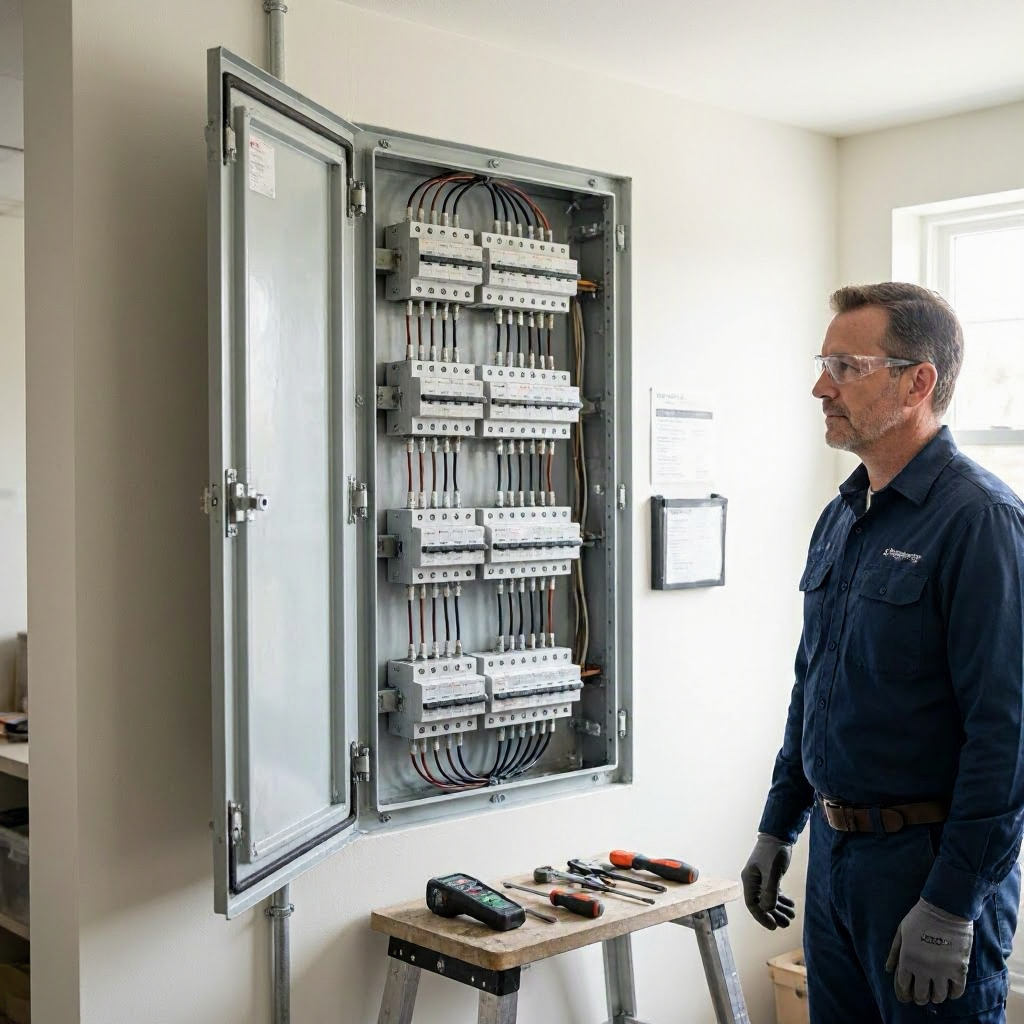
Electrician salary, job outlook, and education requirements
---
Why Consider a Career as an Electrician?
Electricians install, maintain, and repair electrical systems in homes, factories, businesses, and construction sites across the United States. They ensure power flows safely and efficiently, handling everything from wiring new buildings to troubleshooting outages. If you're looking for a hands-on trade with steady demand, good pay, and clear paths to enter without a four-year degree, this field offers realistic opportunities.
The U.S. Bureau of Labor Statistics (BLS) tracks electrician data closely, showing consistent job growth tied to construction, renewable energy, and infrastructure needs. Whether you're starting from high school, switching careers, or upskilling, understanding salary ranges, outlook, and training sets you up for smart decisions. This guide pulls from BLS, O*NET Online, and CareerOneStop to help you evaluate if it's right for you and what to do next.
Electrician Salary Breakdown
Electrician pay varies by experience, location, specialization, and employer type, but it starts solid and grows with skills. According to the BLS Occupational Outlook Handbook (updated May 2023 data), the median annual wage for electricians is $61,590. That's about $29.61 per hour, putting it well above the national median for all occupations.
Entry-level apprentices earn less during training, often $15–$20 per hour, but journeymen (fully qualified) hit $25–$40 or more. Master electricians, who supervise crews or run businesses, can exceed $80,000–$100,000 annually in high-demand areas.
Wage Percentiles and Ranges
BLS data shows a wide spread based on skill and market:
| Percentile | Annual Wage | Hourly Wage |
|---|---|---|
| 10th | $39,030 | $18.77 |
| 25th | $48,220 | $23.18 |
| Median (50th) | $61,590 | $29.61 |
| 75th | $80,260 | $38.59 |
| 90th | $101,080 | $48.60 |
These figures come from the BLS Occupational Employment and Wage Statistics (OEWS) program. About 10% earn under $39,000, often new apprentices, while top earners work in specialized fields like industrial or elevator work.
Salaries by Industry
Pay differs by sector: - Nonresidential building construction: Median $65,500 – busy with commercial projects. - Electric power generation, transmission, distribution: Median $82,950 – higher due to technical demands. - Residential building construction: Median $58,030 – steady but entry-focused.
Union jobs through the International Brotherhood of Electrical Workers (IBEW) often pay more with benefits like pensions and health insurance. Non-union roles might offer flexibility but lower starting rates.
Regional Differences
Location drives big swings. High-cost states like New Jersey ($84,890 median), Illinois ($81,650), and New York ($81,580) lead, per BLS. In contrast, Southern states like North Carolina ($50,400) or South Carolina ($49,080) pay less but have lower living costs.
Check BLS.gov/ooh for your state's data or use CareerOneStop.org's wage tool. Metro areas like San Francisco ($92,000+) or Chicago ($82,000+) pay premiums for urban demand.
Factors Influencing Electrician Pay
To maximize earnings:
- Experience: Apprentices start low; after 4–5 years, journeyman status boosts pay 50–100%.
- Specialization: Solar installers, wind turbine techs, or controls specialists earn 10–20% more amid green energy pushes.
- Union vs. non-union: IBEW apprenticeships guarantee raises; check local halls via ibew.org.
- Overtime and shifts: Construction sites offer time-and-a-half, pushing annual totals higher.
- Self-employment: 10% of electricians run businesses, netting $75,000+ after expenses.
Track local rates on Indeed or Glassdoor, but verify with job postings. Negotiate by highlighting apprenticeships or side projects.
Job Outlook for Electricians
The BLS projects 6% growth for electricians from 2023 to 2033, faster than the 3% average for all jobs. That's about 49,200 openings yearly, mostly from retirements and replacements.
Demand stems from:
- Construction boom: New housing and commercial builds need wiring experts.
- Renewables: Solar, EV chargers, and smart grids create niches; the Inflation Reduction Act funds infrastructure.
- Aging workforce: Many electricians near retirement, per O*NET data.
- Retrofits: Older buildings upgrade for energy efficiency.
Unemployment stays low at 3–4%, per BLS. Rural areas and Sun Belt states (Texas, Florida) see fastest growth due to population shifts.
Challenges include physical demands and competition in saturated markets. Still, shortages persist in industrial and utility sectors.
Education and Training Requirements
No college degree required – that's a draw. Most start with a high school diploma or GED, focusing on math, physics, and shop classes.
Primary path: Paid apprenticeships (4–5 years, 8,000 hours on-the-job + 144–200 classroom hours yearly). Earn while learning via:
- IBEW/Joint Apprenticeship and Training Committees (JATCs): Competitive entry, free training.
- Non-union programs: Through IEC or ABC chapters.
- Community colleges or trade schools: 1–2 year certificates accelerate entry.
Costs: Apprenticeships are often free or low-cost ($500–$2,000/year for books/tools). Trade programs run $5,000–$15,000 total, varying by state. Check for Pell Grants or workforce grants via StudentAid.gov.
Training Paths Comparison
| Path | Time Commitment | Cost Estimate | Pros | Cons |
|---|---|---|---|---|
| Union Apprenticeship | 4–5 years | Low (paid position) | Steady raises, benefits | Competitive selection |
| Trade School | 6–24 months | $5,000–$20,000 | Faster start, flexible | Upfront costs, less OJT |
| Community College | 1–2 years | $3,000–$10,000 in-state | Credits transfer, affordable | Less hands-on initially |
Verify programs on CareerOneStop.org. Look for NCCER or NJATC accreditation.
Steps to Become a Licensed Electrician
Follow these practical steps:
- Earn a high school diploma/GED: Build basics in algebra and blueprint reading.
- Gain initial experience: Helper jobs or pre-apprenticeship programs (3–6 months).
- Apply to apprenticeships: Use iec.org, abc.org, or local IBEW. Prepare resume with shop classes, math scores.
- Complete training: Log hours via state-approved systems.
- Pass journeyman exam: State-specific; study NEC (National Electrical Code).
- Get licensed: Most states require it via boards like California's CSLB.
Timeline: 4–6 years to journeyman. Track progress with a spreadsheet: hours logged, classes done, pay stubs.
Avoid scams: Legit programs don't charge big upfront fees. Verify via DOL.gov/apprenticeship.
Certifications and Licensing Essentials
Licensing varies by state – 48 require it for journeymen/masters. Check your state's board (e.g., Texas TDLR, Florida DBPR).
Key certs:
- OSHA 10/30: Safety basics, often employer-paid.
- EPA 608: For refrigerants in HVAC work.
- NICET or NABCEP: For engineering or solar.
Renewals need continuing education (8–16 hours/year). Costs: $50–$200/exam.
Research via onetonline.org or state sites. Build credentials gradually.
Essential Skills for Electricians
Success hinges on:
- Technical: Reading blueprints, using multimeters, bending conduit.
- Physical: Climbing ladders, working in tight spaces.
- Soft: Problem-solving under pressure, teamwork on crews.
- Safety: Lockout/tagout, PPE adherence.
Practice via YouTube channels like Electrician U or free Khan Academy circuits. Portfolio tip: Document personal projects (garage wiring) with photos.
Job Search and Application Tips
Tailor your resume:
- Bullet example: "Completed 2,000-hour apprenticeship at ABC Chapter, installing residential panels under journeyman supervision, achieving zero safety incidents."
- Highlight hours, certs, tools proficiency.
Interview prep:
- Common question: "Describe troubleshooting a circuit." Answer: "First, verify power off and use voltage tester; isolate fault with multimeter; reference NEC Article 210."
- Ask: "What projects is the team bidding? Overtime expectations?"
Follow up: "Thank you for the interview. I'm excited about your solar installs and attached my apprenticeship log."
Use LinkedIn, Handshake for apprenticeships. Track applications: Job title, company, date applied, follow-up date.
Spot scams: No legit electrician job asks for payment upfront.
Career Advancement Paths
From apprentice to master (1–2 more years experience + exam), then:
- Foreman/supervisor: $70,000–$90,000.
- Estimator/project manager: Office role, $80,000+.
- Own business: IEC startup courses help.
- Specialize: Elevator ($90,000+ median), controls.
Join NECA or IBEW for networking. Ask mentors: "What skills for foreman track?"
Realistic Costs and Financial Considerations
Apprenticeships minimize debt. Trade school? Fill FAFSA for aid; community colleges offer in-state rates under $5,000/year.
Tools kit: $1,000–$2,000 (multimeter, pliers, boots). Employers often provide.
Compare via net price calculators on school sites. Avoid for-profit chains with hidden fees.
Common Mistakes to Avoid
- Skipping math prep: Practice fractions/blueprints early.
- Ignoring safety certs: OSHA is non-negotiable.
- Rushing licensing: Work only under licensed pros.
- Overlooking unions: They offer stability.
Start small: Volunteer for Habitat for Humanity wiring.
Resources for Next Steps
- BLS.gov/ooh/construction-and-extraction/electricians.htm: Latest stats.
- O*NET Online: Tasks/skills.
- CareerOneStop.org: Local training.
- StudentAid.gov: Aid for programs.
Contact local JATC or IEC chapter today. Print this checklist:
- [ ] Research state licensing.
- [ ] Update resume with skills.
- [ ] Apply to 3 apprenticeships.
- [ ] Schedule OSHA 10.
Electrician offers security without massive debt. Take one step – your local demand awaits.
(Word count: 2,512) ---

About the TDL Expert Panel
TDL Expert Panel · TheDigitalLife Editorial Team
TDL Expert Panel is the editorial team behind TheDigitalLife. The team researches, reviews, and creates practical guides to help everyday readers make better decisions about home repair costs, refunds, AI tools, digital safety, productivity, and useful online resources. Each guide is written to be clear, useful, and easy to understand.