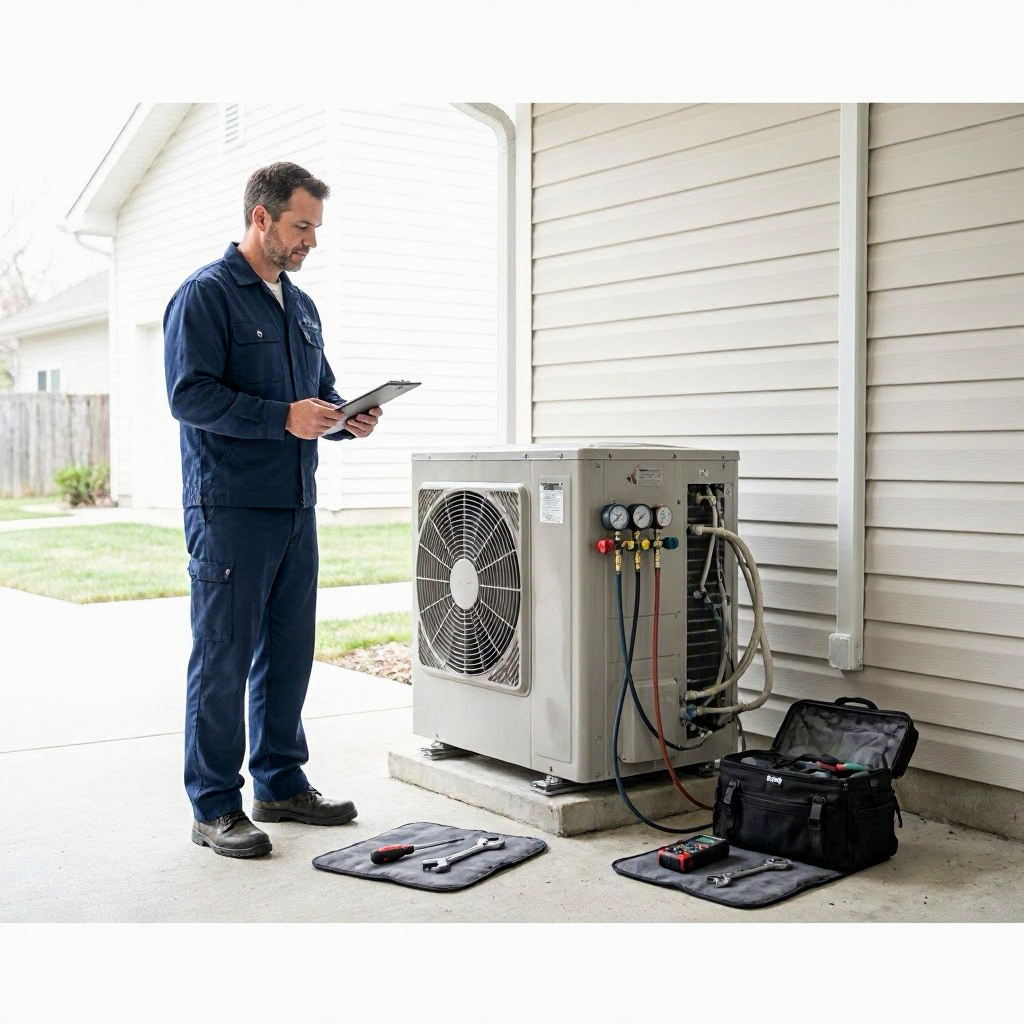
Best online HVAC technician courses and certifications
Why Become an HVAC Technician?
HVAC technicians install, maintain, and repair heating, ventilation, air conditioning, and refrigeration systems in homes, offices, and commercial buildings. Demand stays steady because every building needs climate control, and systems wear out over time.
This career suits hands-on workers who like troubleshooting and problem-solving. Entry often requires a high school diploma or GED, plus training. Many start with online courses before hands-on apprenticeships.
The U.S. Bureau of Labor Statistics (BLS) projects 6% job growth for heating, air conditioning, and refrigeration mechanics from 2023 to 2033, about average for all occupations. Around 37,700 openings each year from retirements and replacements.
HVAC Technician Salary and Job Outlook
Median annual wage for HVAC technicians was $57,300 in May 2023, per BLS data. Entry-level pay often starts lower, around $40,000 to $50,000, depending on location and experience. Top earners in high-demand areas like California or New York exceed $80,000.
Pay varies by region, employer size, and specialties like commercial refrigeration. Union jobs through organizations like UA (United Association) often offer better benefits and scales.
Check BLS.gov/ooh for your state's outlook. O*NET Online (onetonline.org) lists skills like brazing, electrical diagnostics, and blueprint reading as key.
Basic Education Requirements for HVAC Technicians
Most employers prefer postsecondary training, but no college degree is required. Start with a high school diploma focusing on math, physics, and shop classes.
Postsecondary options include:
- Community college associate degrees (1-2 years).
- Trade school programs (6-18 months).
- Apprenticeships (3-5 years, paid).
- Online courses and certifications for flexible entry.
State licensing is common. All states except a few require EPA certification for refrigerant work. Many mandate journeyman or master licenses after hours of experience. Verify requirements at your state's contractor licensing board, like California's CSLB or Texas's TDLR.
The Role of Online Courses in HVAC Training
Online HVAC courses build foundational knowledge in electrical systems, thermodynamics, refrigeration cycles, and safety. They suit working adults or those in rural areas without nearby trade schools.
These programs rarely replace hands-on work. Pair them with apprenticeships for real skills. Employers value them for showing initiative.
Look for programs aligned with Industry Competency Exams (ICE) from HVAC Excellence or NATE standards.
Top Online HVAC Technician Courses
Here are standout online programs recognized in the U.S. Focus on self-paced options with strong curricula. Always verify current details on provider sites.
Penn Foster Career Diploma in HVACR Technician
Penn Foster offers a fully online diploma covering EPA 608 prep, electrical theory, and system installation. Includes virtual simulations and textbooks.
Duration: 6-12 months at 15-20 hours/week. Students access 24/7 tutor support and career services. Graduates report using it to land apprenticeships. Check pennfoster.edu for enrollment.
Ashworth College HVAC Technician Career Diploma
Self-paced program teaches brazing, ductwork, and troubleshooting. Prepares for entry-level roles and certifications.
Duration: 6-12 months. Flexible for shift workers. Includes exam prep and job search tools. Visit ashworthcollege.edu.
HVAC School Online (hvaccareers.net)
Run by experienced instructors, this covers NATE core competencies online with video lessons and quizzes. Strong on practical scenarios.
Duration: Varies, modular format. Affordable modules. Good for supplementing apprenticeships.
SkillCat HVAC Technician Courses
Platform with micro-credentials in safety, electrical, and refrigeration. Mobile-friendly app for on-the-job learning.
Duration: Short courses (hours to weeks). Tracks progress for employers. Partners with unions.
Century College Online HVAC Certificate (via ed2go)
Community college-backed intro courses on basics like psychrometrics and controls. Credits may transfer.
Duration: 3-6 months. Affordable, instructor-led.
Other notables: Alison.com free intros, Udemy for supplemental EPA prep (not comprehensive).
Essential HVAC Certifications
Certifications prove skills and meet legal needs. Prioritize these:
EPA Section 608 Certification
Mandatory for handling refrigerants. Covers Type I (small appliances), II (high-pressure), III (low-pressure), Universal (all).
How to get it: Online prep courses, then proctored exam at sites like ESCO Institute (escogroup.org). Cost around $20-100 per attempt; retakes allowed.
Valid nationwide. Renew every few years with updates.
North American Technician Excellence (NATE) Certification
Industry gold standard. Core exam plus specialties (air conditioning, heat pumps, etc.).
Requirements: 2 years experience or graduation from approved program. Testing at centers nationwide. natex.org for schedules.
HVAC Excellence Certifications
Entry-level Employment Readiness Assessment (ERA) or proctored exams in areas like light commercial AC.
hvacexcellence.org lists schools.
Other Valuable Certs
- RSES (Refrigeration Service Engineers Society) for CM/CMS.
- NCCER for construction-related HVAC.
State-specific: Florida CGSA, etc. Track at careeronestop.org.
Comparing Online HVAC Courses and Certifications
| Aspect | What to Check | Why It Matters |
|---|---|---|
| Accreditation | NCCER, HVAC Excellence alignment; college credits | Ensures employer recognition |
| Curriculum | EPA prep, electrical, refrigeration, safety (OSHA 10) | Matches job needs |
| Hands-On Elements | Virtual labs, partnerships for internships | Builds real skills |
| Duration & Pace | Self-paced vs fixed | Fits your schedule |
| Support | Tutors, forums, career help | Helps completion |
| Outcomes | Alumni reviews, job placement info | Realistic expectations |
Use this table to evaluate. Read student feedback on Reddit (r/HVAC) or Indeed.
How to Choose the Right Online HVAC Program
Start by assessing your goals: Quick cert for EPA? Full diploma for apprenticeships?
Steps: 1. Match to state license path (check state board site). 2. Verify curriculum via syllabus. 3. Read independent reviews (BBB, Trustpilot). 4. Contact admissions for demo lessons. 5. Confirm refund policy.
Avoid programs promising "jobs guaranteed" or skipping apprenticeships. Legit ones disclose experience needs.
Checklist for Program Evaluation:
- Does it prep for EPA 608 and NATE?
- Mobile access for field study?
- Cost transparency (tuition, books, exams separate)?
- Completion rate >70%?
- Employer partnerships?
Compare 3-5 options. Free trials help.
Costs of Online HVAC Training
Costs vary widely: $500-$5,000 for diplomas, $50-300 for cert exams. Factor books ($100-300), tools ($200+), travel to tests.
Financial aid: Community college programs qualify for FAFSA (studentaid.gov). Private online diplomas rarely do; check scholarships at fastweb.com or HVAC associations.
Employer reimbursement common. Save by starting with free OSHA 10 (osha.gov) or YouTube basics.
Verify totals before enrolling. Ask: "What are all fees? Any hidden costs?"
Building Hands-On Skills After Online Training
Theory alone won't cut it. Next:
- Apprenticeships: Paid, 4-5 years. Find via CareerOneStop.org, state workforce agencies, or unions like UA Local.
- Helper jobs: Entry paid roles shadowing techs.
- Home practice: Build duct mockups, wire circuits safely.
Log 2,000+ hours for licensing.
Job Search Strategies for New HVAC Technicians
Tailor resume to keywords: "EPA 608 Universal", "NATE Core", "troubleshooting".
Resume Example Bullet: - Completed online HVAC diploma, scoring 95% on refrigeration module; prepared for EPA certification.
Apply via:
- Indeed, LinkedIn (search "HVAC apprentice").
- Company sites (Trane, Carrier, local contractors).
- ServiceTitan job board.
Interview Prep:
- Practice: "Walk me through diagnosing a no-cool call."
- Answer: "Check power, thermostat, filters, then refrigerant levels per EPA rules."
Follow up: "Thank you for the interview. I'm excited about applying my online training to your team's installs."
Negotiate: Ask about overtime, truck/tools provided, health benefits.
Common Mistakes to Avoid
- Skipping EPA cert: Illegal for refrigerant work.
- Buying unneeded tools early.
- Ignoring soft skills: Customer service key for residential.
- Falling for scams: No legit program charges for "job placement".
Track applications in a spreadsheet: Program, date applied, follow-up.
Career Advancement in HVAC
After 2-5 years:
- Specialize (controls, commissioning).
- Get master license.
- Start business (check SBA.gov).
Median experienced pay: $70,000+.
Next Steps to Launch Your HVAC Career
- Earn GED if needed.
- Enroll in online course (start Penn Foster or SkillCat).
- Pass EPA 608.
- Apply for apprenticeships.
- Network at ACCA events (acca.org).
Resources:
- BLS.gov/ooh/construction-and-extraction/heating-air-conditioning-and-refrigeration-mechanics-and-installers.htm
- Onetonline.org/link/summary/49-9021.01
- Careeronestop.org/Toolkit/Training/Find-Vocational-Training.aspx
Commit 10-15 hours/week. Many transition in 6-12 months.
| Certification Path | Experience Needed | Exam Cost Estimate | Renewal |
|---|---|---|---|
| EPA 608 | None | $20-100 | Core every 3 years |
| NATE Core | 2 years or program | $150-250 | Every 2 years |
| HVAC Excellence ERA | Entry-level | $50-150 | Varies |
This path leads to stable work. Verify all via official sites.

About the TDL Expert Panel
TDL Expert Panel · TheDigitalLife Editorial Team
TDL Expert Panel is the editorial team behind TheDigitalLife. The team researches, reviews, and creates practical guides to help everyday readers make better decisions about home repair costs, refunds, AI tools, digital safety, productivity, and useful online resources. Each guide is written to be clear, useful, and easy to understand.