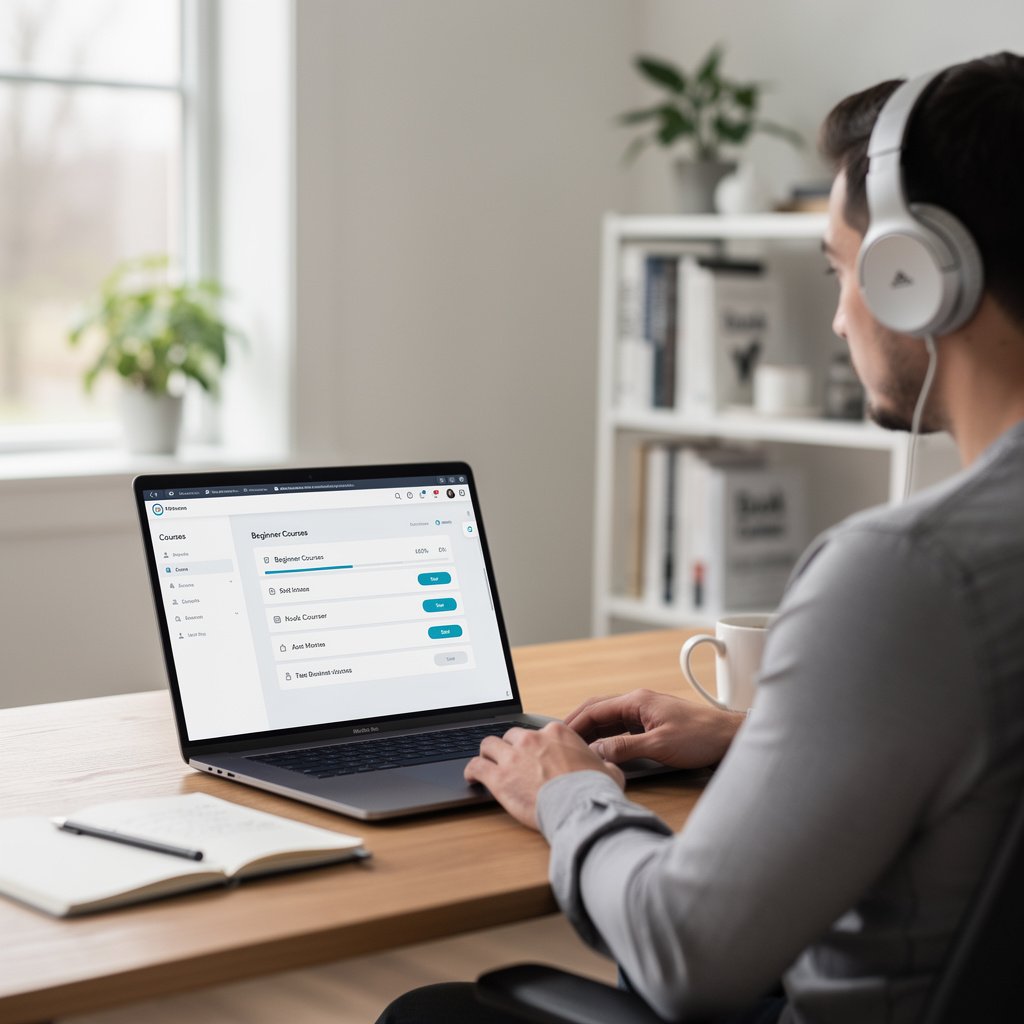
Best Free Online Learning Platforms for Beginners
Imagine wanting to learn a new skill, but the thought of expensive classes or a long commute stops you before you start. You are not alone. The good news is that the internet has changed everything. Today, world-class education is available to anyone with an internet connection, and much of it is completely free.
This guide is here to help you navigate the vast world of free online learning. We will cut through the noise and show you the most reliable and user-friendly platforms. Whether you want to change careers, pick up a hobby, or simply learn something new, these resources are your first step.
The choices can be overwhelming, so we have broken them down by category. By the end, you will have a clear roadmap to start your learning journey and unlock new opportunities from the comfort of your home.
The best free online learning platforms offer high-quality courses without requiring payment. Key platforms include Coursera and edX for academic and professional skills, Khan Academy for foundational K-12 subjects, freeCodeCamp for coding, Canva Design School for creative skills, and Duolingo for languages. These platforms let you access all core learning materials for free, with optional paid certificates.
Item | Detail ---|--- Typical Cost | Free access to learning
Item | Detail ---|--- Typical Cost | Free access to learning materials. Optional paid certificates for some platforms. Best First Contact | The platform's official website or help center. Main Safety Warning | Ensure the course is truly for beginners and has no hidden prerequisites. Warranty Proof Needed | For verifiable certificates, proof of course/project completion is needed. When to Call a Licensed Professional | Not applicable for online learning.
Who should I call first
- Who should I call first? Contact the platform's official support for any technical or account issues.
- What will it cost? The core learning content on all listed platforms is free. You may pay for official certificates.
- What proof is needed for warranty? For platforms offering certifications, you typically need to complete all required projects or exams.
- Which state or local office should I check? Not applicable for these educational platforms.
- What are the warning signs? Be cautious of platforms demanding payment upfront for basic access or those that lack clear beginner-level descriptions.
- When should I avoid DIY? DIY learning is the standard here. It is safe and encouraged.
Main customer question | How do I start learning online for free? Best first contact | Official website of the chosen learning platform. Estimated cost range | Free for core content. Labor charges | Not applicable. Fitting or installation contact | Not applicable. Official brand contacts | Coursera, edX, Khan Academy, FutureLearn, freeCodeCamp, Codecademy, Canva, GCFGlobal, Duolingo, BBC Languages. Retailer contacts | Not applicable. Warranty claim documents needed | Course completion records or project portfolio. State or local agency to check | Not applicable. Safety warning | Check course prerequisites to ensure it matches your skill level. Important URLs | Official platform websites (listed in article). Contact numbers | See platform websites for support contact information.
Why Choose Free Online Learning?
Free online learning is more than just saving money. It is about flexibility and access. You can learn on your own schedule, fitting lessons around your work or family time. The variety is endless, from academic subjects to practical skills like baking or programming.
Most importantly, these skills can advance your career. Employers increasingly value demonstrated skills over formal degrees alone. Showing you have taken the initiative to learn on your own is a powerful signal of discipline and motivation.
Top General Education Platforms
These large platforms partner with top universities to bring high-quality courses to a global audience.
1. Coursera
Coursera is a major name in online learning. It offers many paid degrees and certificates, but also a massive catalog of courses you can audit for free. Choose the "Audit" option when signing up to access all video lectures and materials without paying. You only pay if you want a graded certificate to share.
DIY Is Usually Safe Only If: You are self-motivated. Audit tracks require discipline without deadlines.
Best for: Academic subjects, computer science, business, and data science. Beginners love it because the courses are structured by university professors, ensuring reliable content.
2. edX
Founded by Harvard University and MIT, edX is a non-profit with a strong focus on higher education. Like Coursera, it uses an audit track to provide free access to course materials.
Best for: Computer science, engineering, humanities, and languages. The key benefit is learning from the same curriculum used at top universities like Harvard and Yale.
3. Khan Academy

Khan Academy is a non-profit providing completely free education. There are no paywalls or audit tricks. Everything is 100% free upon account creation. It started with math but now covers a wide library of subjects.
Best for: K-12 subjects like Maths, Science, History, and foundational computer programming. Its gamified system with badges and progress tracking makes learning fun and effective for building strong foundations.
4. FutureLearn
Based in the UK, FutureLearn offers short courses from British and international universities. It emphasizes social learning through discussion sections. Their "limited access" option lets you join courses for free for the course duration plus 14 extra days.
Best for: Healthcare, history, teaching, and cultural studies. Beginners appreciate its user-friendly design and the community feel of a real classroom.
Best Platforms for Tech and Coding Skills
If you aim to break into tech or understand the digital world, these platforms are essential.
1. freeCodeCamp
freeCodeCamp is a donor-supported non-profit and arguably the best resource for learning to code from scratch. It has helped thousands land jobs at companies like Google and Microsoft.
Curriculum: It offers a structured path covering HTML, CSS, JavaScript, and Data Visualisation. Learning is hands-on; you write code directly in your browser.
Warranty Documents Needed: For their free certifications, you must complete their rigorous, verifiable projects.
Unlike many platforms, freeCodeCamp offers free verifiable certifications upon completion of their project-based curriculum.
2. Codecademy (Basic Plan)
Codecademy is famous for its interactive, split-screen interface. While a paid "Pro" version exists, the free tier is generous for beginners. You can learn basics of Python, Java, C++, Ruby, and SQL with instant feedback on your code.
Best for: Absolute beginners who want to try coding before committing to a deeper, more structured course.
Best Platforms for Creative Skills
For graphic design, photography, or writing, the internet offers fantastic free resources.
1. Canva Design School
Canva is a popular design tool, and its Design School is an excellent resource. It offers short, bite-sized video tutorials on design basics, branding, and social media mastery.
Why it's great: It focuses on practical application. You learn principles you can immediately use for your CV, social media, or business presentations.
2. GCFGlobal
GCFGlobal is a hidden gem with over two decades of free tutorials. While covering many topics, its creative tutorials on Photoshop basics and digital photography are excellent for beginners.
Why it's great: The tutorials are incredibly patient and assume zero prior knowledge, making them perfect for true novices.
Best Platforms for Language Learning
Learning a new language opens new cultural and career doors, and it can start for free.
1. Duolingo
Duolingo has gamified language learning into short, game-like lessons involving translation, speaking, and listening. You earn points and can compete on leaderboards.
Average Cost: The core learning content for over 30 languages is entirely free.
Languages: Includes Spanish, French, German, and Japanese. It’s designed to be engaging and habit-forming.
2. BBC Languages
Though no longer updated, the BBC Languages archive remains a comprehensive free resource. It offers video courses, audio lessons, vocabulary lists, and grammar guides.
Best for: Getting a solid grounding in European languages like French, Spanish, Italian, and German.
How to Choose the Right Platform for You
With so many choices, use this simple checklist to decide:
- Define Your Goal: Are you learning for fun, a career switch, or an exam? Academic platforms like Coursera suit career goals, while Khan Academy is great for exam prep.
- Assess Your Learning Style: Do you prefer videos (Coursera, YouTube) or hands-on exercises (freeCodeCamp, Duolingo)?
- Check the Time Commitment: Some courses have weekly deadlines (FutureLearn), while others are self-paced (Khan Academy). Pick what fits your schedule.
- Look for Prerequisites: Always check the course description to ensure it is truly for beginners and doesn’t require knowledge you don’t have.
Tips for Success in Online Learning
Signing up is easy; sticking with it is the challenge. Online learning requires self-discipline.
Create a Dedicated Study Space
You don’t need a home office, but a quiet corner helps. Studying in bed often leads to distraction. A specific spot tells your brain it’s time to focus.
Set Realistic Goals
Don’t try to finish a 40-hour course in a weekend. Aim for 30 minutes a day or a few hours a week. Consistent, small efforts are more effective than occasional marathons.
Take Notes
Treat it like a physical classroom. Take notes digitally or on paper. Writing helps reinforce memory and understanding.
Join a Community
Learning alone can be isolating. Most platforms have forums. Engage with them-ask questions, answer others, and share your progress.
Practice What You Learn
If you watch a lesson on Excel formulas, open Excel and try them immediately. Passive watching isn’t learning. Active application is where the magic happens.
The Role of YouTube in Free Education
We can’t discuss free education without mentioning YouTube, the world’s largest video library. It hosts thousands of high-quality educational channels.
CrashCourse offers fast-paced, witty overviews of history, biology, and literature. Ted-Ed features beautifully animated lessons on curious topics. Professor Leonard provides full-length, high-quality mathematics lectures rivaling paid courses.
The key is finding structured playlists. Many creators organize content into full courses that guide you from beginner to advanced levels.
Frequently Asked Questions (FAQ)
1. Are these platforms truly free?
Yes. All listed platforms offer free access to learning materials. Some, like Coursera and edX, use a "freemium" model where content is free but certificates cost money. Others, like Khan Academy and freeCodeCamp, are completely free with no hidden costs.
2. Can I put free courses on my CV?
Absolutely. Employers value skills. List the course and the skill you gained. For project-based platforms like freeCodeCamp, link to your portfolio as proof of your abilities.
3. Do I need a powerful computer to learn online?
For most general courses, a basic laptop, tablet, or smartphone is sufficient. For heavy video editing or complex programming, better specs help, but for 90% of free learning, basic hardware is fine.
4. How do I stay motivated without a teacher?
Set a schedule and stick to it. Find a "study buddy" or join online communities. Regularly remind yourself of your goal, whether it's a better job, a personal project, or pure curiosity.
This guide is based on the official information and structures of the learning platforms mentioned: Coursera, edX, Khan Academy, FutureLearn, freeCodeCamp, Codecademy, Canva Design School, GCFGlobal, Duolingo, and BBC Languages. Always re-check the official websites for the most current course offerings, platform policies, and any changes to free access terms before you begin your studies.
The barriers to education have crumbled. You can learn to code, speak a new language, or explore history without spending money or needing prior permission. The most important step is the first one. Pick a platform that resonates with you, choose a topic that excites you, and start learning today. You just need curiosity and an internet connection. Happy learning!

About the TDL Expert Panel
TDL Expert Panel · TheDigitalLife Editorial Team
TDL Expert Panel is the editorial team behind TheDigitalLife. The team researches, reviews, and creates practical guides to help everyday readers make better decisions about home repair costs, refunds, AI tools, digital safety, productivity, and useful online resources. Each guide is written to be clear, useful, and easy to understand.