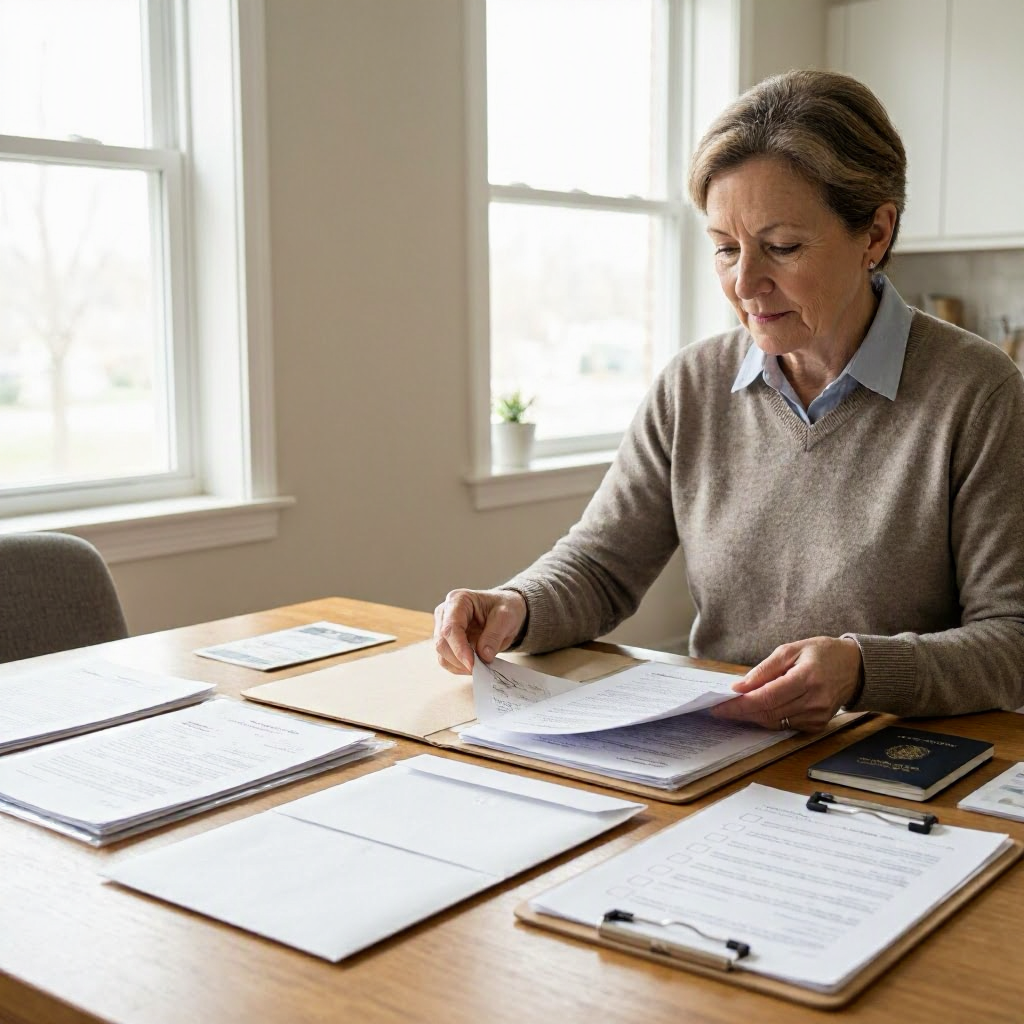
Asylum Application documents checklist for 2026
Asylum Basics and Application Overview
Asylum offers protection to individuals in the United States who face persecution or a well-founded fear of persecution in their home country based on race, religion, nationality, membership in a particular social group, or political opinion. This protection can lead to work authorization, a green card after one year, and eventually a path to citizenship. However, eligibility depends on your specific facts and immigration history.
Immigration rules can change, so always check USCIS.gov for the latest information before preparing or filing any asylum application. This article provides a general documents checklist for asylum applications, focusing on Form I-589, Application for Asylum and for Withholding of Removal. It is not legal advice. A qualified immigration attorney or accredited representative can review your situation.
Asylum applications fall into two main types: affirmative asylum (filed with USCIS if you are not in removal proceedings) and defensive asylum (raised in immigration court). This checklist primarily covers affirmative applications, but many documents overlap. Verify your situation through official USCIS resources.
Key Steps Before Gathering Documents
Before collecting documents, review these first checks:
- Confirm your deadline: You generally must apply within one year of your last arrival in the U.S., unless you qualify for an exception like changed circumstances or extraordinary reasons. Late filings require explanation and evidence.
- Check your current status: Review your passport, visa, Form I-94 arrival/departure record (available at CBP.gov/I94), and any prior immigration notices.
- Gather basic identity proof: Start with your full name, date of birth, A-Number (if any), and contact details.
- Protect sensitive information: Do not share passport numbers, A-Numbers, or personal details with unofficial sources.
Organize everything in a secure folder system, such as digital scans named by date and type (e.g., "2026-01-15_Passport_Copy.pdf") and physical copies in labeled binders. Keep originals safe and use copies for submissions.
The Main Form: Form I-589
Download the current Form I-589 from USCIS.gov/forms. Read the instructions carefully, as they list exact requirements, filing addresses, and any updates for 2026.
- Complete one form per applicant, but you can include qualifying family members (spouse and unmarried children under 21) on the same form if filing together.
- Sign and date the form. Each adult applicant must sign.
- No filing fee for Form I-589.
- Mail to the correct USCIS lockbox based on your location (check form instructions for addresses).
Submit in English or with certified translations. Incomplete forms can lead to rejection or delays.
Comprehensive Documents Checklist
Use this checklist to ensure you have all required and recommended supporting items. USCIS requires originals where possible, but photocopies are often accepted for initial filing—bring originals to interviews. Scan everything before submitting.
The table below summarizes core categories. Expand with details in the subsections that follow.
| Document Category | Key Examples | Why It Matters |
|---|---|---|
| Personal Identification | Passport, birth certificate, national ID | Proves identity, nationality, and age |
| Immigration Records | Form I-94, prior visas, entry stamps | Shows U.S. arrival date and status history |
| Photos | Two passport-style photos per person | Required for processing and ID |
| Persecution Evidence | Personal statement, affidavits, medical records | Builds your fear-based claim |
| Country Conditions | U.S. State Department reports, news articles | Supports general conditions in home country |
| Family Documents | Marriage/birth certificates for derivatives | Proves relationships if including family |
| Translations | English versions with certifications | Ensures USCIS can review non-English docs |
Personal Identification Documents
These establish who you are. Missing them can delay processing.
- Passport: Current or expired, all pages with stamps. If no passport, explain why and provide alternatives.
- Birth certificate: Original or certified copy showing full name and parents.
- National ID card, driver's license, or government-issued ID: From your home country or U.S.
- Any U.S. ID: Social Security card, state ID (do not send originals unless requested).
- Police clearance certificates: If available, from countries where you lived over 16 (check instructions for specifics).
Keep copies of all IDs. If documents are lost, file a police report and include it.
U.S. Immigration and Travel Records
These prove your entry and status.
- Form I-94: Print from CBP.gov/I94 using your passport number, name, and arrival date.
- Visa stamps: Copies from passport.
- Prior USCIS notices: Receipt notices, approvals, denials from any petitions.
- Travel records: Airline tickets, boarding passes, hotel receipts showing U.S. arrival date.
- Border crossing documents: If entered via land or other means.
Verify your I-94 immediately, as errors can affect your one-year deadline.
Passport-Style Photographs
- Two identical color photos per applicant (including children): 2x2 inches, white background, taken within 30 days.
- Write name and A-Number lightly on the back.
- Follow USCIS photo requirements (link in Form I-589 instructions).
Professional photo services can help, costing around $15 USD.
Core Evidence of Persecution or Well-Founded Fear
This is the heart of your application. Provide as much detail as possible without exaggeration—truthfulness matters.
- Personal statement: 10-20+ pages, signed, explaining your claim chronologically. Include dates, names, locations, incidents of past harm or threats, why it qualifies under asylum grounds, and why relocation in your country is impossible. Type or write legibly in English.
- Affidavits from witnesses: Sworn statements from family, friends, colleagues detailing what they know. Include their contact info and ID copies.
- Medical records: Hospital reports, doctor's letters for injuries, psychological evaluations showing trauma.
- Threat letters or documents: Emails, notes, police reports from home country.
- Expert declarations: If available, from professors or country specialists (consult an attorney for this).
- Membership proof: Cards, letters showing political party, religion, union, or social group ties.
Corroborate with multiple sources. If evidence is unavailable, explain why in your statement.
Country Conditions Evidence
Supports that conditions in your country justify your fear.
- U.S. Department of State Human Rights Reports: Download from State.gov for your country and year.
- UNHCR or Amnesty International reports.
- News articles: From reputable U.S. sources like New York Times, BBC, about similar persecution.
- NGO reports: Human Rights Watch, etc.
Print recent reports (2024-2026) relevant to your grounds.
Documents for Family Members (Derivatives)
If including spouse or children:
- Marriage certificate: For spouse.
- Birth certificates: For children, showing your relationship.
- Proof of termination: Divorce decrees if prior marriages.
- Photos: Of family together.
- Consent forms: If one parent files separately.
Each derivative needs their own photos and basic ID.
Translations and Certifications
All non-English documents require:
- Full English translation.
- Translator's certification: Signed statement that the translator is competent, translation is accurate, and they are not related to you.
- Sample: "I [name] certify that I am fluent in [languages] and this is a true translation."
Do translations yourself if fluent, or hire a certified service (costs $20-50 USD per page).
Organizing and Submitting Your Application
Create a Cover Letter
Optional but recommended: List all enclosed items, forms, and fees (none for I-589). Reference Form I-589 instructions.
Package Assembly
- Original Form I-589 on top.
- Supporting docs tabbed by category (use dividers).
- Two copies of entire package if mailing.
- Use USPS Priority Mail or tracked service (keep receipt).
Filing Locations
Check current lockbox addresses on USCIS.gov or Form I-589 instructions. Online filing may be available by 2026—verify.
After Submission: What Happens Next
Receipt Notice
Expect a Form I-797C receipt notice within weeks. Note the receipt number (starts with letters like ZAS).
Biometrics Appointment
- USCIS sends Form I-797C biometrics notice (30-60 days after filing).
- Bring: Appointment notice, passport photo ID, receipt notice.
- Prepare: Arrive early, no weapons, dress professionally.
Asylum Interview
- Notice sent months later (processing varies; check USCIS processing times).
- Bring: Originals of all submitted docs, additional evidence, interpreter if needed (fluent in English? No need).
- Prepare: Review your statement, practice answers honestly.
Case Status Checks
- Create USCIS online account at my.uscis.gov.
- Enter receipt number.
- Call USCIS at 800-375-5283 (have receipt ready).
Processing times fluctuate—check USCIS.gov/processing-times for asylum estimates.
Responding to Requests for Evidence (RFEs) or Notices
If USCIS issues a Request for Evidence (RFE) or Notice of Intent to Deny (NOID):
- Read deadline (usually 30-87 days).
- Gather requested items, explain gaps.
- Respond fully with copies of notice.
- Keep mailing proof.
Referral to immigration court possible if denied.
Common Mistakes to Avoid
- Missing the one-year deadline: Document exceptions clearly.
- Incomplete evidence: Provide what you have and explain lacks.
- Poor organization: Use tabs, index.
- Unauthorized work: Wait for Employment Authorization Document (EAD, Form I-765, eligible 150+ days after filing).
- Ignoring notices: Respond promptly.
- Non-English docs without translation.
Double-check against Form I-589 instructions.
Essential Recordkeeping Practices
Keep forever:
- Copies of everything submitted.
- All USCIS notices (receipt, biometrics, RFE, decision).
- Mailing receipts, delivery confirmations.
- Interview notes, online status screenshots.
- Passport, I-94, EAD, green card if approved.
Store digitally (password-protected) and physically. Update addresses via Form AR-11.
Watch for Immigration Scams
Asylum seekers are common scam targets. Beware:
- Promises of "guaranteed approval" or "fast-track."
- Requests for fees via wire, gift cards, crypto.
- Fake USCIS calls demanding payment or info.
- "Notarios" or preparers signing blanks or withholding copies.
Verify help at USCIS.gov/avoid-scams. Use only DOJ-accredited representatives (search at justice.gov/eoir).
When to Contact Qualified Immigration Help
Consider an attorney or accredited rep if:
- Complex persecution claim or criminal history.
- Late filing needed.
- Prior deportations, overstays, or fraud.
- RFE, denial, or court referral.
- Including many family members or experts.
Find help via:
- American Immigration Lawyers Association (aila.org).
- DOJ list at justice.gov/eoir/list-pro-bono-legal-service-providers.
- Nonprofits like Catholic Legal Immigration Network.
Initial consultations often $100-300 USD. Ask about fees, experience with asylum, and copies of all work.
Questions to ask:
- What forms and evidence do you recommend for my facts?
- How do you handle RFEs or interviews?
- What are your success rates with similar cases? (No guarantees.)
This is general information, not legal advice. Eligibility depends on personal facts. Check USCIS.gov for current instructions, as rules change. Consult professionals for your case.
(Word count: 2748)

About the TDL Expert Panel
TDL Expert Panel · TheDigitalLife Editorial Team
TDL Expert Panel is the editorial team behind TheDigitalLife. The team researches, reviews, and creates practical guides to help everyday readers make better decisions about home repair costs, refunds, AI tools, digital safety, productivity, and useful online resources. Each guide is written to be clear, useful, and easy to understand.